
The sixth round of the World Trade Organization's ministerial meeting, started in Hong Kong today. The 6 person delegation from belize joins 5,800 delegates from 149 countries, to discuss the framework for global trade. The trade talks are being held amidst large and angry protests in that region. For the tiny Belize delegation led by minister of Foreign Trade Godfrey Smith, the mission is simply: try and keep the heads of Belize's banana and sugar growers above water as the tide of trade liberalization washes over small and vulnerable economies.
It's no small task, as the developed countries are intent on eliminating quotas and preferential markets that developing nations have come to rely on, even as those same developed countries maintain huge domestic agricultural subsidies. With so many opposing interests vying for control, many experts predict that this round of meetings will fall apart, much like the previous ministerial meting in Cancun in 2003. But whether it falls or not, the Belize team has to try and hold a shrinking forner in the global agricultural trade and before he left on Friday, Trade Minister Godfrey Smith said the strategy is simply, to stay alive.
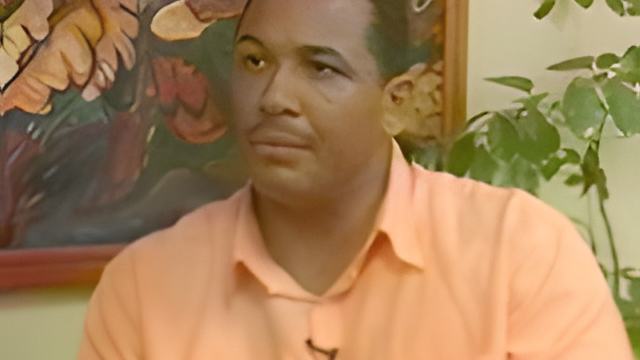
Hon. Godfrey Smith, Minister of Foreign Trade
"Certainly from our view it will be a very difficult challenge. Agriculture will be one of the biggest issues on the table and there seems to be so far a reluctance on the part of the USA to give any concessions that is being called for by some of the larger developing countries in terms of market access."
Jules Vasquez,
Certainly there is a sense of complete urgency for ACP countries and Belize in particular vis a vie sugar and bananas. What are you going there knowing and what do you hope to leave with as regards those critical industries?
Hon. Godfrey Smith,
"We go in knowing that proposals on the table from the EU in relation to sugar and bananas does not, the proposals do not bode well for Belize. We go in hoping that by joining forces with CARICOM, ACP etc, and what is termed the G90 countries, developing countries on a whole, we may be able to forcibly put a position, aggressively put a position. Am I personally optimistic that it will change the sugar regime for instance? I have to honestly say I don't think that coming out of Hong Kong the position will change. Banana is slightly different because the position has not crystallized yet. We hope we may be able to impact on that to optimize the position for Belize."
Jules Vasquez,
Are you going with one single idea, one single mission that Belize must leave this meeting with at least this?
Hon. Godfrey Smith,
"No. I am afraid not. So I suppose the answer to your question is the thing at highest stake for Belize at this juncture, if we are forced to reduce it to one, is the issue of bananas."
Jules Vasquez,
Are we entering knowing or thinking that in the era of trade liberalization, small countries stand only to lose? All we can do is try to hold our corner, protect as best we can our strategic interest, but in fact the world order has been realigned to, excuse the language, screw us over.
Hon. Godfrey Smith,
"I fully agree. The approach that is being undertaken to date is that, yes, theoretically even if you agree as small countries that liberalization is good and it brings growth, and growth spurs opportunities for people, at the same time you have to realize, and many academics realize, many NGOs realize, many international organizations recognize that for small little countries the pace at which we open has to be different from the pace at which liberalization occurs in developed countries. You are right in that you sort of enter knowing that it's a tremendous uphill struggle."
Jules Vasquez,
Are we injured at all in this in that the Musa administration has had so much instability in terms of its had since August of 2004, it has had at least four shuffles and in fact the Minister who attended the last ministerial meeting in 2003, Eamon Courtenay, is no longer in the government, the Prime Minister fired him one year ago. Have we suffered from a lack of leadership or a continuality because you are entering this when you weren't even in the picture, trade wise, in 2003?
Hon. Godfrey Smith,
"Yes I agree that lack of continuity clearly impacts. Certainly at the ministerial level there's been a lack of ministerial continuity but that would be to underestimate and undersell the work of the technicians at Foreign Trade. Perhaps what is the greater problem, Jules, is the fact that we have no representation at the WTO, neither does Guyana, neither does Suriname. So that even though there's much ado about this ministerial meeting, that looks over the fact that meetings occur on a daily basis. All the thick rules, bundles of documents that need to be processed and negotiated upon, these occur all year 'round. The difficulty for small countries is lacking the capacity to be able to keep up with the negotiations all around us. You are fully aware that we had to scale back all across government departments and that the Directorate was no exception."
Jules Vasquez,
But isn't this an indication that the government has its priorities in the wrong place? The government still has over 100 contract officers, yet because it is so involved in the everyday management of a ongoing fiscal crisis, it is unable to decide that if we are to secure a future for these key agricultural industries, at least, we must beef up the trade directorate and the government has been unable to do that.
Hon. Godfrey Smith,
"I wouldn't say it is a case mis-prioritization. I think that in a situation in which the government finds itself, things have to give all around."
Jules Vasquez,
But the situation is of the government's making.
Hon. Godfrey Smith,
"The inability to hire more specialists, more trade economists, is as a result of the economic situation in which we find ourselves."
Jules Vasquez,
In which the government has put itself.
Hon. Godfrey Smith,
"Well clearly we are managing the country, we are managing the economy, we have to take responsibility for some of that."
Jules Vasquez,
As mid-2007 Doha is over, presumably, and one never knows what will happen in government from week to week and from month to month, but presumably at that time you are still Minister of Foreign Trade, what looking in your executive crystal ball, what do you see for the implementation at that time?
Hon. Godfrey Smith,
"What I foresee, two years down the road is still a graduated approach to the way we open up and liberalize the nation to trade. Perhaps the key question is what we do in the interim in terms of diversifying and able to foresee what's going to happen in particular industries and how we make adjustments to that."
Under pressure from the WTO, the European Union will cut preferential prices for sugar by 36% over 6 years. The EU has promised funding to modernize affected industries but European funding is notoriously slow to arrive.