Over the years, we've taken you to some far flung places, from the depths of the Chiquibul Forest, to the heights of Victoria Peak. But on Sunday, Jules Vasquez was seeking some new heights when he plowed through mountain snow in the airy reaches of Woodstock, Vermont - a small town about 275 miles from New York City. What was he doing there? Looking for ICJ answers. Here's his story:
Judge Stephen Schwebel, Former President - ICJ
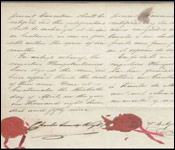
"There are two treaties the 1859 treated which initially drew the boundary and the 1931 exchange of notes which reaffirmed the boundary. And in all those years in between and for a long time preceding 1859 you had what the court would call facts on the ground and those facts on the ground were presence of English settlers tolerated by the Spanish authorities of the day. And so both in practice and in terms of the treaty prescription, Belize has a title to its own territory within its current boundaries which is very compelling.."
Jules Vasquez reporting
And, to that, Schwebel adds the fact that Belize has standing at the UN:
Judge Stephen Schwebel
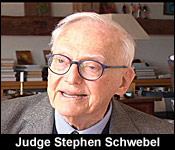
"The court is the principal judicial organ of the United Nations. The General assembly of the United Nations in which every member of the UN since had to vote on the admission of Belize to membership in the UN. That opinion notes that the governing resolutions Affirming to reaffirm the territorial integrity of Belize meaning all of the present territory of Belize. So when I said earlier that Guatemala has an uphill fight, one can see how high the hill is. Because every member of the United Nations voted to admit Belize to membership on the basis of territorial integrity and there was only one state of all the members of the UN that voted against that, and that was Guatemala."
"That opinion notes that the governing resolutions afford and reaffirm the territorial integrity of Belize meaning all of the present territory of Belize - one can see how high the hill is - because every member of the united nations and that was Guatemala."
But, even with all that, Schwebel concedes that same Guatemala won't just concede when it goes to court:
Judge Stephen Schwebel
"In a lifetime at the Law, I have always seen that the contentions of the other side seem stronger when you first hear them than you would have expected. Guatemala surely will come to court with a strong team of Lawyers who will exercise their legal imagination."
"You first hear them than you would have expected. Guatemala will surely come to court with a strong team - who will exercise their imagination."
And, according to the Judge, they must be imaginative, because they haven't got much to work with:
Judge Stephen Schwebel
"In 1950, Guatemala asked one of the most eminent international lawyers then living, judge Manley Hudson, who had been a judge of the permanent Court of International Justice to give an opinion on the Belize dispute. He wrote a very large detailed meticulous objective opinion. and if one reads that opinion one wonders why didn't Guatemala give up then. judge Hudson examines all the arguments that could be for guatemala and he finds none of them convincing."
But, Schwebel says he understands why some Belizeans are naturally afraid to go to court - because of cases like Nigeria versus Cameroon where Nigerians were displaced:
Judge Stephen Schwebel
"But I would note note that the court in the the case i mentioned earlier involving the Bakassi Peninsula, then of Nigeria, again gives great weight to treaty interpretation and to a line that it found to be the governing treaty line. It was and is a very large population of Nigerians, Nigerian citizens living in Bakassi who were displaced, no doubt about about that. There are many in Belize who fear that Belize could end up like Nigeria. There are many in Belize who fear of that Belize could end up like Nigeria."
"I think that I could understand those fears. These are sensitive matters and people understandably can worry about them. And of course nobody can absolutely predict the future. But, I can say I think with genuine confidence that Belize by far has the stronger legal case in this dispute and i for one would be very surprised if the court did not give effect to to the 1859 treaty and the 1931 exchange of notes as well as the effectivities on the ground which also favor the position of Belize."
Schwebel says it is an historic opportunity - which may not come again:
Judge Stephen Schwebel
"The great virtue of going to the world court now is that it will issue a binding judgment which will put an end to the dispute and that will be a great boon to Belize. So, in my view, if because of a quite understandable but profoundly unfounded apprehensions, the people of Belize were to voTe against going to the court I think that they would vote against their own interests. this is the opportunity for the settlement of this long standing dispute, definitively by the world court."
On Friday's news, we'll have more from Judge Schwebel as he talks about some of the specific legal principles in the case which Guatemala could use at the ICJ.