
4 years ago, the Barrow Administration decided that that the time was right to make the transition to E-Government. Government wants to migrate to an online platform. Once completed - in theory - it will make life easier for the general public, when you're conducting business with different government departments.
The designers say the online platform will make it possible for Belizeans to submit electronic applications for important documents such as a passport, a birth certificate, or a driver's license. Right now, if you want these government services, you have to travel in person to the departments, wait in line, and sometimes waste many hours - maybe many days and dollars - trying to run around to complete the process.
The problem now is that going from analog to digital requires setting up the necessary technological infrastructure, but also, there are bureaucratic roadblocks that are still in the way. So, to expedite the process, the Central Information Technology Office and the Office of the Prime Minister are collaborating with the Inter-American Development Bank to take an honest look at how quickly the transition to E-Government can take place.Â
Today, senior public officers from most of the important government ministries attended a workshop organized by the Belize Government and the IDB. The Bank managed to get representatives from the UK-based consultancy firm, Public Digital, to come to Belize and advise the government on how exactly to make the transition to E-Government.Â
We stopped by the workshop today to find out from this Consultant about how Belize can also make this transition. Here's what the organizers had to say on the topic:
Mike Singh - Chief Technology Officer, GOB
"Today, we have a specialist by the name of Mike Bracken, who's one of the guys that actually started gov.uk in 2011. He's the one that led the transformation of the UK government from analogue platform to a digital platform, and some of the principals that they use, which is really to focus on the user experience, and to let that drive how you change, as oppose to us taking policy, and trying to convert policy into an experience. His team, Public Digital, is going to be helping the Government and our team to be able to tool ourselves and be able to fine-tune our strategy to deploy services a lot quicker. Today, what we did is that we brought all the leaders of the public service at the major ministries that are customer-facing. You have immigration, places like the police department, vital statistics. All these are touch points for citizens that we tend to call pain points. Because when you think about going to get a birth certificate, it's not a pleasant experience. But imagine if you can get that same service on a digital platform, almost immediately without the headaches of having to stand in line, and worry about whether your documents are lost. It's a typical problem." Reporter
"Given that you've observed E-Governance in many other countries as it has been rolled out, give us your impression of Belize's state of readiness."

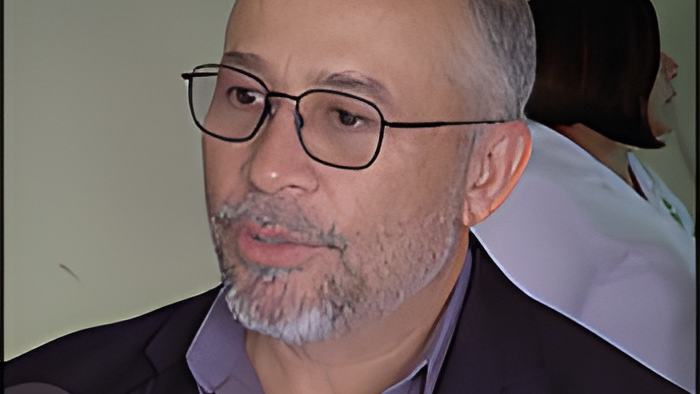
Mike Bracken - IDB Consultant/E-Government Specialist
"You have a tremendous set of ingredients here, which is unusual. First, you have pretty much universal broadband to the home. You have fiber to the home, which, which is not the case in most countries. You have political alignment, good political leadership, with the focus, as you've seen here, the Deputy Prime Minister is here. We're meeting the Prime Minister tomorrow. You have got a good mature set of public services in the first place. You've got a committed set of public servants. You have a relatively simple organisation structure to deal with, and you've got a young demographic. You'd be surprised at how many countries don't have all those ingredients. What else do you need? I think you need to think about service design because many of your government departments are only talking as a department, rather than as the whole of government, and many of the services that you have aren't delivered elegantly online. Most governments talk to their users, and make users understand how the government is set up, so, the Ministry of This, the Ministry of That, the Agency of That, the Agency of This. Users don't really care. They just want to get their form. They want to get their information, use it, and move on with their lives."
Reporter
"We hear folks like you, who are in the public service, who are very much enthused by pushing this particular forward. How receptive is the rest of the public service?"
Mike Singh
"Well, I think, based on the response today- if you notice, we have a full room, and these are all senior people. I think the enthusiasm is growing. I don't think it's at the level I want it to be as yet. But I think now I'm hearing people speak the language about digital transformation. They're speaking the language."Â
Public Digital is responsible for the successful launch of the British Government's web-portal, known as gov.uk. It is internationally recognized as a model of how E-Government should work.