
Over the years, it has become the norm for fire victims to harshly criticize firefighters and their inadequate response to fire emergencies.
Just 10 days ago, the victims of 2 separate fires pointed fingers at the Department, suggesting that if they had managed the blazes better, some of their property swallowed by the fire could have been saved.
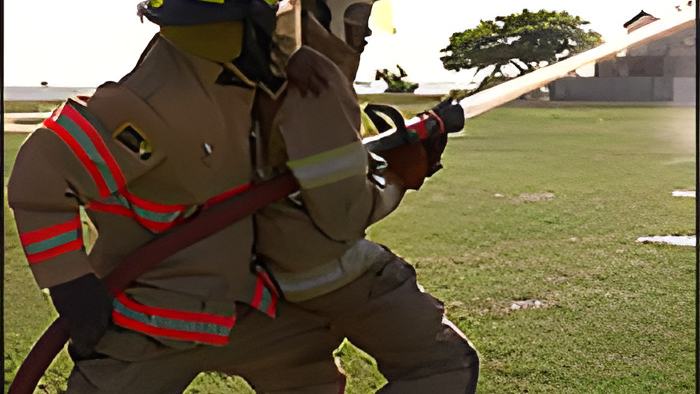
But, what's the fireman's perspective on this? Tonight, we have the second part of our story showing their preparation for that moment when only they stand between a wall of fire and total loss for a property owner:
The public loves to blame the Fire Department for supposedly always arriving with not enough water.
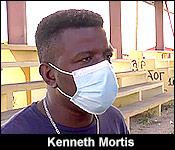
Kenneth Mortis - Station Supervisor
"We are always crying for water. Probably 2 bowsers would be much more effective. Last week, the 4th, we were much more fortunate. We sat right on the bridge of Bird's Isle, whereby we had that sea - or the canal as we so call it Let us look at the Jane Usher Boulevard. Let us look at the Faber's Road area. Let us look at those areas whereby we do not have that open supply of water for us to readily use. Our biggest wish-list wouldn't be more equipment. It probably would be bigger tankers, but until we can acquire a couple million dollars to purchase those tankers, then our next alternate would be bowsers. You have bowsers that hold anything from within 15 hundred to 3 thousand - maybe 4 thousand capacity. We don't need to go to the extreme, just something manageable for us that we can tap into, to then allow us to fight fire effectively, for more than 4 minutes before exhaust our water."
The National Fire Service is also in desperate need of more firefighters.
Kenneth Mortis
"This isn't picking a fight with the powers that be. We operate on what we call a skeleton crew. Our ideal crew would be an 8-man shift rotation. Six men riding 2 trucks, that's 2 drivers per truck. We're down to 4 men. Out of those 4 men, one man is the commanding officer. You're down to 3. So, you have 3 men, 3 firefighters trying to effectively mitigate a fire. We were blessed last week with off-duty firefighters and neighbors who contributed positively. If we could boost up our man-power that would probably give us a sense of release, because we know we would be attacking any size of fire with the ideal amount of manpower that we so desperately need."
But in the meantime, the Department is in an uphill battle to placate the general public.
Kenneth Mortis
"You are always late. You never have any water. All of you burnt down my house. You took an hour. Those are just a few. That is the curse of being a firefighter within the National Fire Service, and that is a curse I'll take to my grave dearly. Until the general populace grasps the reality or the behind-the-scenes of the Fire Department, I am hoping that when that happens, we'll no longer hear, you all are always late. You always come without water. You burnt down my house.' We'll keep doing what we do best and that is responding to emergencies and taking care of that emergency the best we know-how, with what we have."
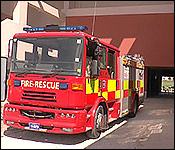
There is one big issue that often causes embarrassment for the responding firefighters. Some of their trucks ought to have been retired many years - if not decades - ago, but there are no immediate replacements. So, through a bit of ingenuity, and elbow grease, their technicians manage to keep them running. The problem is when a truck has some mechanical failure in the middle of a firefighting effort.
Kenneth Mortis
"It's like your own personal vehicle. These trucks will operate for you beautifully. They will give you 2, 3, 4 hours, nonstop. And in the middle of operations, it shuts down. We have our initial firefighting operating procedures that we check in the event that we fail to get water to the scene. Once those firefighting techniques prove not to be the problem, that's when specialists come in. I mean our mechanics. We don't always have the luxury of having our mechanics on-scene at a fire. The only thing that was on our side on that particular day, there were a few hotspots, whereby the truck could have left 13-miles, proceed to the city, refuel from a hydrant, go back, and with the tank of water it had, we could have managed to extinguish those remaining hotspots They don't want to hear that the truck fail. They want us to get that fire out, and get it out quickly."
Mortis also explained that there is a strict assessment of the performance of the firefighters after every emergency.
Kenneth Mortis
"I don't want the general populace to think that They're going back, and they'll just sit down and play dominoes.' Nah. When we mess up, we have to deal with it internally, and then it has its chain of command from there. We're a semi-military body that works out of the public service. So, in other words, we're public servants. They see us as a lazy bunch just sitting around doing nothing. There's more to that than meets the eye. Our firefighters are on a daily training basis. We're located at the Marion Jone Sporting Complex for Belize City. You want to put your firefighters to the test, visit the Marion Jones on any given day, Sunday to Sunday, holiday or no holiday, rain or shine. Put them to the test. I challenge you to challenge them."
Kenneth Mortis tells us that he has had a number of fire victims who have apologized for publicly maligning the National Fire Service. Those apologies usually come several days after they have had time to process their distress.