The High Court of Belize has refused an application by a veteran U.S. attorney, to be admitted to practice law in Belize. Belize, being a member of CARICOM, has a different criteria that one must meet in order to be called to the bar. Despite the prestige, United States institutions do not make a person eligible to practice law in Belize. But in this case, Andrew Birch Reid has certification from the Bahamas.
Jaleeza Roberts found out from Attorney Immanuel Williams why that still wasn't enough:
Andrew Burch Reid applied a provision of the Legal Profession Act that allows foreign-trained lawyers to, but only if they satisfy every requirement set out in the statute. We spoke with one of the representatives of the Bar Association, Attorney at law Immanuel Williams, who detailed how someone of such professional stature was still denied to practice in Belize.
Immanuel Williams, Executive Member of the Bar Association
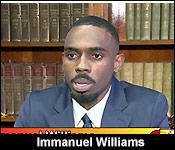
"Under section 6.1.C the applicant must satisfy conjunctively one, that he or she holds a Bachelor's of Law degree or its equivalent from a Commonwealth University, has suitable practical experience from a CARICOM member state, is admitted to practice law in a CARICOM member state and is a person of good character. He did not meet the first three tests."
Jaleeza Roberts -
"Okay and so even though he had I believe it was 47 years but it's almost 50 years of experience. That still did not make him suitable to practice law in Belize. And so can you talk about what that means and what precedence does that set?"
Well, for starters, his practical experience is 47 years in the United States of America.
What the court is looking for and the test under Section 6.1c is experience within
CARICOM relative to our Commonwealth jurisprudence, experience before either the high courts of Belize or any CARICOM member state that would qualify him to practice in Belize.
Jaleeza Roberts -
"And one would say that in a changing world, a changing country, per se, do you think that these requirements, that they're still relevant to the Belizean legal profession or even the global legal profession?"
Immanuel Williams, Executive Member of the Bar Association
"Yes, they are. While there is room for amendments to the provision to make it more flexible for Belizeans, under the CARICOM Community Movement of Factors Act, it created the way, in accordance with the Treaty of Chaguaramas, it created the way for the restrictions to be removed for individuals from the CARICOM to practice law in Belize and to provide their legal services in Belize."
Although he holds a Juris Doctor and a Master of Laws from U.S. universities, the judge ruled that the United States is not part of the Commonwealth, and its universities cannot qualify under Belizean law. Reid also completed the Legal Education Certificate at the Eugene Dupuch Law School in The Bahamas.
But the court ruled that while the LEC is a regional professional qualification, it does not override Belize's domestic admission laws.
Immanuel Williams, Executive Member of the Bar Association
"It was not enough because the LEC is a vocational training certificate. And we distinguish between the vocational training certificate and we distinguish between the vocational training certificate as against the LLB from a Commonwealth University. He needed to have all three requirements under section 6 1 C and in addition the vocational training was not evidence of suitable practical experience within a CARICOM member state. He needed to provide evidence of foreign law or evidence relative to his admission to practice in some CARICOM member state."
In the wake of the judgment, the Bar Association of Belize says it has begun reviewing the decision and examining possible submissions that could be made regarding the current eligibility criteria for admission to practise law. Jaleeza Roberts, 7 News.
We have emailed Reid to find out if he will be appealing the decision, but as of news time tonight we have not gotten a response.