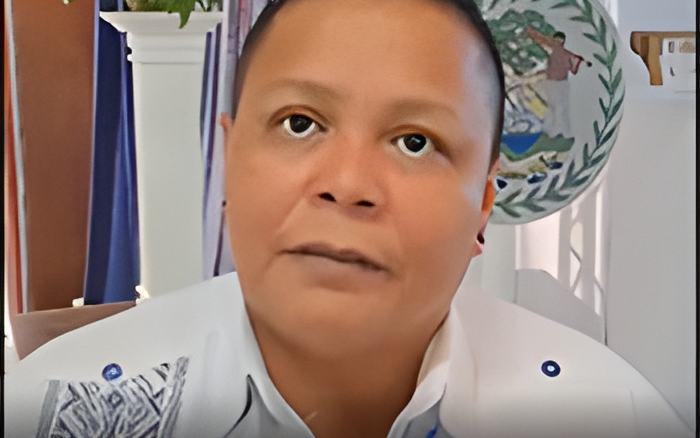

When we spoke to the Minister of Immigration last week Friday about the first transferee that was sent to Belize under the safe third country agreement, he told us our first asylum seeker came in from Haiti. Today a release from the Ministry of Foreign Affairs confirmed that a total of 8 individuals were transferred under Belize's safe third country agreement with the United States. The release states, quote, "Before the transfers took place, national authorities completed all required reviews and clearances through established national and international mechanisms, consistent with Belize's due diligence process."
Hopkins Workshop Trains Women in Sustainable Fish Skin Leather
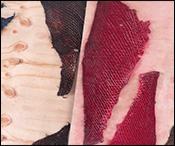
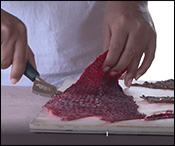
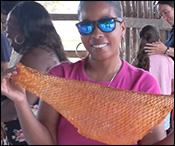
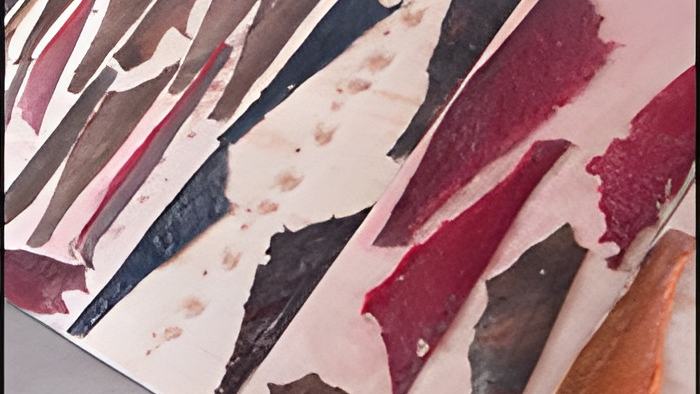
With a focus to introduce eco-friendly alternatives for artisan manufacturing within coastal communities, the Ministry of Agriculture in partnership with the Embassy of Taiwan held a specialized training workshop in Hopkins, teaching women how to cure fish skin for sustainable leather production. The training is being led by a Honduran designer, a representative of the Central American Agricultural Council who works and creates designer wear from the fish skin material. Here are the highlights from the training:
Rodwell Ferguson, Minister of Agriculture, Food Security & New Growth Industries
"Well this is in collaboration with the Taiwanese Embassy I touched base with the Ministry of Agriculture for partnership and they contacted the ladies from the coast of the country. I was wondering why they wanted the ladies from the coast but they say they want to show us how to utilize the fish skin because in Belize we throw it away and in most of Central America the fish skin is used to make products like you see this morning the lady she made a purse with fish skin, many ornaments can be done with fish skin so now we recognize that the fish skin has a value so for today I will work with these ladies to see if they want to form a cooperative to be able to work together as a team, and seek funding for them, this is an income for them as a mother and as a wife. So I will work with them for it to be accomplished."
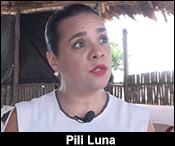
Pili Luna, Fish Skin Artisan
"Okay the process is 100% natural we don't use any chromium, we don't use anything that would be harmful for the ocean or for their hands it is 100% natural and we do it in an artisan way we don't need electricity, we don't need industrialization, and it is something they can do in their communities and it is something they can do without leaving their children unattended and their chores unattended because you only need 3 hours per week to do the process and in 2 weeks you will have the results that you will see later on, the leather that is ready to make any product that you can imagine, wallets, souvenirs, purses, handbags, backpacks, shoes. We even use it for upholstery and we are even selling it in the US and people are making wallpaper with it."
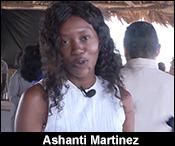
Ashanti Martinez, Ashanti's Crochet Designs
"The first day we had to measure it, we placed it in water with I don't remember the chemical they add in the water but we add it in the water to soak and after that we take it out, we remove the scales and then we placed it to dry, the next day what we did was we dyed it, we dyed it, blue, red, whatever color they had available."
Ashanti Martinez
"I think it will help me build more money, maybe find people who is interested in the bags I make out of the leather like for Hopkins I would want us to build a group and continue the work yeah."
Ministry of Agriculture Hosts Youth Summer Camp in Stann Creek
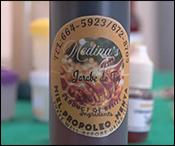
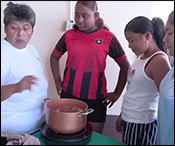
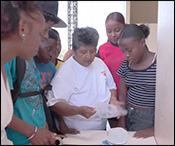
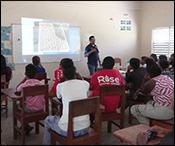
While agriculture demands hard labor, its true rewards lie in the work itself, from tending to livestock and harvesting crops to managing beehives. To instill this appreciation in rural youth, the Ministry of Agriculture launched an immersive youth summer camp designed to educate children and inspire future careers in the sector.
The two-week initiative, hosted at Georgetown Technical High School, brings hands-on agricultural training to students across the Stann Creek District. Here is a look at how the program is shaping young minds:
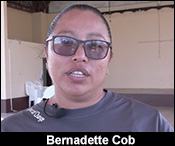
Bernadette Cob, Agriculture Field Officer
"It is actually a two-one-week program within the Stann Creek District, the first week we had it at ANRI, now this second week we are having it here at Georgetown Technical High School. Basically, what we are doing is we are trying to get youths involved in agriculture. When we mean involve them in agriculture, we mean to let them have that concept that agriculture is not just a dirty job, we try to get them inclusive, let them know that the activities we do are very important, especially with agriculture, especially because that is very important, we need it for food security, we need them to be sustainable, so we target them at a young age so they can be able to incorporate whatever activity they are learning in their daily lives, especially during the summer days, right."
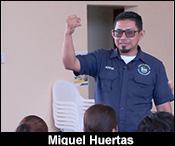
Miguel Huertas, National Beekeeping Coordinator
"When we began asking the questions, we saw one picture and we saw different kinds of bees, including wasp, hornets, so we said there are specific species of bees, who remembers? Raise your hand and then answer the question. One, the native bee, the Africanized bee, solitary bee. Bees are divided into three categories."
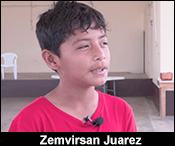
Zemvirsan Juarez, Agriculture Summer Camp Participant
"I came from Monday, and I've been learning a lot since that day."
Reporter
"Tell us about the different topics."
Zemvirsan Juarez
"So on Monday, we were learning about plants, and we went to the greenhouse and planted tomatoes, and then they gave us some plants to take home, and then on Tuesday we did a lot of stuff, and today we were learning about beekeeping, and I learned a lot, that in one bee box there can be up to 80,000 bees."