The House met today for the primary business of introducing the bill for the goods and services tax (GST). And the burning questions were: what will be the percentage and will the GST be charged on water and light bills. Jules Vasquez went to the House to find the answers to those questions.
Jules Vasquez Reporting,
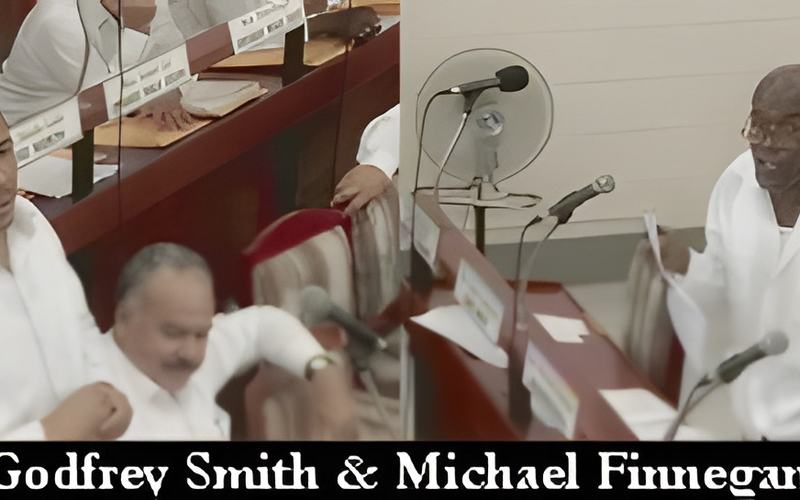
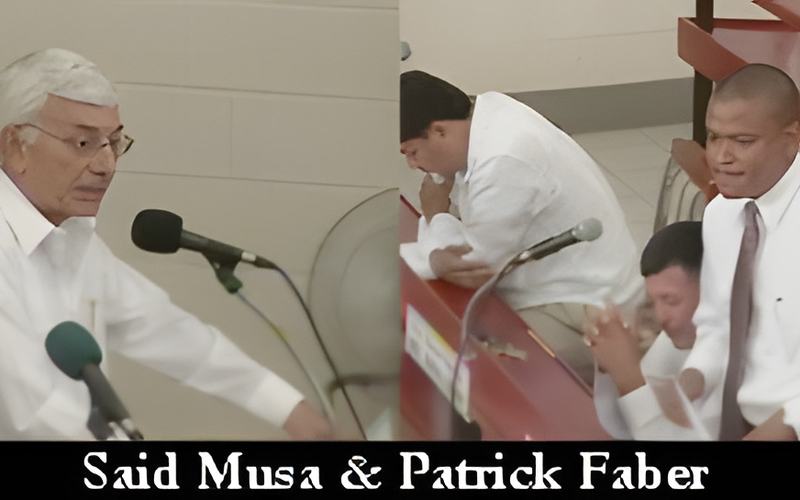
For the first time in a year - the PUP's representatives came over to the National Assembly from their caucus at the administration building as one team, Mark Espat and Cordel Hyde included. Espat and Hyde assumed their new seats on the front bench, Espat tucked in between two former G-7 allies turned adversaries, Godfrey Smith and Jose Coye, and Cordel Hyde between Mike Espat and the wall.
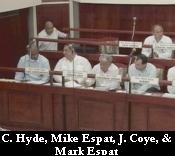
And while hostilities may have prevailed over the testy ten months that intervened, today it was all smiles in the front bench.
So there they were, all the kings horses, in place to support the first reading of the GST bill. But its not the goods and services tax anymore, in a face saving attempt for the much discredited sales tax, it is now the General Sales Tax Bill, GST by another name with an apology for the now deposed sales tax regime.
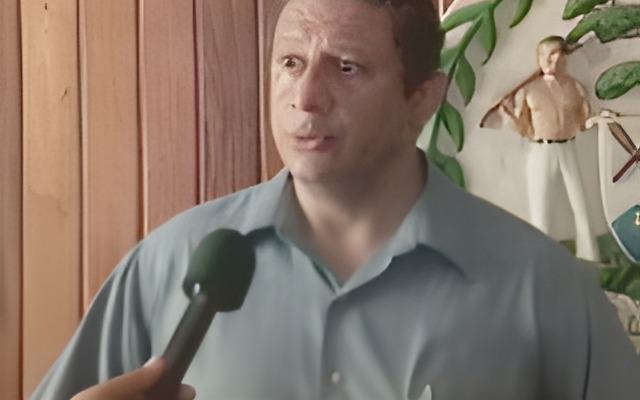
Rt. Hon. Said Musa,
"As tax reform is a dynamic process, we must adopt a pragmatic approach and be prepared to make other necessary adjustments. This Bill is an attempt to improve upon the existing Sales Tax Act by addressing its deficiencies and broadening the overall tax base. The general sales tax, or GST for short, is essentially a consumption tax collected in several stages along the way to the final consumer. Neither goods nor services will be taxed twice since businesses registered for GST will be able to collect the tax and take credit for taxes paid on their inputs or services. This would eliminate any element of tax cascading. In addition the GST will relieve tax paid on capital expenditure and other business expenses by allowing registered businesses to claim a full credit for taxes paid on purchases. The overall cost of doing business in Belize would thus be reduced.
As for the rate of tax, Madam Speaker the Bill provides and proposes for only two rates: a single positive rate of 10% and a zero rate of no percent. In addition to zero rating the bill provides for certain exempted supplies and imports. These include financial services and intermediation services, rents and leases on residential property, public health services on the disabled, education, public transport, and exported services. The many thousands of water and electricity consumers will also be exempted."
The many thousands - he didn't say all, and we asked him really how many thousands.
Jules Vasquez,
The GST tax at 10%, are you excluding light bills or what will be the strategy on the light bills?
Rt. Hon. Said Musa,
"There's no finality on that yet but we are certainly going to exclude at least over 40,000 electricity consumers. We're looking at the possibility of extending that as well."
Jules Vasquez,
The Business Bureau had said that you made a commitment to keep under 10%. The tax is at 10% so have you broken your promise to them?
Rt. Hon. Said Musa,
"No. They requested that, I didn't make any such promise. We discussed that they would prefer, as they call it, a single digit rate but no there was no commitment given by government to keep it single digit. And we believe that taking into account the fact that, as I believe was pointed out in one of your many commentaries on this issue, since we are removing the tax on tax cascading effect of the present law, we believe that 10% would be a reasonable rate, keeping also in mind that the existing sales tax has a dual rate of 9% and 14%."
Jules Vasquez,
The Minister of State in the Ministry of Finance has said it's a rose just by another name, it is the Vat Tax. You are now legislating the VAT tax, the man who won on a campaign against the killa VAT.
Rt. Hon. Said Musa,
"I am not going to spend my time arguing about that issue. As I see it, and you may never agree with me, I see it as strengthening the sales tax mechanism that we have put in place, with certain features of the Value Added system. It was a system that was not, I don't think the country was ready for that. But a 15% VAT was the big problem at the time, let's face it."
Jules Vasquez,
But there were 700 items exempt, there will be only twenty under this.
Rt. Hon. Said Musa,
"But that doesn't matter, 15% affected the poor people no matter how many exemptions there was."
Marion Ali, Love FM
"For all intents and purposes its generally the same structure as it was in 1995 right?"
Rt. Hon. Said Musa,
"Structurally, technically I suppose you could say that yes. But its really also learning from the experience of the sales tax and how that has operated. The sales tax, by and large, has been a success but it has some very deleterious effects, particularly on the productive sector and this is what has driven us to review our position and to change."
Jules Vasquez,
Why did you all change the name from the goods and services tax to the general sales tax?
Rt. Hon. Said Musa,
"Because it's strengthening the sales tax, the present Sales Tax Act, it's strengthening that. It's a progression."
Jules Vasquez,
But didn't the technicians say its using the existing VAT legislation, expertise, and knowledge?
Rt. Hon. Said Musa,
"It's a progression. We've gone from the old VAT to Sales Tax and now it will be the GST, the General Sales Tax."
Jules Vasquez,
The administration of it is like VAT tax, whatever name you want to call it. Isn't that an indication of weak leadership?
Rt. Hon. Said Musa,
"I say when circumstances change, I change. What do you do?"
And with that mercurial closing more perplexing than profound, it's left to be seen if the tax paying public will also embrace the changing circumstance of their tax regime.
The GST bill was presented for only it's first reading today. A period of consultations and a public awareness will follow before it becomes law. The new tax is scheduled to go into effect at the start of the next fiscal year.