
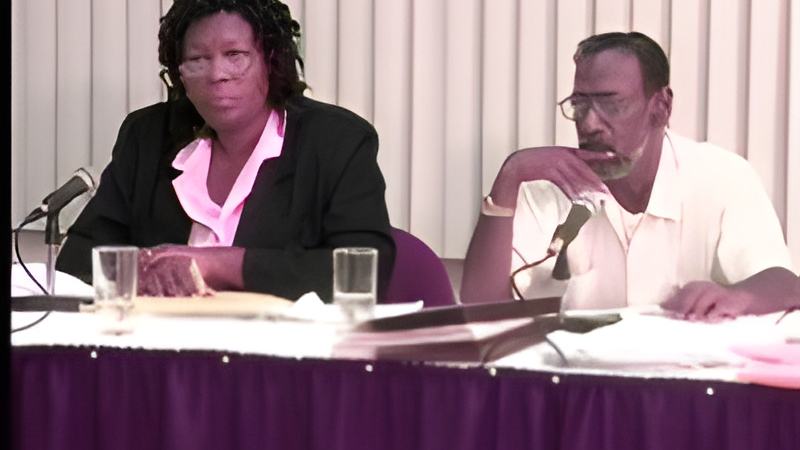
The Commission of Inquiry examining the operations of the DFC between 1999 and 2004 opened public sessions at the BIM Office in Belize City today. In an ideal world, we'd be able to just cut to the chase and see former Chairman Glenn Godfrey, and present and previous Ministers of Finance Ralph Fonseca and Said Musa all on one day of truth and reckoning. But that's not quite how it works; the case will be built incrementally and today DFC commissioners David Price, Merlene Bailey Martinez and Herbert Lord started by laying the foundation with three present and former DFC employees who were involved in the day to day operations of the DFC when the place went from a development bank to a low interest lender for big money friends of the government.
Alfonso Noble Reporting,
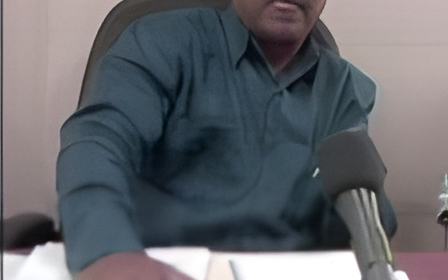
Chairman David Price opened the public hearings saying that August first is an auspicious beginning.
David Price, Chairman of Commission
"August 1st in the former British Empire marked the abolition of slavery as a legal institution. Today is observed as Emancipation Day throughout much of the English speaking Caribbean. It is an auspicious day on which to begin these public hearings."
First to take the oath administered by Commissioner Herbert Lord was Eloisa Phillips, former secretary to the board of directors. She sat in and she sat in on and "minute-ed" every board meeting between 1999 and 2004, the period which created the controversy that forced the appointment of this commission. Chairman Price noted the minutes she kept were too neat, too much without dissent.
David Price,
"We are at a loss as to what type of discussion took place at these board meetings. The impression one gets is that all of the decisions were always unanimous, that there was never any dissenting vote."
Merlene Bailey-Martinez, Commissioner
"Is it because there was no dissent or do you not recall?"
Eloisa Phillips, Fmr. Secretary to DFC Board
"No I don't recall any dissent, no dissent."
Merlene Bailey-Martinez,
"No dissent?"
Eloisa Phillips,
"No dissent."
There was particularly no dissent when resolutions were approved by circulation, meaning that loan approvals were circulated and then approved over the phone.
The Corporate Secretary said that this was done in times of urgent need.
David Price,
"On the 25tht of January, a loan of some $300,000 was approved by circulation. 1999, 25th of January 1999. Two days later, the 27th, the Board ratified it. It is kind of hard for me to understand what urgency means when two days later…was somebody on dying and required it. That $300,000 couldn't wait two more days? What is the nature of the loan? This was for a tourism loan. You wouldn't recall that particular loan?
Eloisa Phillips,
"No I wouldn't."
There were also resolutions passed by circulation and retroactive resolutions for a $20 million loan from Central Bank, a million dollar loan from Social Security and another loan for $14 million.
David Price,
"Not only were there resolutions passed by circulations but there were also some resolutions that had retroactive effect. Something took place last year but it had not been authorized by the Board and then this year a resolution is passed to give retroactive approval. When there were retroactive resolutions, would it be a fair conclusion to say then that whatever transpired, was improper if there was not a board resolution?"
Eloisa Phillips,
"Well I would say that the related party would not have required it and since they did not require it then it was just an oversight on our part."
David Price,
"But the DFC Act required it."
Eloisa Phillips,
"Well the DFC Act it is general, it does not specify."
But what her minutes did specify were loans for what's called "working capital" to well-connected friends of the government on nothing more than a few words of recommendation.
David Price,
"Late 2003/2004, your records, Board records that is, recorded several loans to Novelo's Limited, James Jan Mohammad, and Arnaldo Pena. These loans were for 'working capital' and secured by promissory notes. A couple of questions with respect to those: what papers were tabled at the Board in support of those loans? Did these borrowers apply for these loans?"
Eloisa Phillips,
"Not that I recall. I don't know if they applied."
David Price,
"So why were they given these loans?"
Eloisa Phillips,
"These were papers that were given to the Board from our accounting department requesting such a loan for Novelo's for working capital."
David Price,
"Upon the recommendations by management, the Board approved the following loans: David Novelo, $1 million; Arnaldo Pena, $130,000; James Jan Mohammed, $400,000. 'These loans will assist clients with working capital for their existing operations. Management confirms that facilities being approved were in conformity with the existing obligations and agreements. The Board approved the above mentioned loans on the condition that a special report on these cases be submitted on a quarterly basis.' This recurred on a quarterly basis, these loans, loans of a similar nature, were approved."
Merlene Bailey-Martinez,
"And sometimes on a monthly basis. In the case of Mr. Pena we actually
have fourteen such instances. What was actually tabled?"
Eloisa Phillips,
"As I am telling you, there was no paper tabled. I don't recall any paper being tabled."
Merlene Bailey-Martinez,
"If nothing was tabled on these loans, how could these directors make a decision on them? What would have been the basis, what would have been the basis of discussion for these that you were aware of? What was discussed, what was on the table that they would have looked at to approve these loans?"
Eloisa Phillips,
"As I said, there was nothing tabled."
David Price,
"Can you as the corporate secretary say that these loans that were approved for working capital was in fact used for working capital.""
Eloisa Phillips,
"No I can't say."
David Price,
"Can anybody at the board say that?"
Eloisa Phillips,
"I don't know."
David Price,
"Could it have been that these loans were approved to service other loans held by these borrowers so that the securitization pool was not contaminated?"
Merlene Bailey-Martinez,
"Did that discussion take place Ms. Phillips?"
Eloisa Phillips,
"No."
Merlene Bailey-Martinez,
"That discussion never took place?'
Eloisa Phillips,
"No."
David Price,
"During the period Mrs. Phillips, would you say that there was a certain level of impropriety at the DFC?"
Eloisa Phillips,
"No, I can't say that. I can't say that, no."
David Price,
"So you think that everything was quite in order at the DFC during that period?"
Eloisa Phillips,
"There were some things in between that really struck you, for example the securitization which I don't understand."
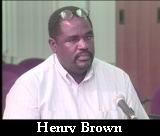
And what former loans recovery officer Henry Brown didn't understand was why the management and the board deemed some bad debtors as untouchables.
Henry Brown, Fmr. Loan Recovery Officer
"There were several non-performing loans in my time, that there was nothing being done to it. These persons had been given a certain amount, some huge sums but no action was taken against them."
David Price,
"What percentage of the loans that you should have followed through were not following through because they were deemed to be sensitive loans?"
Henry Brown,
"I would dare say probably over 50% of it was sensitive loans."
David Price,
"If I use this definition here, there are three things defined here as sensitive: economic circumstances, political circumstances, or loans to government entities. Which one of those three would account for most of the non-follow-up?"
Henry Brown,
"I would say political."
David Price,
"So could it be inferred then that part of the reason for DFC's poor performance was as a result of a large number of politically sensitive loans?"
Henry Brown,
"Yeah I would say so."
And many of them were given further loans, as in the case of Pena, Novelo and Jan Mohammed.
Henry Brown,
"We saw some big loans coming in and then some of it was for refinancing, some of it was for all kinds of stuff which, as far as I know, DFC was not there z
for that. DFC was there for the development of our country. If you're looking at loans that maybe the bank was foreclosing on and they gave these people loans or these people just did not pay their loans and so DFC is bailing them out of a situation then hey, something is wrong there. It is like putting good money in a bad situation. That is just disastrous. No good businessperson who wants to succeed would do that. You wouldn't take good money and put on a bad loan. It doesn't make any sense."
A series of bad decisions, but he says he was powerless to prevent them.
Henry Brown,
"In my capacity as loans recovery officer, you don't question the board, you don't question the credit committee. They are the final authority and they give the instructions and then you carry out the instructions. I don't think in any situation you can tell the boss, 'boss look, we will run the show in this kind of way.' You can't do that."
And he says the workers who had built the DFC through sacrifice - had to just watch it waste away.
Henry Brown,
"At one point in time we had been asked to have a salary freeze because of the condition that our funds was in and we made that sacrifice. In fact we had an agreement with management and for a period of time we sacrificed our increments and all of this to bring DFC to what it was. And then later on with changes and we see this loans going out, a lot of our staff became very frustrated because they said, and we talked about it at different levels and at different forums, that we have worked so hard, we have made so much sacrifices, and then to see our loans going out like this in big trenches and that was very very disappointing."
Also testifying today was Cherry Berry, records keeper. The hearings continue on Thursday and, as they were today, they will be aired live on Channel 7 starting at 9:30.