

Last night we told you a little about the Aquaculture Development Bill and the lavish concessions that it gives to this important industry. The bill is generating controversy in some sectors because of those concessions and the fact that the bill essentially parcels out to private interests what are and have always been public sector responsibilities to create, essentially, a self-regulating industry. We looked inside the bill, and to some extent, the industry, to see what the aquaculture bill proposes.
Jules Vasquez Reporting,
Farming ponds like these ones in Ladyville now dot the landscape in all areas of the country. These vast acreages of ponds represent an investment of over $300 million. They provide the platform for what has emerged as one of Belize's
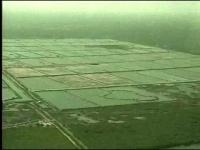
leading foreign exchange earners. Shrimp farming accounted for $80 million in exports last year
But there are no sure things, and globally aquaculture enterprises are prone to price wars, disease and general uncertainties. Any of those could be devastating for Belize, whose aquaculture industry, is like grain of sand in a fiercely competitive and productive global market.
And the fledgling nature of this industry and those uncertainties are what have led to the creation of the Aquaculture Development Bill of 2006 - which says it is to provide for the sustainable development of the aquaculture industry. For that purpose, it's setting up the Belize Aquaculture Authority - an autonomous body that is privately controlled but with public regulatory functions
The authority will have broad ranging, far reaching and sweeping powers of regulation, licensing and self policing powers that would traditionally rest with the BAHA, the Department of Environment and the Fisheries Department.
Case in point is 6 - 6 of the bill, which says that the authority will identify its own guidelines to control effluent discharges from aquaculture facilities. That regulatory function is usually the job of an independent Department of the Environment.
And if that didn't make it clear, 7. - 2 - b states that the Authority - not any ministry or any department like Fisheries or BAHA, but the Authority will
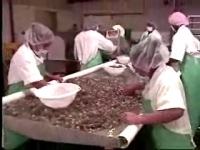
formulate aquaculture policies, guidelines and regulatory measures. The authority also licenses. Section 35 - 1 makes it clear that no one can operate an aquaculture facility in Belize unless that person is a member of the association.
And fittingly because it does the work of public authorities, the bill calls for this private authority to be treated like one. Section 18 - 1 says the board is entitled to the same protection as a public authority. And the Ministry of Finance also needs to get out of the way, because 8 - 2 - a makes it clear that the authority may establish fees and charges for the issuance of licenses or permits. And just like a public authority, this authority will get its revenues from section 29-a makes it clear, that revenues will be allocated from the consolidated fund.
And if this publicly vested, private Authority makes a loan, and for some reason defaults, there's a government guarantee, and section 32-4 makes it clear that payment for the Authority's bad loan must come from the consolidated fund.
And while much is asked of the consolidated fund, little is given licensed operators will be owners of what's called export business certificates, similar to EPZ status, meaning that they won't be liable to pay any taxes or duties. It says owners shall be exempt from all taxes, and duties levied under the income and business tax act, the environment tax act the general sales tax act, the customs and excise duties act, the customs regulations act, the exchange control regulation act. The trade licensing act, the supplies control act, the land tax act, and the town property tax act. And, get this, any form of withholding tax, sales tax, capital gains tax or any new corporate tax including exemption, in perpetuity from taxes on dividends. And not only does it not pay land tax or town property tax, and sale of land within the designated area will also be exempt from stamp duty. No taxes and no duty on vehicles, office furniture, spare parts, raw materials, fuel. Not only that it's all duty free, but all those things, vehicles included must be exempt from all licensing requirements.
And while imports don't even have to be licensed all exports shall be exempt from customs duties. And if Customs wants to inspect anything it can only do so in what's known as the designated area, which is designated by the Authority. And as for foreign exchange, the bill states that exchange control regulations shall not apply to an aquaculture exporting business and no regulations, restrictions or prohibitions regarding the sale of purchase of foreign currency shall apply to such business. And not only is it exempt from currency controls, the Labour Department must give work permits free the bill says permits shall be granted by the Minister of Labour without payments of any charges or fees.
By divesting government of oversight and regulatory powers, it gives this industry a broad range of control over domestic instruments and its own destiny. The question now is, does it give away too much…?
On Monday when the bill went to a House committee for review, the position of the Shrimp Growers Association was that the concessions are not overly generous. They argue that it puts shrimp growers back where they were in 2004 when government amended the EPZ legislation in 2004 to exclude aquaculture operations. They pointed out that apart from investing $300 million, the shrimp farms employ over 2,000 persons and have a wage bill of $20 million. They reported that in the past three years, four shrimp farms have closed and nova, the largest aquaculture operation in Belize is reported to be under serious financial pressures.
All this and a groundswell of opposition to the bill will be taken into consideration before it next goes to the House of Representatives for second and third readings. In the intervening time, well connected special interests will, we are well advised, factor into Cabinet's deliberations.
In related news, one of the biggest players in the shrimp farming business, Barry Bowen has made a major investment in a stand-alone diesel generator to run his shrimp farm, Belize Aquaculture in the Placencia area. But this isn't your old trusty standby, it's a monster - and he's playing with power. It's reported to be a 23.6 megawatt stainless steel clad plant manufactured by Wärtsilä Corporation. For scale, BEL's Mollejon only produces 25 megawatts, and mile 8, only 22. According to a release from Wartsila, the contract is valued at approximately US$19 million. It reports that, "there is also a future possibility that the plant may be connected to the Belize national grid to sell power to the grid."