
Yesterday, we showed you the response that Gregory Ch'oc, the Commissioner of Indigenous Peoples Affairs, and his Minister, Dolores Balderamos-Garcia made to the Maya Leader Alliance and Toledo Alcalde's Association. They hosted an extended press conference to answer questions raised about the controversial FPIC protocol that has been filed with the Caribbean Court of Justice as part of the ongoing implementation of the 2015 Judgement on Maya Communal Land Rights.
Last Friday, prominent members of the MLA and TAA hosted a press conference to complain about the FPIC, and the manner in which the Government is implementing the judgement. They then came under attack from another group of Maya organizations, who suggest that they are unfairly claiming to represent all 41 Maya villages of Southern Belize.
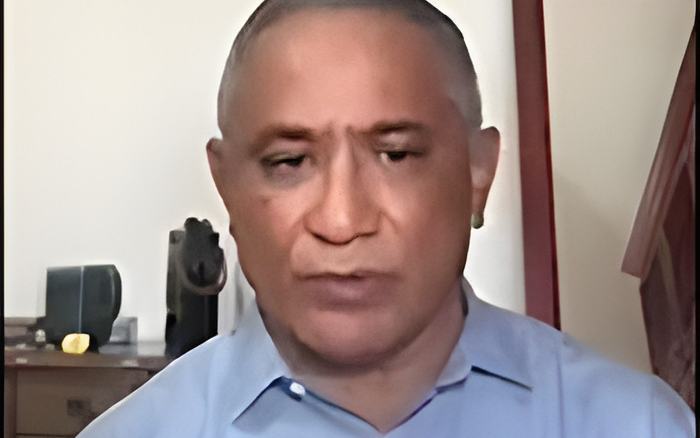
Well, Greg Ch'oc, who came to public prominence as a pioneering advocate for Maya land rights, was also a part of the MLA in its early years. Yesterday, he basically insisted that the MLA of today is a house divided. Here's that brief history lesson he gave the press to make that point:
Greg Ch'oc - Commissioner, Indigenous Peoples Affairs
"An association is not the system of governance of the Maya People. We have to be clear on that. The central principle of Maya Customary Law state that the villagers in a village are the only authority to make decisions on behalf of that village, on any matter that may affect them. So, the villagers are the Supreme authority. The villagers of the villages of Toledo have not taken the decision for the TAA to be the Alcalde System, not that it cannot happen. If the villagers are the authoritative body, then only the villagers can decide whether the TAA becomes the system of governance for the Maya People. The Maya Leaders Alliance, an entity that I established, is an umbrella organization. Its membership is comprised of Mayan organizations working with communities, the villages of the Toledo District, but they had to have obtained the consent of the communities. I led the effort. The MLA did not sit in a room and negotiate with the Government of Belize. We, sentence by sentence, paragraph by paragraph, explained the 10 points of agreement to the Maya Communities. It's clear that there is intractable tension in the membership. This is affecting the implementation process."
As you heard, the Commissioner of Indigenous Peoples Affairs is insisting that the infighting and jostling for prominence that taking place in the present-day MLA is affecting the implementation of the CCJ judgement, still languishing 6 years after it was delivered. He explained why:
Greg Ch'oc - Commissioner, Indigenous Peoples Affairs
"There is Claim 366 which is the 2nd Maya Land Rights case that is now the CCJ Consent Order. That second case was appealed up to the Caribbean Court of Justice. In that document, it explains who the MLA is comprised of, the organizations, and what they do. Likewise, it explained the Alcalde Association. So, the record is before the court who the appellants are, under the MLA. It is the Kechki Council of Belize, the Toledo Alcaldes Association, the Toledo Maya Women's Council, the Julian Cho Society - SATIIM was not there, for some reason. Tumulkin Center of Learning, perhaps erroneously, was put in there. But, these Mayan organizations came under the umbrella of the Maya Leaders Alliance. So, the Government of Belize is legally bound to consult with them. It's not a choice. We can't select who we should consult. They fall under the umbrella of the Maya Leaders Alliance. We have consulted with them, extensively, respectfully, and equally because we believe that all of them have the same standing. All these - these are just some of the documents of the exchange of proposal, exchange of the revision of the FPIC Protocol, objections, my response to those objections, the face-to-face meeting transcript. The disagreement and the lack of consensus among the membership proved difficult to overcome. At the end of June, recognizing that the impasse that existed would not result in a revised protocol, the Office of the Commissioner and the Attorney General's Ministry took all these documents that we got, all the revised versions, and consolidated them into one document."
But despite what he characterizes as a frustration of the implementation process, he told us that his office and the Briceno government has an ambitious goal of submitting legislation by 2023:
Greg Ch'oc - Commissioner, Indigenous Peoples Affairs
"Today, we are to file the revised roadmap. We have submitted the revised roadmap to the Mayan Organizations. I'm still waiting for a response from them. Whether they have objections, whether they want to modify, revise, but as the minister says, they have the right to approach the court to say we need time. That roadmap put in place an ambitious agenda that April of 2023, legislation should be placed before Parliament, before the Legislature."