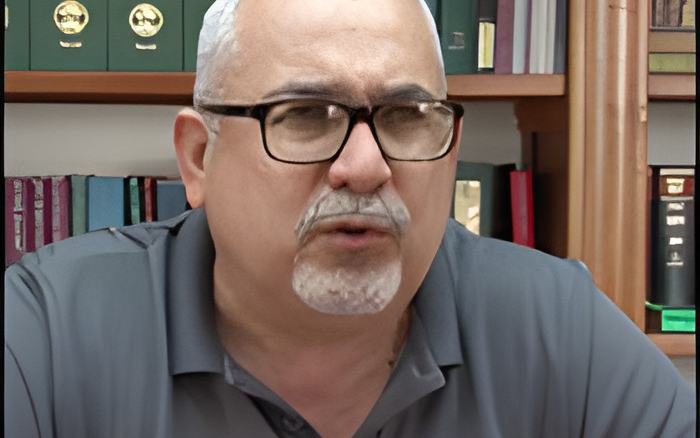
Chairman Marshalleck has conceded that the Commission - by its terms of reference - was not allowed, without prior notice and a full rebuttal, to utilize several pieces of evidence which helped to shape their conclusions about what happened to Former Deputy Prime Minister Hugo Patt's former Ministerial ride.
But, he insists that since the information came to him, he couldn't just ignore it. Here's how he justified its use in the hearings and the Commission's review of the sale of the Toyota Tacoma:
E. Andrew Marshalleck, SC - Chairman, Commission of Inquiry
"That the missteps occurred, we've acknowledged it. The impact of those missteps, we think, is being greatly exaggerated. With regard to Mr. Patt, the complaint was - which we accept - that the report from the Ministry of Natural Resources, the Ministry of Natural Resources, as into Mr. Lee, was not shared with Mr. Patt before we questioned him. We had received a report the day before he was scheduled to appear, and after he had been summoned. So, the report wasn't even available at the time he was summoned. It came in the interim, so it was the flow. What I did was take the report that morning and put the contents of it to him during the questioning. They say that was unfair because he should have had it before so he could prepare himself. All right, we've accepted that it was unfair to question him on the report in the way that we did. Does that make the report any more or any less true? Is it not the case that all those lands identified in it were in fact, sold under the authority of the minister at the time to Mr. Lee? There has been no suggestion otherwise. Those lands have been lost to the Belizean people. There's also a complaint that the police report the criminal record of Mr. Herrera was not shared before comments were included in the report about it. Fine, ok, [it] wasn't shared. Does that make the content of the criminal report any more or any less true? It can hardly be disputed that what it says is so."
And although the claimants are putting a laser focus on every misstep that the Commission made, the Chairman is insisting that the general public doesn't lose sight of why the Commission of Inquiry was appointed in the first place. They were tasked to look into the sale of 112 government vehicles that were sold at an under-value, which cause financial losses to the public purse. Here are his comments on that issue:
E. Andrew Marshalleck, SC - Chairman, Commission of Inquiry
"When you just flip through them, just look at what happened, no assessment, no judging of anybody. None of that matters. A single one of them in none of them, Was there any competitive bid for any vehicle. The conclusion for that is obvious. One, there was only a decision to sell to one person. There was no choice so there was no competition. There was no transparent way of determining who gets to buy. And two, there was no transparent way of determining how the price for it was fixed because there was no competition for it. And then you have reliance in a handful of cases, well, five or six over 212 vehicles, customs valuations on which some price was fixed on the basis of. And when the customs man comes, he tells you, that valuation is not market value. So when you just look at that without anything else that is designed to secure value for the public purse, that needs to be addressed. So, on the face of it from we started, it was clear that there was something very wrong with it, regardless of who operated it or when. No personalities, divorce personalities, and officers completely. The whole process wasn't designed to procure the result that we're purportedly seeking from it."
And while the taxpayers may end up saddled with a judgment debt from the awards of damages to the two claimants, Marshalleck is hoping to convince the government to implement the Commission's recommendations for reforms at the Vehicle Care Unit. Here's how we challenged him on whether or not the public will actually get value for money:
E. Andrew Marshalleck, SC - Chairman, Commission of Inquiry
"The point I come back to is that, let's not lose sight of what it is we were seeking to address. So in terms of the overall effect, the comments that we remove don't really change anything at the end of the day. At the core of the Commission's report were its recommendations for reform of the procurement processes. And its recommendations for the regular audit of those processes. So without the kind of mismanagement that we saw in relation to the conduct of vehicle sales, didn't repeat itself. In the long run, if these recommendations are taken on board, even to a limited extent, the savings to the Belizean public will more than offset any of the costs that you're concerned about, the commission's activities incurred. So you notice, that's all premised on, and if the recommendations are adopted. If they're not adopted, then the whole thing was for naught and is a deadweight loss to the taxpayer. The core of the report has to do with those reforms, and we're doing our best to preserve that core for the benefit of the people going forward. And we will encourage - well, we're hopeful that that will stand and that there will be pressure on the authorities to effect towards those reforms."
Daniel Ortiz
"Can't you, as the chairman of the commission. Seek to - if not extract - convince the Prime Minister, the person who appointed you to at least, implement those recommendations to protect the vehicle fleet."
E. Andrew Marshalleck, SC
"And that's what we've done. The object of the whole thing is to preserve the core of the report having to do with the reforms. I think if it's preserved, then we can actually manage to achieve some of those reforms. Those costs that you are concerned about will eventually be more than offset."