

At the top of the news, you heard how the Prime Minister insisted that private company information, which is managed by the Belize Companies and Corporate Affairs Registry, will have to remain private and closed to the public.
It represents a major shift and one that the independent media has rejected. So, on last Friday night, when the government celebrated the launch of this new Online Business Registry System, the media was right there to get answers from the key players who oversaw this change. Daniel Ortiz has that story:
The Financial Services Commission, the staff of the Belize Companies Corporate Affairs Registry - and indeed everyone - who worked on the Online Business Registry System have legitimate reasons to feel proud of this accomplishment.
Another digital lane to government services has been opened for ease of use and comfort to Belizean company owners and entrepreneurs - one more step in the advancement of the overall goal of E-government.
Completing this task at your desk, on your computer - at your own leisurely pace and free time - removes "ease of doing business" as a possible excuse that delinquent business owners can offer for failing to file their annual returns - or failing to register their businesses in the first place.
Santiago Gonzalez - Deputy Registrar, Belize Companies and Corporate Affairs Registry
"When we started this re-registration process, we found out that a lot of the companies here in Belize were not updated. I mean, we saw people filing from 2009. So, even before the system came on board, this whole project helped. It helped Belize."
Their victory lap for progress would have been complete if not for one big problem.
Since these government officials are handling information belonging to corporate and private citizens who are registered, they must guarantee the constitutional right to privacy.

In seeking to do just that, the FSC and the BCCAR have crossed a line with those who insist that transparency is a fundamental requirement of democracy:
Alindy Marisol Amaya - News Director, KREM News

"I am completely opposed to this new way of doing things. I think it is completely anti-democratic."
Shasta Wade - News Director, Plus TV News
"I personally think that this new change is really, indeed, counterproductive to the freedom of information. It makes it very much difficult to research."
Jules Vasquez - News Director, 7News
"It is so deliberately obfuscatory and anti-transparency."
Aldo Reyes - Member, Bar Association of Belize
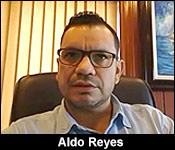
"My concerns were the same as yours. Why are all these registers now closed, and we can't access the information?"
Those believers in transparency can even be found on the two sides of this line in the sand on the protection of privacy.
File: December 9, 2022
Kareem Musa, Minister of Home Affairs
"I don't think that should be the intention to deprive anyone of access. Even in the court system, it's always asked. Who are the true, beneficial owners of these companies?"

That transparency dispute between BCCAR and the press also allowed the public disclosure of another major challenge that the registry managers were having. They also made this change to plug leaks in their old paper system. According to the Deputy Registrar, they had anecdotal evidence that the previously free access to the registry was allowing bad actors to abuse private company records.
Santiago Gonzalez
"I've sat with people, and they were like, 'We weren't aware that people come in here and open this file, and your passport, social security - everything is open. Everyone takes a picture of it and sends it to whoever. Do you think that's right? Personally, I don't. We have a lot of investors out there. And if they know that you're circulating a picture of their passport, a picture of whatever information they have there, they can start looking at it differently."
"We even found out that they were selling this information. People go in there, and I could tell you because I saw it. We had somebody in there - I mean - from like 8 to 5, and I'm like, But, what is he doing?"
"We have seen corporate theft that people are not aware [of]. It's not like before that anyone can go and pick up a file - what do you want? [They] look through it and give you what you want. In fact, there are cases that I saw that they removed files. Not everyone one of my staff could actually review the information. And Not even I, I can't go in and actually remove anything from that system. So, it's what you, the owner of that information, or the agent, whatever you file. That is what is in there."
So, to the elephant in the room... Why are some journalists up in arms about this? Well, in prioritizing privacy, the registry managers have made the press' jobs much harder.
Civilian and law enforcement investigators have long realized that corporate misdeeds, and illegal acts are sometimes behind shell companies.
Reviewing company ownership, and matching that information to a corresponding government contract award, is usually a good starting point in investigations of nepotism, unjust enrichment, and corruption in public life. Companies research often leads to a long and winding trail where companies and beneficial owners suddenly change without explanation.
Shasta Wade - News Director, Plus TV News
"I've spent several hours at the registry, and it was always a free process. You just need to give the name of the company that you want to research. You find the number, they get the files for you, and you go through it. If you get stuck and you find the next company, you go to that one. You can continue your research for many hours."
In fact, Prime Minister Briceno was so certain that his Opposition Party had found a trail of corruption relating to one company that they went public with it eight days before the 2020 General Elections.
He even risked taking the hit from a defamation lawsuit to make a major public disclosure in a forum where he wasn't protected by parliamentary privilege.
File: November 3rd, 2020
John Briceno - Leader of Opposition
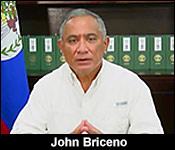
"Two weeks after the Prime Minister said he did not know who owned the company, our sources in Saint Lucia informed us that on the Ninth of October 2020 - that is, last month - Good Lee presented articles of dissolution to the Registrar to begin to dissolve the company. All that is publicly known is that Good Lee is a company formed in Saint Lucia on the third of December 2009. We checked and found out that Good Lee, Sheffield, and McCroy are not Belizean companies. They are offshore companies registered in Dominica. This means their ownership is secret and is not available to the public. Why the cover-up? Why the secrecy?"
Well, peculiarities like that will have to go down as urban legends because this registry change makes it so that only law enforcement agencies can compel the registry keepers to hand over the type of information that the press and the public previously had open access to.
The Finance Minister of State, Chris Coye - who is an attorney - insists that this is how things must be in the balance of the public right to disclosure vs. the right to privacy.
Chris Coye - Minister of State, Ministry of Finance
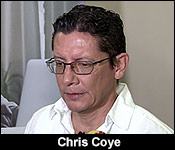
"You have to balance different legal interests. There is - maybe people might not recall or may not remember - but there is a constitutionally entrenched and protected right to privacy. So, you have to have a balancing of those rights and those interests, lest you will end up having that law challenged for being unconstitutional. Where do you end up, then?"
Of course, we got a second legal opinion, and that answer was consistent with Coye's views. Privacy has to supersede public disclosure in the hierarchy of rights.
File: December 9, 2022
Aldo Reyes - Member, Bar Association of Belize
"The ECJ passed a ruling that registries - you cannot force registries to be open to the public because your position - and I should say our position - ought to be counterbalanced with people's fundamental rights to privacy and protection of data. So, it is a balance of rights, really."
So, the press will have to settle for a concession from the registry keepers - a small victory, if you will - that maybe some type of limited access to company details could be allowed to civilian investigators who can prove that they will behave responsibly with that data.
Daniel Ortiz
"But, sir, you're lumping two separate groups together: a legitimate investigation that maybe a journalist may intend to do and mischief-makers. Those two aren't one and the same."
Santiago Gonzalez
"Again, that's what I am saying. We have to rethink it. Now, how you're explaining: mischief-makers [vs] the press. We have to rethink, you know, but a procedure so that we can move away from the ones that are doing mischief and, actually, the press."
Daniel Ortiz
"So, if I understand you correctly, you all are trying to plug leaks, but you could find common cause with legitimate investigations."
Santiago Gonzalez
"Yes, exactly. We have to look at it, and if it's an investigation, we have the right to say, 'Hey, you know what? That person needs it." And we give the information."
Daniel Ortiz
"So, there is a carve-out for the press to get access to this information."

Mindaugas Glodas - CEO, NRD Companies/International Consultant
"Very often, yes."
Jules Vasquez
"In some territories."
Mindaugas Glodas
"Yes."