
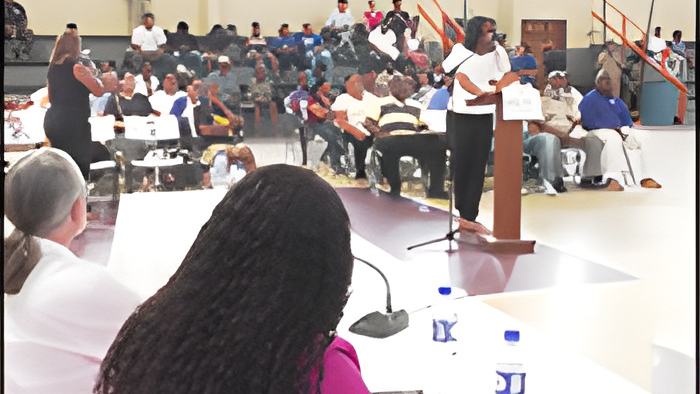
The Minister of Home Affairs and the Attorney General are making media rounds to win public support for the proposed 13th amendment to the constitution. This comes after the first round of consultations, which was held last Wednesday, during which many voiced their concerns and opposition to the bill. Opponents say that this amendment will strip persons in specific areas of their rights under the constitution by allowing SOE's to be enacted much more easily.
But this morning on Sunup on 7, Minister Kareem Musa said it's the opposite. He contends that the 13th amendment is supposed to further regulate SOE's. He also explained one of the recommendations that they will be implementing.
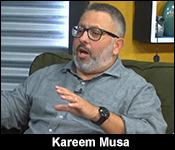
Kareem Musa, Minister of Home Affairs:
"At the first consultation, I think once you dig beneath the surface because there's a lot of noise and there's a lot of misinformation being put forward by unfortunately attorneys and so it is important for the AG and myself to clear up some of these pieces of information that are being inserted out there in public. But when you cut beneath that surface, there are a lot of good suggestions coming out of the public. This one unfortunately did not come from someone who approached the mic but rather on the margins of our first consultation and the individual said, why not have, within this one month period, because there is this fear being put out there that suppose there's no reasonable suspicion, Courtney, the police have no reasonable suspicion to detain Courtney but they did. Why not put in there a mechanism to allow for an emergency application to be made to the high court to determine whether or not the police had reasonable suspicion or had grounds to detain Courtney in the first place. That's not in it but that's a recommendation so that is what the attorney general is saying, we are getting positive constructive input from the public through this consultative process that we can see how we can incorporate a provision like that to allow for applications to be made to the high court in instances where individuals feel as though there was no right to detain them because that's one of the things you hear, oh they're just going to come into my house and detain me. Well let's just look at 2018 to 2025, I haven't heard any individual who's not a part of this gang culture say listen I'm a hardworking person and they went to detain me and I should not have been detained. If there were persons like that, they would have shown up at this consultation, they would have given their input, but that is not what we're seeing. And then of course a lot of people are using the police saying oh the police are so rogue, they're going to detain everybody and they're going to maliciously detain you. What I have to say to that is that when the police come to me as the minister to sign for somebody to be detained they have to satisfy me. It's not as though a police officer can just detain Courtney without presenting to me that they are involved or their affiliates are involved in some sort of organized crime."
Musa explained that instead of police just detaining persons they believe are gang affiliated, with the 13th amendment, the National Security Council will be able to make the decisions.
Kareem Musa, Minister of Home Affairs:
"We're now saying a great body, a bigger body that includes not just police, it includes Foreign Affairs, it includes Immigration, it includes the military and so all of these different bodies on the National Security Council will now determine whether or not a special area is to be designated."
Courtney Menzies:
"The criticism is that the National Security Council is made up of people who will be yes men."
Kareem Musa, Minister of Home Affairs:
"I don't agree with that, these are all professionals, people who have been in service. The general of the BDF, the commandant of the coast guard."
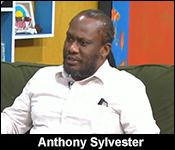
Anthony Sylvester, Attorney General:
"The new commander of the coast guard, I really hope you wouldn't regard her as a yes person. so they are persons of integrity, persons who have risen through the ranks on their merit, their hard work, and their integrity. And so respectfully I think that comment, and that has been put out there, that is a disrespect to those individuals."
Brandon Usher:
"I want to ask, you named some of them just now but who all is a part of the National Security Council?"
Anthony Sylvester, Attorney General:
"It's in the legislation. So it sets out, the prime minister, the Minister of Foreign Affairs, the Minister of Home Affairs, the Minister that is responsible for National Security, the attorney general, the CEO of Home Affairs, Foreign Affairs, Defense, and as well the commandant of the BDF, Coast Guard and the ComPol and you also have the national security director."