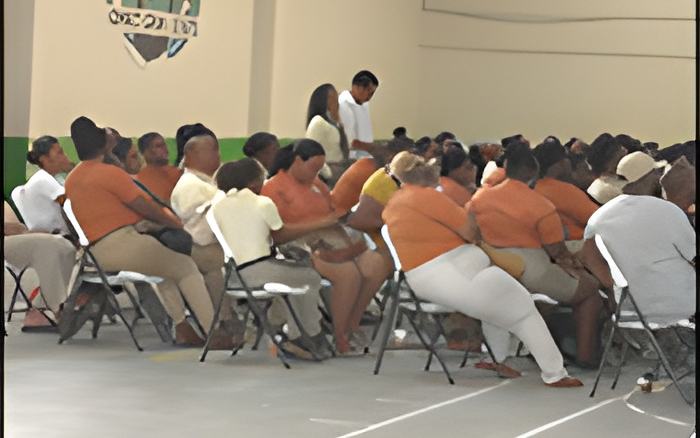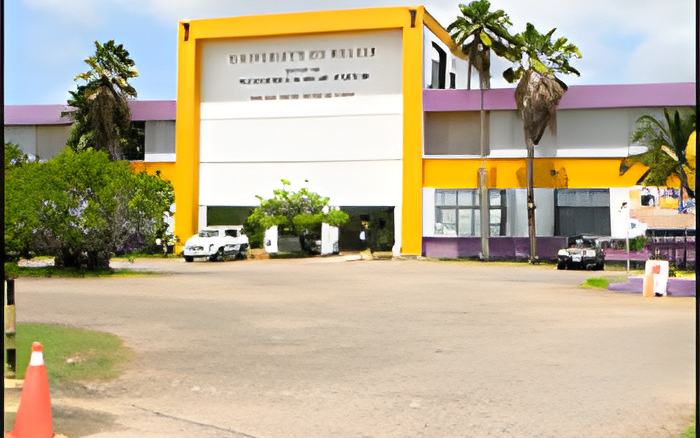

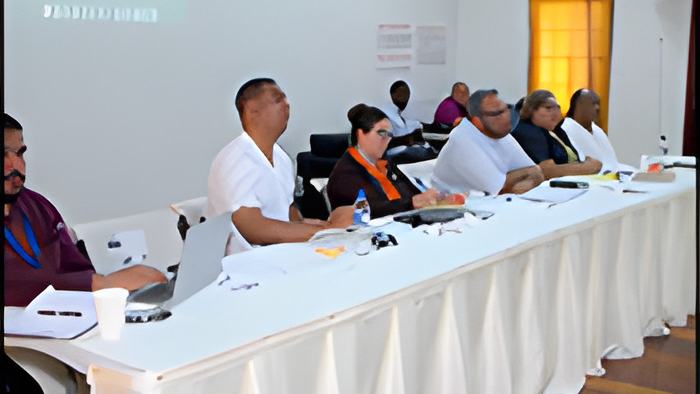
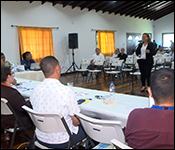
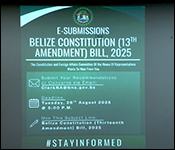
The second round of consultations for the 13th amendment took place today at the University of Belize in Belmopan. But unlike the Belize City consultation, hardly anyone attended. And, both the chair, Julius Espat, and Minister Francis Fonseca were missing in action. The Minister for Constitutional Affairs, Dr Louis Zabaneh, was also absent.
Still, the few members of the public who did attend got their chance to share both objections and support. Courtney Menzies was there and has this story.
Consultations on the 13th amendment continued today in Belmopan - but apart from starting more than 20 minutes late, only 11 members of the general public showed up. Whether it was a matter of the public being uninformed, uninterested, or just unable to go since it was held on a workday, Minister Henry Charles Usher - who was sitting in for the chair - said that it's not the only way persons can voice their concerns.
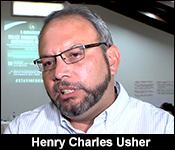
Henry Charles Usher, Acting Chair, House Committee for Constitution and Foreign Affairs:
"I think that it's important that we hear the public's views. As I mentioned this morning, and the Leader of the Opposition mentioned, this is not the only way that the public can submit their recommendations or their criticisms, questions, on this particular bill. They can do so in person at these public consultations, in writing to the National Assembly, or by email also to the National Assembly so maybe some persons would prefer to do it that way."
And two of the concerned residents that did show up explained what issues they had with the amendment as is.
Voice of: Concerned Resident:
"Any time you're tampering with the constitution, it's time to sit up and be counted. I mean, changing the constitution doesn't happen everyday and as far as I'm concerned, the constitution is a sacred document, it's supposed to afford Belizeans rights, not restrict them so I felt it important as a Belizean, as someone who loves my country, and strongly believes in democracy that I need to make my concerns known."
"I understand the reason for the SOE, I'm not entirely comfortable with how it operates, but I understand the reason for it. What I still don't fully understand is why the need to change the constitution, I think that's a bridge too far."
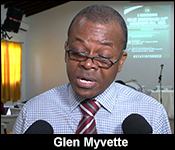
Glen Myvette, Concerned Resident:
"Reasonable suspicion is very ambiguous in my view however we have a police department that is full of hubris and very petty. Reasonable suspicion to them may be depending on where you live, the color of your skin, the clothes you're wearing, just as a few examples."
Reporter:
"Why did you decide to come to the consultation and share your concerns?"
Glen Myvette, Concerned Resident:
"Because I'm a Belizean by birth and I'm a very concerned citizen and I know this will impact those that are less marginalized."
Reporter:
"As a concerned citizen are you disappointed that more people didn't show up?"
Glen Myvette, Concerned Resident:
"Of course I am, that's why I made the suggestion of the local television station to air this for a week or two, I'm very concerned."
Courtney Menzies:
"Do you believe enough is being done to educate the public on the 13th amendment?"
Glen Myvette, Concerned Resident:
"Absolutely no, enough is not being done which is in favor of the government."
Courtney Menzies:
"Are you rejecting the amendment outright or do you feel it can work if it has some changes to it?"
Glen Myvette, Concerned Resident:
"I feel that it can work with some tweaks to it, yes."
And as it relates to the "reasonable suspicion" stated in the amendment, Usher clarified that it's a legal term.
Henry Charles Usher, Acting Chair, House Committee for Constitution and Foreign Affairs:
"I think it's important and yes that question was raised in terms of what does reasonable suspicion mean. I think the representative from the Attorney General's Ministry, Crown Counsel Sheppard, explained that reasonable suspicion is a legal term, it is something that has been fleshed out in a number of cases so you can look at case law, you can also look at different legislations around the world that really speak on the matter of reasonable suspicion so I think it's something that like one off the last suggestions from an attorney was that we put in the bill itself the criteria that defines reasonable suspicion. It's something we can look at but there is a body of law out there that speaks on this particular matter."
And now, he and the other members of the panel will have to report back to the rest of the committee:
Henry Charles Usher, Acting Chair, House Committee for Constitution and Foreign Affairs:
"I think that there have been very good suggestions in terms of maybe supporting parts of the bill but also amending other parts of the bill. We heard from persons who are coming from a human rights perspective, we heard from persons speaking from their legal training, being attorneys at law, having training in other fields. I think what is important is that we put all of these recommendations and suggestions together and we take it back to the House Committee, of course when the bill is brought up for second reading, a report will be submitted to the House of Representatives before that second reading and that debate is done."
When asked if there will be more consultations in other parts of the country, Minister Usher stated that they were undecided at this point.