Last year over 60 thousand Belizeans applied to the government for COVID-19 relief after they lost their jobs.
A significant portion of those workers were employed in the tourism industry.
But, the lockdowns and the closure of borders didn't just affect the tourism stakeholders. Local fisher folks took a massive hit when they could no longer export their marine products. The corresponding decrease in international tourism and travel, meant that there was far less of a demand from local and international restaurants to purchase seafood.
This morning, in celebration of Fisherfolk Month, the Belize Chapter of the Wildlife Conservation Society hosted a virtual panel discussion. They wanted to explore just how difficult it has become to continue being a fisher in Belize. The title of the forum's main topic was "the Impacts of a Global Pandemic on Belize's Small-Scale Fisheries Sector".
To discuss the issues on a granular level, the WCS invited representatives of the Fisheries Department, the Belize Coast Guard, the National Cooperative Fisherman Association, and the Caribbean Network of Fisherfolk Organizations.
They also invited the press to listen in on the forum, and 7News tuned in.
Here's what the main speakers had to say about the challenges that local fisher folks had to face as a result of the pandemic:
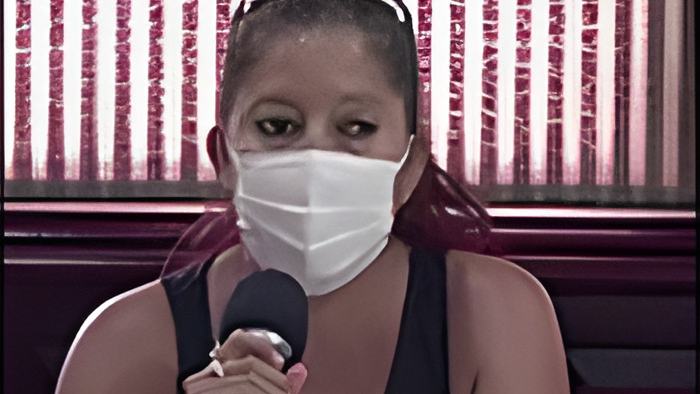
Maria Allen - Fisher Lady
"The biggest challenge in my profession of being a fisherwoman is finding the sales for the seafood that we get. The borders were closed. The lobster season had just closed. So, I personally depended on the stone crab sales to the restaurants and the fish. So, that's been a challenge for me, and it is still a challenge up to now."
Beverly Wade - Director of Fisheries/Policy and Planning Advisor
"Fishermen had less purchasing power because, at the end of the day, they were not getting the price that they were normally expected to get because the export sectors had restrictions because of COVID-19. Their personal livelihoods were being impacted because of the cost of inputs, the cost of supplies and everyday goods, food, those prices were going up, and they totally lost the purchasing power that they were accustomed to having."

Adele Ramos - Moderator
"What have been some of the coping strategies that you have seen fisherfolk in your community employ during this time?"
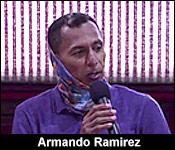
Armando Ramirez - Punta Gorda Fisherman
"Fishers try to do a number of things. Some have been talking about pre-cooking your food, whether it's shrimp or whatever it is - crab. Others are thinking about getting into some sort of home cooking and delivering, but these are things that are not easy for a fisher whose passion is to do the things that they've been doing for years. It's not easy to just move or to turn your back on what you're accustomed to doing. For some fishers, not because you can't do something else, but you just don't want to do anything else. You want to stay within the fishing industry. So, I think that for fishers, it would only be fair to say that fishers overall are still trying to find their way through this pandemic."
Adrian LaRoda - Chairman, Caribbean Network of Fisherfolk Organizations
"International exports came to an almost standstill because quite frankly, in our markets, our external markets where there's Europe, the US, wherever, people weren't dining out. Restaurants weren't open, so they weren't purchasing products. This then put a strain on the local market, where either the price for fresh seafood was dramatically reduced, or in some instances - just using here in the Bahamas - the cost of seafood to locals increased dramatically. Wholesalers and commercial enterprises needed to make up for that shortfall in international sales. The cost to the domestic population increased dramatically, again, another hardship."
And while Belizean fisher folks struggle, like the rest of the nation, to survive the ongoing pandemic, the Director of Fisheries says that the ongoing ordeal had one positive impact. It has clearly demonstrated how important the fisheries industry is to the country's economic health:
Beverly Wade - Director of Fisheries/Policy and Planning Advisor
"One thing COVID-19 has taught us is that we need to ensure that those assets are functional. We need to ensure that they continue to be healthy, so that we can continue to be productive, and have the economic returns that are much needed, especially in a situation like COVID-19. When the pandemic hit Belize, and everything was locked down in March, the first time you truly had economic infusion into this country was the start of the lobster season in June. That was the first time that you actually had monies being now infused in the local economy. In the first 2 weeks of the lobster season, 3 million dollars were circulated into the local economy from lobster sales. That was huge. Everything was locked down. No other sector was doing that for Belize."
"With COVID, the fisheries sector absorbed a huge number of people who were employed full-time in the tourism sector. How do we also look at these various groups and build and allow them to be able to have the kind of adaptive management capabilities that is necessary to, 1, take advantage of opportunities, but also to allow them to survive shocks?"

Adrian LaRoda
"The business model for commercial fishing has to change. I know, here in the country where I reside, the Bahamas, the business model has changed. Whereas, when all of the fish markets were closed, a lot of operators then reverted to doing personalized. Yes, there were added costs for personalized deliveries, but again, it's the cost of doing business. I made a joke one time that I have come full circle in the fishing industry because I started doing personalized deliveries, and now I'm back to doing personalized deliveries again."