


If you have an account at a commercial bank - you should know all about those nuisance fees that the banks charge you to use your own money.
They can vary from a 50 cent per transaction ATM fee, to a 35 dollar fee just to close your account, to a five dollars maintenance fee on savings accounts, to 20 to 45 dollars for dormant accounts and the list goes on.
These are all examples of banks just piling on unconscionable fees on depositors, and it has caught the attention of the Central Bank - which regulates commercial banks.
For months, the Central Bank has been in negotiation with the banks to eliminate or reduce these fees - and it has been a negotiation because while the fees might be a nuisance to you, they form a major part of the bank's bottom line.
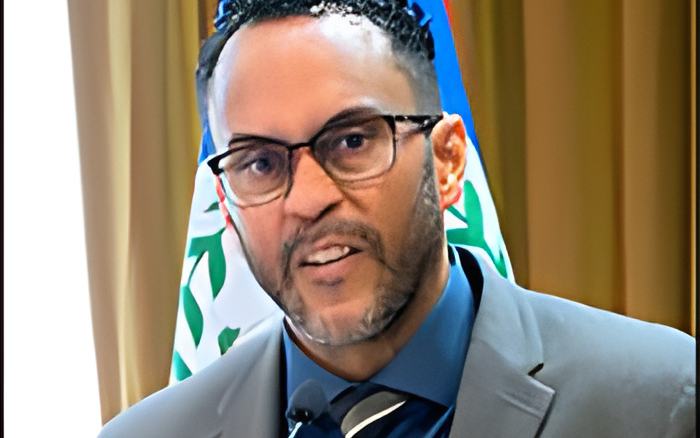
Today - at his quarterly press briefing - the governor made the big announcement of how the fees are going down or being eliminated on the first working day in January:
Kareem Michael, Governor, Central Bank

"With effect second January, 2024, the central bank will require domestic banks to limit and desist from imposing the following fees and charges. All banks must reduce or limit ATM withdraw fees to a maximum of $0.25 per transaction. The banks have also committed to reviewing these fees over the next 12 months, this is sort of a transition period with the aim of reducing them further or applying thresholds based on the level of activity and type of customers in the system. I would be as transparent as I possibly can: the end objective of the central bank is to have this as zero for own-network, own-account usage."
"We've also received a verbal written commitment. I call it an indicative commitment from the banks, that they will also bring down what they charge customers for the instant funds transfer and also the electronic funds transfer. So those mobile transactions, digital transactions that you engage across the up system that used to be to the lows and above, above, above. That now, we have received a commitment also that banks are willing - I shouldn't say commitment - that banks would be willing to lower that to a dollar below a dollar. Now driving that is also the sense that the central bank will - this is not - this is a fact, that come the 1st of January that the central bank will no longer be taking $0.25 or $0.50 from those on line charges. We are putting that at zero. So the central bank collects nothing further for electronic funds transfer. Instant funds transfer. Why? Because we believe as the evidence has shown, that it drives positive financial inclusion and therefore enhances financial stability mandate."
Jules Vasquez
"When does the indicative commitment go into effect? I don't see any date on it yet."
Kareem Michael, Governor, Central Bank
"We're expecting the same date as the 2nd of January as well."
Jules Vasquez
"Okay, So but it sounds like it's not firm."
Kareem Michael, Governor, Central Bank
"It's not it's not firm as a practice direction, which is a regulation by a different name. So there are no penalties should they not change the pricing or the charges tied to IFT/EFT."
Jules Vasquez
"Right. So..."
Kareem Michael, Governor, Central Bank
"But if practice direction isn't followed on the 2nd of January, all things considered, are things remaining the same, then there is recourse that the central bank can take action that the central bank can take."
As you saw, the Central Bank has also agreed to flatline its APS 3 fees as a demonstration of its commitment of facilitating electronic banking. Previously, it earned 1.3 million dollars annually from those fees.