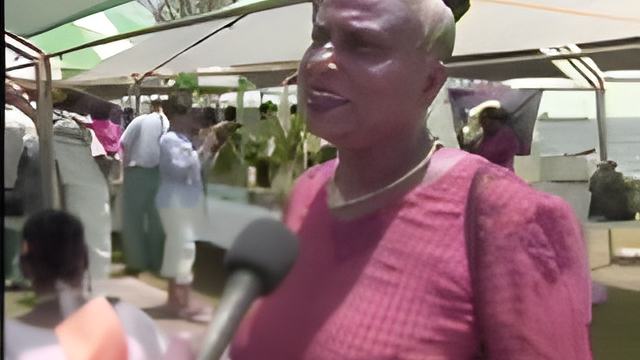
When it comes to ethnic groups in Belize, the first names that come to mind are Creole, Mestizo, and Garifuna. There is however a small but increasingly visible part of our population known as the East Indians. They first came here in the 1800s as indentured labors. Their countrymen are now coming as businessmen. Today on the anniversary of the independence of India, East Indians in Belize held a big family reunion at the House of Culture. Keith Swift has the story.
Timothy Bardalez,
"This means the beginning of a new era for the East Indian people. It means that we can go on like other people, "
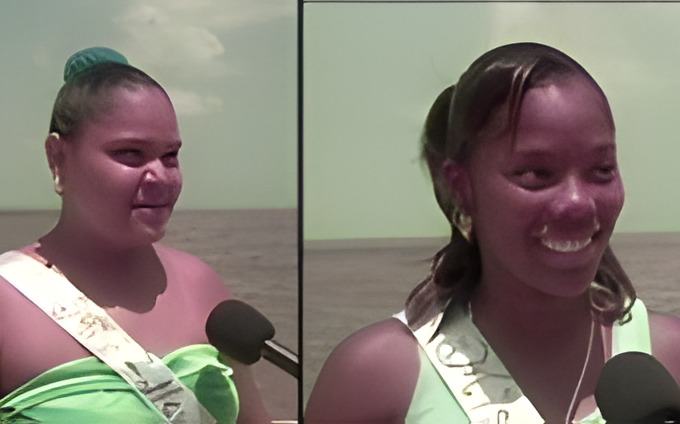
Today is a day Timothy Bardalez from Punta Gorda has waited decades for. That's because in Belize we would normally refer to Bardalez as a coolie; he is not quite Creole and not quite Spanish. But Bardalez wants to be called East Indian and he wants his culture recognized and respected. Former Miss Y Catherine Flowers and President of the East Indian Council Gabriel Pate have been leading the charge.
Gabriel Pate,
"Today is the independence day of India. It feels good today. Being an Indian, it definitely means a lot. It makes you feel proud. It makes you feel good. It makes you feel really good inside."
Catherine Flowers,
"We put this together to come to one, from PG to Corozal and Belize. We are gathered here this morning to let the people know that our culture is still alive."
It came alive today on the grounds of House of Culture. The East Indian culture runs parallel to the Indian culture. So Catherine Flowers, who is an East Indian, wear the same gown as most Indian women. And so who is an Indian? Well Commander of the Coast Guard General Cedric Borland who is from Punta Gorda is a proud East Indian, but so is Arun Hotchandi, a businessman and the Honorary Consul from India to Belize.
Gen. Cedric Borland,
"I am an East Indian and I think this is a special occasion for all East Indians to come out and celebrate a day that we can put down in history."
Arun Hotchandani,
"East Indians were here many years ago and they were the ancestors and the newly arrived Indians community members have just recently commuted here. There is a difference when it comes to the migration but I think the culture is definitely important, I think the foundation is the same."
The same: food, music, kitchen utensils, jewelry and of course dance. As for the food - there was a wide variety from split peas to samosa. And all that was capped off this afternoon when there was the offering of Tadjah to the sea honoring their ancestors. In simpler language - the house was thrown into the sea. But more dramatic than that, better than any dance, and nicer than of the dishes is the effect this day had on 13 year old Maynardi Bood. She is an East Indian and for the first time in h
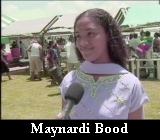
er thirteen years, Maynardi Bood felt proud to dress and be an East Indian.
Maynardi Bood, East Indian
"I usually hide my culture because I think people will tease me but I feel comfortable here. First I used to hide it but now it is just fun."
East Indians make up about 3.5% of the Belize population. There are 600 Indians that have migrated to Belize in recent years. We note that coolie is not a term of endearment, though widely used, in fact it is derogatory. Coolie was what the indentured Indian laborers were once called by their masters.