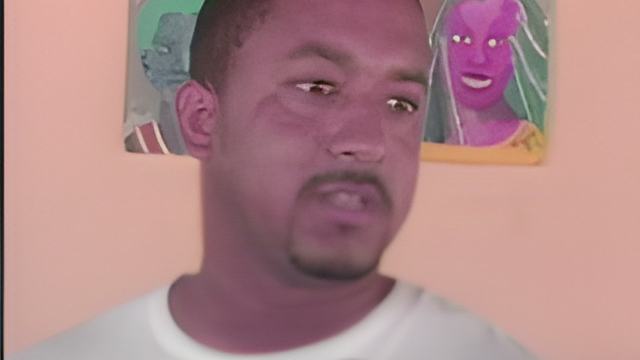
It might be the last place you'd expect to find an art exhibit, but the Hattieville Prison this morning pulled the curtain on its first art show. Today we were there to see the beauty that can be produced from behind bars.
Keith SwiftReporting,
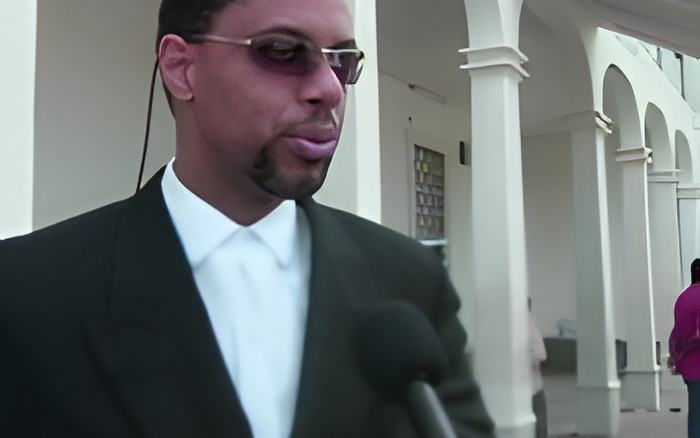
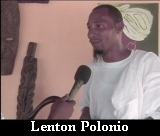
28-year-old Deon Gillett and 27-year-old Lenton Polonio are both convicted killers. Gillett is serving a 20-year prison sentence for manslaughter. He spends his time painting.
Deon Gillett, Inmate
"I am in jail for manslaughter. It was murder and the charge was dropped to manslaughter."
Keith Swift,
So tell us about your art.
Deon Gillett,
"I painted several pieces but the one I have painted that is being shown here today is about faces, with different faces, different ethnic groups, and mainly ladies they are depicting. Faces is really complicated. You need to know what you are doing because it is really sophisticated due to the light and dark colors and the shadows and so."
And while Gillett dabbles with faces, Polonio deals in abstract art. He too is a convicted killer facing a life sentence for murder. He spends his time sculpting.
Lenton Polonio, Inmate
"I'm here on an injustice case and a murder charge and I got sentenced to life but eventually soon I will be out free. I do wood sculpting and wood carving at the facility."
Keith Swift,
How long have you been doing this?
Lenton Polonio,
"Well almost four years. I am not old in it, I just get creative with
a piece of wood and I see myself doing good in what I do."
Polonio's sculptures and Gillett's art are on display at a first of its kind art show opened this morning at the Belize Central Prison. These paintings, crafts, sculptures, and even this sofa were all made by prisoners. They've been working for about four years under the guidance of art instructor Michelle Perdomo and more recently with Gilvano Swasey.
Michelle Perdomo, Art Instructor
"And for the painting section the art students went to SJC and my initial reaction was that this is scary because they are prisoners and I ended up having the best behaved students I have ever had. The high school is put to shame by these guys' behavior and their talent and their focus and their hard work and their discipline. I guess it has been wonderful working with them.
I don't think it is different. I think art is art, no matter who does it and I think it is amazing to me that the guys who come have never done art before and the fact that they can achieve such a high result in such a short period of time is realty amazing."
Gilvano Swasey,
"Usually when you think about prisoners you have a certain prejudice or an idea from before. But it was very exciting to see that these guys were being very creative in an environment that we would think would be very confining. And like I said, my experience with them, I realized that how we are actually prisoners outside instead of inside here because the space that they are provided in here is very open and they have the time to express themselves as much as possible and art is one of the best ways of expressing yourself."
But more than expression, these prisoners with long prison time ahead say the art is therapeutic, it is almost an escape-a virtual escape.
Deon Gillett,
"As a prisoner it takes my mind off a lot of stuff. For me it takes my mind off a lot of stuff, off my time and my incarceration here."
Lenton Polonio,
"It helps me release my stress, keep my mind focused and occupied and improve on my skills because I take this what I am going through schooling, to master my skills. So I am working to accomplishing my master's in my art."
Michelle Perdomo,
"They open up. It is kind of like a therapy for them. It is a stress reliever. It is a break to be able to enter into a whole different kind of world. So I think they find it very relaxing and very comforting and very cathartic. They really get out a lot of their stress kind of thing."
And according to the Kolbe Foundation, that is something good.
Carl Trapp,
"Eventhough people come to prison and they are sent here by the courts, I think they should be given an opportunity to show what they can do when it comes to positive steps in their lives. And through art, as anyone will tell you who is familiar with the arts, art has a way of expressing how a person thinks or how he feels and this is the kind of programs that the Kolbe Foundation encourages."
All pieces are for sale at the gift shop at the entrance of the prison. From the sale proceeds, the prison collects 70% and the remaining 30% goes to the inmates.