In our ongoing series "Glimpses into the Past" with Belize's Chief Archaeologist Dr. Jaime Awe, we've taken you into caves, atop Mayan temples, and gone through many mysteries of Mayan civilization. Throughout Dr. Awe has steered clear of controversy, siding mostly with conventional theories of the rise, reign and fall of the Mayas. But the discipline and study of archaeology is not jut cold facts and carbon dating, there's a bit of entertainment to it as well. And at the border between archaeology and quackery is the Crystal Skull.
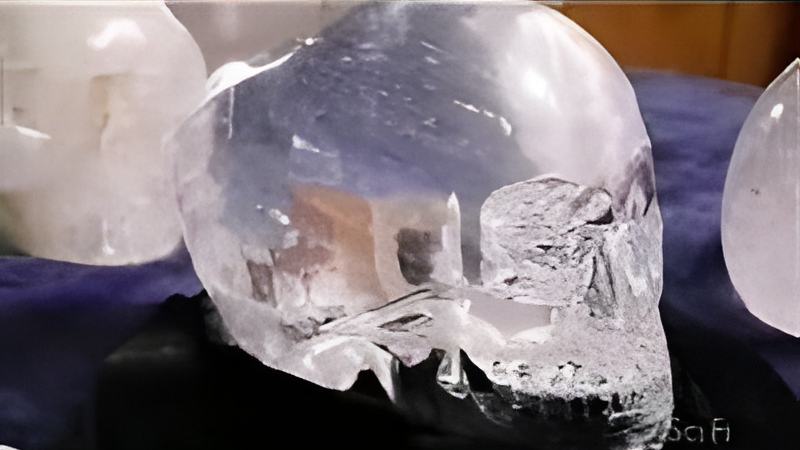
It's one of the greatest and most bedeviling mysteries of Belizean archaeology but more than that, the skull is one of the most visually stunning objects known to mankind. It's all these things and the subject of an ongoing dispute in archaeological circles: is it for real, or is it a hoax, is it Mayan pre-Columbian, or European modern and does it really matter anyway. It's a thicket of explosive questions and tonight, Dr. Awe wades in fearlessly.
[Original Air Date: October 13th, 2005]
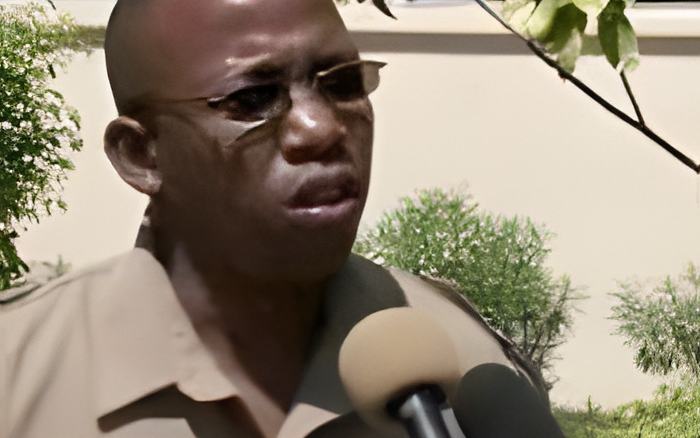
Dr. Jaime Awe, Director of Archaeology
"After the Jade Head, I think that the Crystal Skull is very likely the second most famous, or perhaps the most infamous artifact."
Infamous mostly because of this man, Mitchell Hedges, a British explorer and adventurer who claims he found it here at Lubantuun in 1927.
Dr. Jaime Awe,
"Mr. Mitchell Hedges claims, in 1943 he wrote an autobiography and he claims that in 1927 when he was down visiting the city, the ancient Maya city of Lubantuun, that he found the main section of the skull, when he was with his daughter working, and that a couple months later the daughter found the second part of the skull. In his book he even mentions that the elders of the village, which would have to be San Pedro Columbia in Toledo, that they said to him, 'you can keep it.' Now I am certain that if any cultural group saw this and knew that this was something from their heritage would not have said, 'oh no take it, go with it.'
And thereafter they took it to England, because Mitchell Hedges was an English man, and he was actually down in Lubantuun at the time when the British Museum from London England was doing a research project at Lubantuun. Now this is what he claims but interestingly nothing is said, and nobody knows anything about this Crystal Skull until 1943."
1943, that's when Mitchell published his autobiography, this book, Danger My Ally, in which he told the story of how he found the Crystal Skull at Lubantuun. His stories led him on to great fame as an adventurer, good enough for a meeting with the queen. When he died his only heir, step daughter Ana Mitchell Hedges continued with that fame. Their fame is unrivalled but Awe says it's built on a myth. New evidence shows that Hedges' Lubantuun story is easily and resolutely debunked.
Dr. Jaime Awe,
"We know that Sotheby's was auctioning the Crystal Skull in 1943. Why do we know that? Because the British Museum tried to purchase it but the gentleman that they sent to purchase it was only able to produce 350 pounds and he recorded that he lost the bid to an adventurer by the name of F.A. Mike Mitchell-Hedges who bought it for 400 pounds. Now there are other things that we also know. So that would make sense why Mitchell-Hedges doesn't publish anything on it until 1943, after 1943, in other words after he bought it. "
So why did he make up the story?
Dr. Jaime Awe,
"I think that the reason why he claims that it came from Lubantuun is because he was trying to legitimize the object. He was trying to say this
is a real artifact. Now I don't know why Mitchell-Hedges may have wanted to do that because he didn't need to do that. There were all kinds of tests done on this thing and this is a unique object. It is an artifact. And today we also know that the Aztec culture in Mexico had produced several Crystal Skulls, none as beautiful as the Crystal Skull 'from Belize,' but nonetheless there are several of them and we have images of them."
Indeed there are several, but those skulls look nothing like this one which experts say was never touched with metal implements. Awe says that while Mitchell's story may be bogus, the Crystal Skull is not.
Dr. Jaime Awe,
"Most of us believe it is a post classic object so it is made during the height of Aztec civilization which goes from 1200 to about 1400 AD. So it is ancient. It was produced before Europeans came to the New World, without a doubt. People have done tests on it."
So if it was a Pre-Colombian object, with a possible origin in Mexico, why is Belize so eager to claim it?
Dr. Jaime Awe,
"It is of dubious origin.
I guess that is the best way to put it and it is not like the Jade Head. The Jade Head is of definite origin. Because remember if it was a fake, I would say don't bother. But it is not a fake, it is a real pre-Hispanic or pre-historic object. Thus it is a artifact, a valid artifact, and if people who have it claim that it came from Belize then give it back to us. If I knew that it was a fake I would say no."
But unlike some in the archaeology cognoscenti who frown on the dubious skull, Awe would never say no to the object. Why? Because it's just too damn sexy.
Dr. Jaime Awe,
"It is an amazing and unique piece of art and it is very sexy and if we could have it here in Belize, let's do it. I am all for it."
So while Anna Hedges, now in her late 80's, clings to the skull and its dubious fame at her home in Canada, Awe says Belize's Department of Archaeology will keep asking her to return it to the place she claims is its home, Belize because if she'll stick to that story, so can we. Awe's predecessor, the late Harriot Topsey made a trip to Canada to personally request that Ana Mitchell Hodges bequeath the item to Belize. She gave no commitment, and to this day there is no indication what she will do with the skull.
Since our story first aired, Anna Mitchell-Hedges passed away and the crystal skull has been put into the custody of Bill Homann.