Child labor: whenever we think of it we envision Nike sweatshops in Asia or sugar plantations in South America. But while those do hold true, right here in Belize child labor is staring us in the face. In fact everyday instead of going to school, thousands of Belizean children go to work. When last did you buy a tacos from a child or gone into a store and having a child serve you? It's a problem which has its root cause in poverty and in which a multi-sectorial approach lies the solution. On Friday the International Labor Organization brought employers, employees, and social partners together near the Free Zone in Corozal to formulate a national response. Keith Swift was there and has this report
Keith Swift Reporting, [keithkswift@gmail.com]
A study in 2001 revealed that more than 5,000 children in Belize are working. 10% of that amount, just ever 500 of them, are working right here in the Corozal district.
Judith Alpuche, Exec. Dir. - NCFC
"What that study demonstrates is that 6% of children in Belize are in engaged in child labor."
That's 6 out of every one hundred children in Belize working, instead of learning.
Judith Alpuche,
"I think its cause for alarm. We are talking about somewhere about 5,000+ children between the ages of five and seven that are in situations that I just describe. So I think it's a definitive cause for concern and I think one of the interesting aspects of the statistics that we were not able, or the CSO was not able to capture Mennonite children so, potentially, the statistics could be even higher than that."
But where do chores end and child labor begin? Judith Alpuche is the Executive Director of the National Committee for Families and Children.
Judith Alpuche,
"What we're looking at are situations where children, the work that children do limits their ability, or is a barrier to their ability to access education services and that work may also be hazardous to their physical, their moral well-being, and emotional well being as well. So we're not talking about situations where children are engaged in household chores or they are helping out families. We are talking about work that impedes them from developing their full potential."
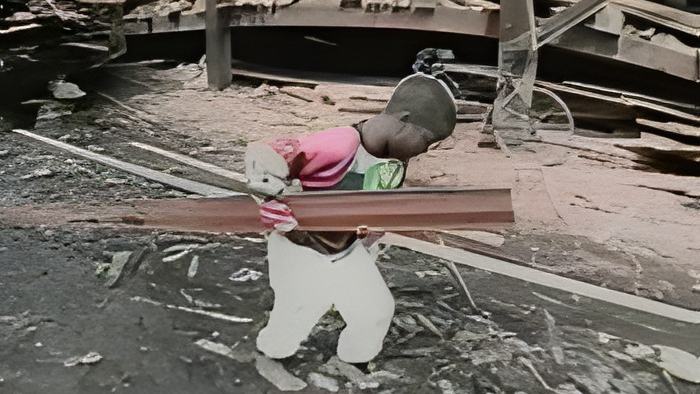
So washing the dishes isn't child labor - but there are the obvious and the extreme forms like the ones presented in this video from the Chamber of Commerce and industry. But in most cases, 14-year-old Roshar Estrada is the face of child labor in Belize. On Friday we met him in front of the Princess in Corozal doing what he does everyday, hard labor, side by side with his father Javier. He would prefer to be in school but right now that's just not possible.
Roshar Estrada, Child Laborer
"We need to make a little money too to have in our pockets. Its Christmas time right now and we can't depend on mommy and daddy all year 'round because somebody they won't be here."
Keith Swift,
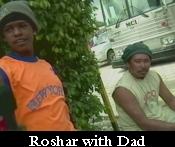
Young man would you prefer to be in school?
Roshar Estrada,
"Yes but I still would like to make my own money at time."
Javier Estrada, Roshar's Father
"I know he is underage but I got to have him make his money."
Keith Swift,
Would you prefer for your son to be in school rather than being out here?
Javier Estrada,
"That is very good, to be in school and learn some more and do some thing for himself."
Keith Swift,
So why isn't he in school?
Javier Estrada,
"Because he came out of school, he graduated from standard six and that is the problem. He want to make his own money."
Keith Swift,
He doesn't want to be in school?
Javier Estrada,
"The money is the problem. That is the thing right there, the money. If I had money to help him to go to college or something like that, I would help him."
And while we all agree that money is the problem, Alpuche says poverty is no excuse for child labor.
Judith Alpuche,
"Let's face it, poverty impacts very heavily on child labor. What we do want to encourage is for families to put their children's education first. We are not saying that your children cannot assist. We are very cognizant of the reality that children live under but top continue to pull your child from school, to send them to do work, is really setting up a situation where that child remains in a cycle of poverty."
Belize, like many other Caribbean countries, has ratified the ILO Convention on the Elimination of the Worst Forms of Child Labor, but that is about all we have done. So while Roshar worked downstairs, upstairs this group of employers, unionists, and employees spent the day trying to ensure he doesn't have to work. It is a task spearheaded by the Ministry of Labor and on the desk of Labor Commissioner Paul Williams.
Paul Williams, Labor Commissioner
"The public has to be aware that they should discontinue child labor because its going to be harmful to the health and welfare of the children non a whole."
Hon. Vildo Marin, Minister of Labor
"Child labor cannot be seen as the violation of a child's rights in isolation. All children's rights, which are basic human rights, are interrelated so that the violation of one right, has a negative impact on the enjoyment of other rights."
And of course none of these children would be working if no one was hiring, which is why the Chamber of Commerce has committed to cracking down on members who employ kids.
Dionne Miranda, BCCI
"If an organization or company does not want to abide by the laws of the country and will not prescribe to the international conventions which makes this an illegal activity, then these are members who the Chamber can really do without."
But the threat of expulsion or even a arrest won't end child labor, neither will a United Nations Convention, ultimately it rests with us: do we want our children to be here in a classroom learning or in a store working.
Earlier this year the NCFC rounded up about 80 children who were illegally working in the Toledo District. So far 49 of them have been placed in schools and arrangements are being made for another 26. The NCFC and Labor Department plan similar campaigns countrywide.