In the past few days, the buzz in the international science circles has been about two U.S. scientists and a startling new framework they've come up with which competes with Einstein's General Theory of Relativity, the head corner stone of the scientific understanding of the universe.
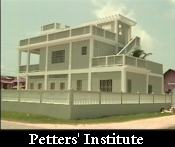
So what could all that ever have to do with Belize? Well, plenty. One of the scientists who's propounded this new theory is Dr. Arlie Petters, a world renowned mathematician who was born in Dangriga. But even as he makes international headlines for his work in science, the 42-year-old Petters keeps close to the place he still calls home and that's Dangriga town. He migrated to the United States in 1979 when we was just 15 but now he's giving back to Dangriga, in a big way, with the Petters Research Institute, a specialized math and science teaching facility.
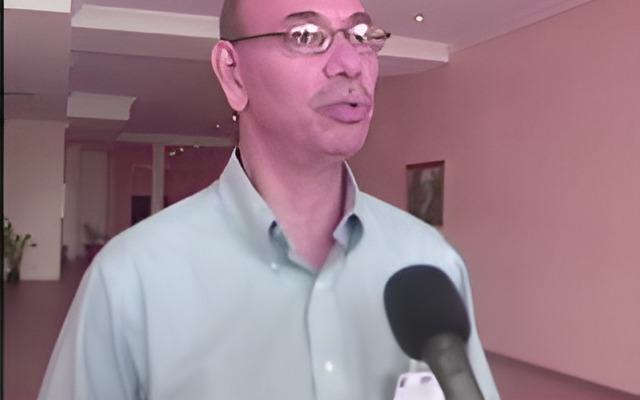
So what is Dr. Arlie Petters and his mission in Belize all about? We spoke to him on Saturday and found out that it begins with the institute.
Dr. Arlie Petters,
"There are many goals to the institute and one that I think will interest a lot of viewers is that we are interested in focusing on math science education for students from ages twelve to eighteen. We will be doing some teacher training for elementary and high school teachers."
Now he sees this center on No. 1 Citron Street in Dangriga town as an important contribution to the community he grew up in.
Dr. Arlie Petters,
"I grew up in Dangriga at a time when things like this would not have been imaginable. I feel that my foundation to get to where I am today was laid
by my upbringing in Belize and the time in my career is perfect to give back to the country. I think of all the giving back I have ever done in my life, this is the one dearest to my heart.
There's nothing worse than having a highly talented young person go astray. Our country is full of brilliant people but we need to be able to nurture it and take it to the next level. I believe that in every person there is a desire to be creative, to be unique, to do something great. I think that's in everyone. It beaten out of most of us but if you create an environment where you feel, 'wow I can go after this great thing I want to do in life, I have someone to help guide me,' it allows a creative release for a human being and that is what spawns entrepreneurship. That spawns innovation."
And to urge them on, Dr. Petters will use his own life as an example.
Dr. Arlie Petters,
"They I know I grew up right in Dangriga and I was there as a child when we didn't even have half of what they have today growing up and they also see that you don't have to be an athlete, you don't have to be a musician. You can also be a scientist, you can be a doctor---the other professions where you can excel and do extremely well financially."
Dr. Petters left Dangriga in 1979 when he was 15 and went to live with his mother in New York. He almost didn't make it as an young, out of place immigrant.
Dr. Arlie Petters,
"I was at a junction in my life, very early in teens, living in Brooklyn in East New York. Things were extremely hard and I almost gave up and returned home. I called up my grandmother and she said, 'bwoy you stay where you are because life will have its tribulations and you should persevere through it.' And in many ways it's this kind of foundation that helps to give you resiliency to push ahead. It hasn't been an easy road to get where I am at and if there is one thing I would say to listeners it is that you are going to be hit with trials and tribulations but if there is anything you must remember in that moment is that other people have been there, some have been through worse. And so developing that resiliency, that ability to bounce back, I think is the key.
When I first arrived in the U.S. it was funny. There are issues of ethnicity and race that you have to deal with so the usual, the obvious thing is Black Americans, White Americans, and the issues that relate to the setting. But then the Black Americans use to call me coconut and so you have this whole thing, 'oh boy I am in no man's land.' In a sense that gives you an opportunity to begin to be at a unique position."
And that unique place gave him a unique perspective that has stayed with him throughout his studies and academic pursuits.
Dr. Arlie Petters,
"At the end of the day people just want to see excellence and that is something I did from Belize. In my work I pursue it with a whole lot of discipline and rigor and each time I fail I get back up, study why I didn't make it and I perfect my game and I do that repeatedly repeatedly. And in many ways, being in a place where you are different from everyone else, you speak and there is an accent, it draws attention to you in a way it probably wouldn't otherwise and when you add on top of that the hard work, the excelling in school, and repeatedly not giving up, it opens up doors for you."
And Petters walked through those doors to secure scholarship to pursue a doctorate in math and physics at MIT, the Massachusetts Institute of Technology, the most prestigious science university in the United States.
Dr. Arlie Petters,
"When you arrived at MIT you are the only person of color in your class so again there is the singular nature to the experience and I worked even harder and you find that as you master subjects there are opportunities for creative leaps and when that happens they say, 'wow that person… that's pretty good.' And then you win another award and this has been sort of the track where at each stage I took full advantage of the opportunity before me."
And those creative leaps took him higher and higher up the educational ladder, first as an instructor of pure math at MIT, then to Assistant Professor in mathematics at Princeton university and then in 1998, Petters joined Duke University, where he chairs the mathematics department, described as the first African American tenured faculty in the sciences and mathematics.
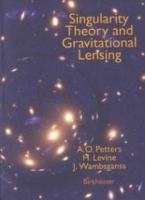
Now, he's making international headline for Duke University's Math Department with a new theory published on May 24th called the Brane World Theory. It states that studying light as it passes over black holes can unlock a mystery in space that we never even knew existed. It builds upon work his 2001 book "Singularity theory and gravitational lensing." He put the importance of his new theory in context
Dr. Arlie Petters,
"From a youngster I've been studying Einstein's General Theory of Relativity and I was always fascinated by how he uses light as a prove for understanding space and time. And you know traditionally growing up we think of space as three dimensional, lengthy, width, and height. Well in modern theories of physics, we are trying to blend together quantum mechanics and Einstein's General Theory of Relativity and one attempt at that is called Brane World Gravity and in this model of the universe there is an extra dimension to space. So space is now four dimensional and in a sense you can image our universe as restricted to a sheet of paper and we can't directly come off the sheet of paper. What the co-author and I, his name is Keaton, was to show a way to detect getting off that sheet of paper, a sure way how to probe the fourth dimension.
Then comes the question to if there is a fourth dimension to space, what is over there because there is something to access in that other direction and it would be something that I think would really create shockwaves. It would shake up, literally, how we, we will have to rewrite some of the textbooks because space would not just be length, width, and height. There is an extra one."
And now as he stands on the precipice of what could be a profound shift in physical thought, he is ever mindful of who he is and what he's been through.
Dr. Arlie Petters,
"I'm Belizean, I'm African American, I'm American, and I am very proud of that mixture."
But that mixture hasn't always made life for him easy in the United States, where he has been publicly misjudged because of his race.
Jules Vasquez,
I've read where you've been to events where you are the only non-white person and people think you are the waiter.
Dr. Arlie Petters,
"That's right, yes."
Jules Vasquez,
That would seem like extreme humiliation and you would just want to put your tail between your leg and you go home. But somehow you don't' internalize it.
Dr. Arlie Petters,
"Yes I've had worse. I am use to situations where you are standing outside at a high end restaurant in your suit and your tie and someone pulls up in a luxury car and hands you the keys for you to park it. You seem I am an old warhorse, I've been through all kinds of mental assaults of the type you've mentioned. It weakens you physiologically because you work extremely hard, you're tired, and then you feel something unfair happens to you. That would be enough to just suck all the energy out of you. I do feel that but I don't let it last long. I look at it, I step back, and I say something unfair happened to me, and how can I now strategically navigate around that.
In a sense I view it as a sort of war of the minds and there will be battlefields where the opposing force will defeat you but that doesn't mean that force wins the war. That was just one battle. And so I would retreat, bring back up my energy, and figure out how to navigate around it. In a way I don't let the defeats and the assaults spread inside of me and weaken me like a virus would as it invade your immune system, I don't let that happen because I think that there are many people who have suffered more than me and that gives me strength.
At the end of the day I feel the foundation I had growing up as a little boy in Dangriga, I never once lost the confidence in me. That was never shaken and I had this belief, you know when you are told as a kid that you could do it, you have it in you---that goes a very long way I think so that whenever you are overwhelmed by discouragement you are able to step back from it and see this as a moment in time, this isn't something that should overwhelm the rest of your life. And the world is huge, you go to one door, its locked and you go to another and its locked, there are many doors out there. And sometimes you may encounter a high wall and you say there is no way on earth I can get across that, well I say step and think about it. Maybe you can walk around it, why you trying to climb over it."
And from the walls of this institute, he hopes to now spread that message to young Belizeans.
Dr. Arlie Petters,
"Its extremely important to just stay focused on your goal and weather the storm because the silver lining is going to show up and I think at the end of the day that is it, having the faith that something better is going to come out of it and obviously I was blest to be able to have passed through many storms and am now at a stage where I could give back to my country."
Don't Want To Read? Watch Dr. Petters' Interview On Demand
The Petters Research Institute in Dangriga Town is slated for a July 15th opening. In August of 2007 Petters' Brane World Universe framework will be tested when NASA launches what's called the gamma-ray large area space telescope. It is expected to collect information on light transmission in the universe that will tell definitively if the Petters theory is valid.
And for those wondering about that last name, Petters, so unusual in Belize. Well it's not his original name, he was born Arlie Oswald Vasquez in Dangriga in 1964, the son of Velinna Waight and Oswald Vasquez. He was raised by his grandparents Bernice Waight and Gilbert Waight in Dangriga town. When he migrated to the United States he took the name of his stepfather, Cecil Petters, a Honduran of Jamaican ancestry.
Click Here to read more about Petters' personal life and his scholarly works as well as his new Brane World Theory.