
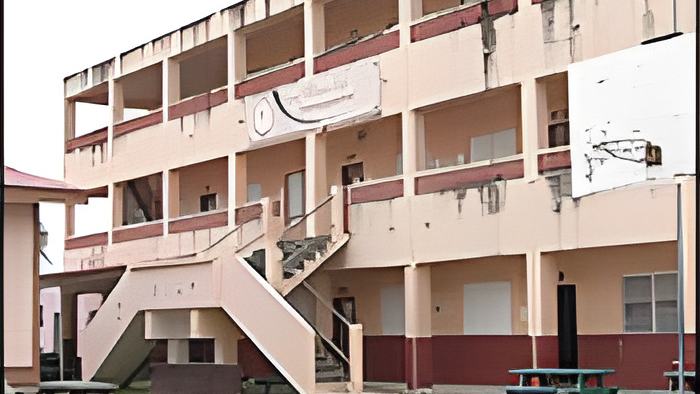
And in other news, if you're a student right now, you might be feeling overwhelmed with distance learning, and you actually can't wait for your school to reopen. It's the same with kids across the country, but for some, school represents more than just their education - it's a much needed escape and a buffer from the negative influences plaguing their neighborhoods.
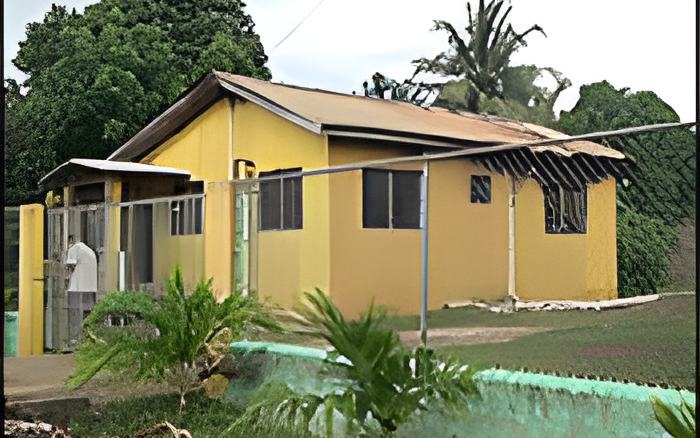
And while some schools can easily reach their students via an online platform, other schools like Maud Williams have to go the extra mile to keep their children enrolled and to ensure that they are receiving the education they need. It's not always easy when these students have other obstacles to contend with, and that's why the high school made the choice to start face-to-face learning last week as part of a phased approach to reopening. Yesterday, we spoke to the principal about some of the difficulties the staff and students have to face, and what the school is doing to get past them. Courtney Menzies has this story.
For many of the students enrolled at Maud Williams, it's more than just a school, but rather a chance to change their circumstances. Many of them come from challenged backgrounds, hanging by only a thread - which COVID threatened to cut. Dropout rates started to soar, but the staff at the high school fought to get them back.
Deborah Domingo, Principal, Maud Williams
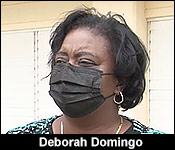
"We have embarked on a very aggressive, very assertive campaign to have our students return and so when you look at our database you will see quite a few reentry because we have made a deliberate effort to go out, to reach out to students who have been fallen by the wayside. And it has also informed our own approach to remote learning as well. It is no longer the case that learning packages are simply produced, distributed, collected. We actively track the students who are collecting, the teachers are here once per week and so the students are provided the opportunity to meet with teachers if they're experiencing any difficulties and the remote learning packages are supporting by the online videos and tutorials."
And it is this tracking that made the teachers aware that students were falling behind. And being a semi-vocational school, distance learning wasn't cutting it.
Deborah Domingo, Principal, Maud Williams
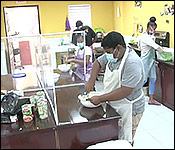
"We have been tracking the students as they bring in packages, we get the information from our teachers about the quality of what they have been submitting and we've noticed that the level of achievement isn't what it should be, the engagement isn't where it should be. As well all of our students take a vocational subject. It is just the nature of technical vocational education to have hands off, it's competency based and so that gave us good reason. Along with of course the absence of good progress to organize this very slow phase in approach to face to face learning that we've started."
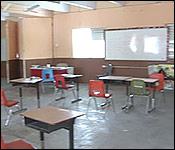
And from there, phase two will see students who are not performing well returning to classes, and phase three hopes to have the students return for Monday/Wednesday and Tuesday/Thursday classes. And for the students, this is great news since most of them aren't benefiting from online classes.
Courtney Menzies:
"What percentage of the school has access to internet and technology?"
Deborah Domingo, Principal, Maud Williams
"Off the top, 30%, we've done the research. So 30% of them have access to online learning, the other 70% opt for the hard copies or the learning packages. But we have found even with online learning, if the home environment isn't one that's supportive or there isn't that kind of structure in their day it may still make it difficult for those who have the internet access and who have the device to actually do well with online learning."
And on top of that, Domingo recognizes the students' need for socialization and the extra pressure placed on them to earn an income once they're not in class.
Deborah Domingo, Principal, Maud Williams
"They would love to come back tomorrow, they want to come back. I think it underscores the importance of school not just for academic progress, building competence, but there's a very important social aspect for schools so a lot of them live for Thursdays when they get to come on campus so they have been asking, miss, when will we come back? Although we started with our face to face sessions last week, they've said to me, miss this still doesn't feel like face to face because it's not everybody back yet and they are longing for that."
"There is the pressure in our students to contribute to the family and so although a lot of our students are still engaged remotely, we found more and more of them having to work to contribute to the family."
But the school's long list of obstacles continues with unvaccinated students. They're almost up to 65% now, but it wasn't easy to get there.
Deborah Domingo, Principal, Maud Williams
"We have all of our teaachers except two who are fully vaccinated and at this point among the student body, we're approaching 65% vaccination rate. That has been quite an effort to get that point, the level of vaccine hesitancy, the level of absolute rejection was fairly high when we did our first check early September and so as a school community we decided let's deal with this the best way we know how, providing opportunities to learn more about the vaccine, the science behind it and actually reach out to the individual parents to find out why because we thought if we understand what were the concerns of parents, we'd be able to shape a program that can address their needs so that has been our approach and we've been able to move it from 30% when we evaluated September 2nd to close 65% when we evaluated last Thursday."
But the staff at the school continues to leap over hurdles to ensure that the children - especially those that are at-risk - get the education that the deserve.
There are currently 276 students enrolled at Maud Williams.