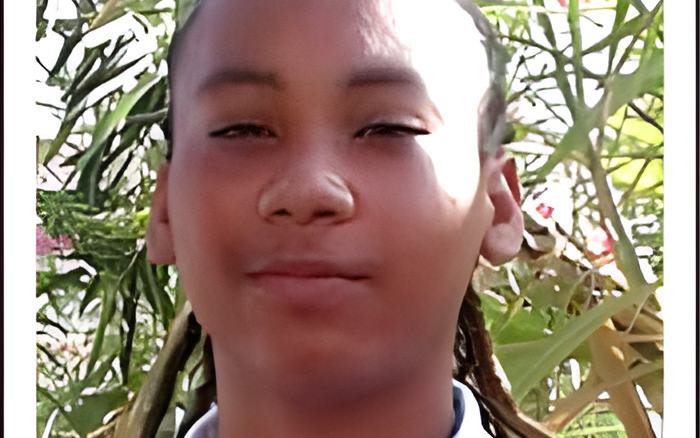

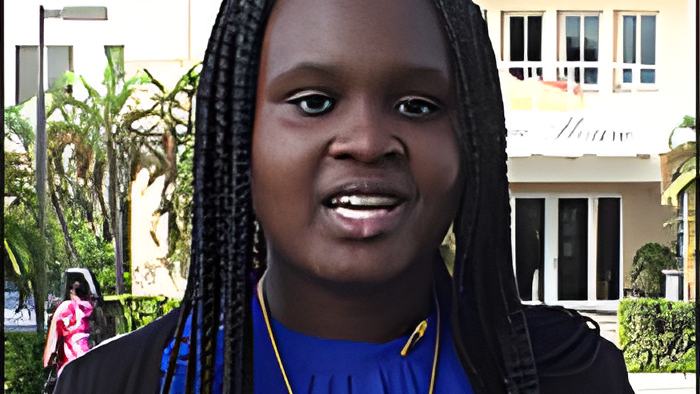
Today was World Children's Day, and to celebrate, our newsroom partnered with UNICEF and a youth reporter to get a teenager's perspective on the disorienting event of online schooling.
And while online learning has its limitations - and deprives the young student of key interactions when it's the only way - resilient kids have to find a way to make it work.
Tonight, our junior reporter, Tamaine Ottley brings us perspectives from a parent, students, and even a principal on what learning from home really been like.
Tamaine Ottley
"My name is Tamaine Ottley and On this World Children's Day, I've partnered with UNICEF and 7News to tell a story about online learning and how COVID-19 has changed the way education is delivered to kids my age and younger. This is my school, S.C.A. It's where my classmates should have been studying behind a desk, but thanks to the pandemic Jade has been studying right here at home."
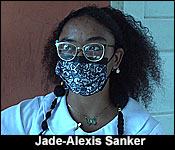
Jade-Alexis Sanker - Student
"Online school is, the big difference is that you can't really be there physically with other students. So, to me, I found it was a bit more, I was able to focus more. Am, compared to face-to-face school. So, for me I was able to focus more because of online school."
And while for Jade, solitude inspired focus, it's not the way every child would choose to learn.
Tamaine Ottley
So how has your online experience been social, grades wise and even in work-life balance?
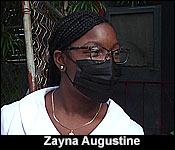
Zayna Augustine - Student
"Am, it's alright for me. I would say I prefer more face-to-face classes because even though we are at the safety of our own homes like It's kinda confusing and also. Plus, you have to deal with the internet and it's like not connecting every minute. That's why I like the face-to-face aspect of it."
Ms. Skeen, the parent of a preschooler, sees online school as an opportunity to better bond with her child.
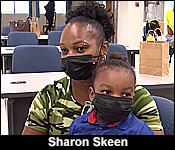
Sharon Skeen - Parent
"That's awesome you get to know the real child, not only the one that is at home after school but the one that is in the class also."
And while parents use the opportunity to get to know their child in the short term, youths can also use the opportunity to become better acquainted with their real selves.
Jade-Alexis Sanker
"I would tell them to take this time as an opportunity for you to really develop yourself mentally,I mean there's a lot of things we all can work on and we can use this time from being away from everybody else's projections to really go deep into who you are."
Of course - the socialization aspect of school is about looking outward - and that's what is sorely missing for those going to school though a screen.
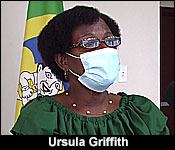
Ursula Griffith - Principal, Port Loyola Preschool
"We have psycho social component in our curriculum where we put on our packages for those who don't have the whats app because some of our parents will have to do a little extra for them. The psycho social give activity that parents can do with the children to keep them sociable. For example, this past September we had whole families marching in there home, so we do these things to ensure that the social activities and the moving around continues. Every week when we send out our packages, there is something for psycho social in there, it's not just math and communication and language arts, it goes further than that."
And while virtual schooling is no substitute for the real thing, in challenging times what's key is resilience, and the willpower to get through this transitional phase with some useful knowledge and knowledge of self.
And we note that while the students of SCA are mostly from towns and cities, thousands of students in rural areas and under-served communities in many cases don't have access to broadband. The lack of access in those communities is deep and far ranging and cuts along socio economic lines.