
And onto a different kind of school - beekeeping classes - where the only security risk is being stung. More than forty farmers today graduated from a Honey Project Program, where they learnt all about beekeeping. The goal is to eventually standardize the honey made in Belize, and break into the international market - especially in larger countries where organic honey is hard to find.
But it starts with these beekeepers who come from across the country, each with their own reasons for wanting to raise bees and harvest honey - along with a number of other byproducts. Courtney Menzies travelled west to the graduation ceremony today and has this story.
Over forty students are certified and ready to join the sweet world of the honey industry. The Ministry of Agriculture's Honey Project concluded today with a graduation for all the beekeepers-to-be.
According to the minister, the goal for this training program is to up the standard of honey production in Belize so that it can hopefully reach the international market.
Jose Mai, Minister of Agriculture
"We realize that the honey Industry is a viable industry in Belize to a certain extent so way back in the 80's, the production of honey fell, it fell so low that there was barely any production. We used to export to Europe at that time so after so many years and efforts we couldn't get it up until now. I think that now we have to move forward towards looking at the export market now. We know we only have a certain amount which can be consumed in country because of our population, now as we expand you see today we have new beekeepers, we have new production coming in, we have to look at the export market now. that means 2 things, it means, one, standards and the other certification. It means now we have to have traceability in place, we have to have good manufacturing practices, we have to have good standards in place if we're going to tap into the export market. There's different types of honey, the honey made up north, for example, comes from sugar cane flowers, that's a darker honey, I've seen the honey that comes from down south, it's beautiful, clear crystal, and different people want different types of honey. I think that we have tremendous potential especially down south I think is just amazing."
Courtney Menzies
"What were some of the things that they learnt in the program?"
Jose Mai, Minister of Agriculture
"Well, everything. Management, managing bees. Nobody likes to get bee sting you know. but that's the first thing you have to deal with, the stings, the day to day management, the cultural practices, how do you establish a hive, how do you set them out, what are some of the constraints you'll find, some of the problems you'll deal with, just like a farm, it's a farm, you have to deal with the animals, so this training encompassed all that including some equipment for the beekeepers."
And the graduates each have their own reasons for wanting to pursue beekeeping as their livelihood - one mother says its always been in her family, while another nature-loving woman exchanged her office job for sustainable farming, and one 23-year-old man says he wants to give back to his country. We spoke with them today.
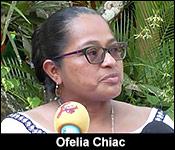
Ofelia Chiac, Beekeeper "Beekeeping is something that interest me from the beginning because my father and my grandparents were beekeepers. But when I realized I didn't have anything to do was during the pandemic. I was at home, find myself at home and that's when I realized its something… the idea came from my son who was also with me. And that is when we just started going in by just capturing bees, everywhere that we could find bees and we started with capturing the bees. But we didn't know how to keep them, most of them ran away. Bees is a funny business. Then at the same time the Minister of Agriculture said that there would be a beekeeping training so we decided to apply for it and we got accepted. After the training we learned so much about what to do with the bees and hence it can compare with nothing we had, that is the reason we have progressed from the bed running away to where we are at the moment. The only risk you may think would be there is pain but women take so much pain so beekeeping shouldn't be a problem. One of two [sting], no, unless you are allergic."
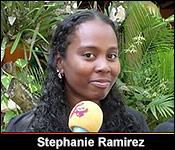
Stephanie Ramirez, Beekeeper
" A few years ago, about four years ago, we moved on the farm, I gave up the office, moved on the farm and decided to become a farmer. We weren't sure what direction to go, we were doing organic farming, we do greens, kale, bok choy and different fruits trees, but we wanted to do some sort of livestock and one of the things is that we're big into the preservation and conservation of our rainforest, our jungle, and we didn't want to tear down your jungle, livestock you need to tear down your jungle and so we did some research on bees and we understood that bees are also livestock."
Courtney Menzies
"Do you feel like you'll be able to get your honey to that standard to be exported to other countries?"
Stephanie Ramirez, Beekeeper
"Definitely, that's the goal, to be able to tap into the export market and to be able to tap into the other byproducts of the bees because a lot of times we put our emphasis on honey but there are many other byproducts that are even more expensive so you would get a bigger income if you start diversifying into the other byproducts such as the pollen, the royal jelly and you know so we can get on that level of Mexico and Guatemala."
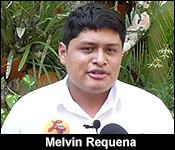
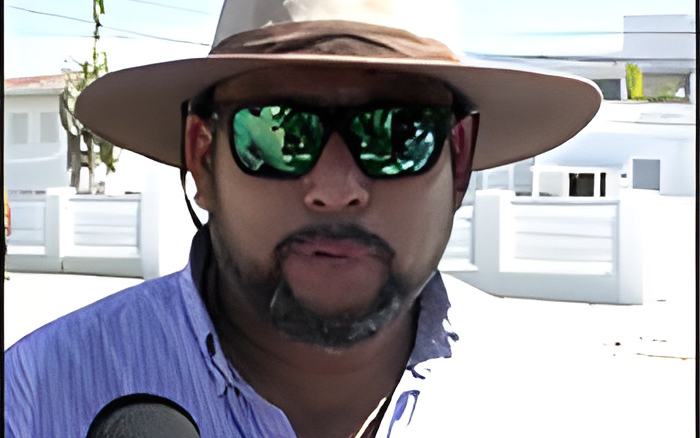
Melvin Requena, Beekeeper
"It's always been a dream of ours as a family since my family is a family that was, we grew up on agriculture so it was necessary to have bees on the farm because the bees offer necessary pollination services to the fruits which also then increases our production which also results in increased profits for the family. The hardest part would be probably dedication because it consumes a lot of your free time so then you would have to dedicate yourself rather than being out on the weekends, having fun, you would have to dedicate that time providing a service that many Belizeans don't actually recognize because beekeeping is a very, a huge industry for Belize and being a country that is solely relying on agriculture, it is something that is very important for us as a country to start appreciate the work that beekeepers do in the country. I feel as an individual I have the role being an agricultural major to help the country be food secure but I mean as a young individual, I mean, all the time management come into play so you definitely find time to socialize. It's all a balance, you have to balance life."
And at the end of the training, each student received four hives to get started on their sweet new job.