

body,td,th { font-family: Arial; font-style: normal; font-weight: normal; }
And taking a break from politics now...
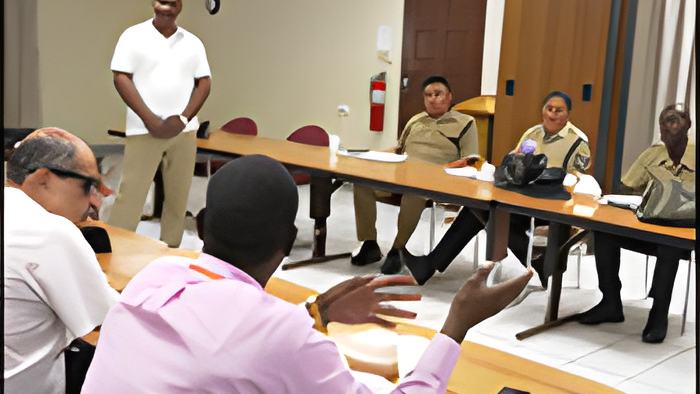
Galen University and the Kolbe Foundation today, held a presentation called Empathy & Recidivism. It was hosted by criminal justice professor Terrence Alladin and highlighted his preliminary work on recidivism statistics at the Kolbe Foundation.
For those not familiar with the term, recidivism refers to convicted criminals who commit offenses after they are released from prison and end up back in there.
And, in Belize the findings are that the prevalence of that phenomenon among inmates is quite low.
It's a statistic that given the constant talk of high crime rates may prove surprising.
But where does Empathy come into the picture? Well, if you ask the good doctor, he'll tell you that societal empathy for former inmates, in considering them as truly rehabilitated, is perhaps the single biggest factor in combating recidivism. Here's what I found out today at his presentation.
When Terrence Alladin started his research at the Kolbe Foundation it was, like most other things Mira 2020, derailed by the global pandemic, but in the years since the lockdown ended he's been back at it, studying what he describes as the Belize Central prison's success rate at avoiding repeat inmates behind prison was.
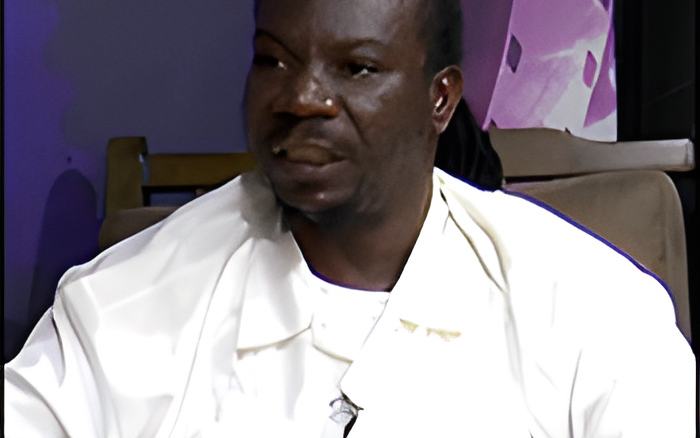
Dr. Terrence Alladin, Criminal Justice Professor, Lebanon Valley College

"We have so many people who are incarcerated and they, we expect people when they are incarcerated that they should come out rehabilitate but if we are not using the right programs to rehabilitate the people, the offenders then we are wasting our time and we need, we have used punishment as a way of, as a method of correcting people and punishment doesn't seem to be working. So, we need to look at a different way and the focus I feel is looking at empathy, putting empathy into our methods of punishment, when I say empathy I mean we need to understand the people who are incarcerated and why they were there. We need to address their conditions outside so when they are rehabilitated and we send them out they have a better chance of not reoffending again so that is the idea behind that."
And after hearing those findings we wanted to get an idea of the practical application from Central Prison Director Virgillo Murillo. He says prison isn't about sitting in a cell but make the choice to be actively engaged in productivity.
Virgillio Murillo, C.E.O, Kolbe Foundation

"Well, first and foremost we are not looking at the crime that the person has committed, we maintain that the punishment that these guys get is, that deprivation of their liberty, not being able to do what they want, come out of the prison and be there with their loved ones and what not so that deprivation of liberty is the punishment so we recognize that, secondly we are definitely trying to offer them as many programs as possible, if you didn't know it I will tell you that 80% of the population are engaged in some kind of rehabilitation program on any given day and we have numerous programs to talk about. We have the drug treatment program, we have the gang affiliation program we have spiritual programs, we have vocational programs, educational programs and even the Rachel program which is the computer or the program that teaches literacy numeracy and whatever else using it's stand alone server with contents the the prison wishes or chooses to have on the server, so the push for rehabilitation, the emphasis on rehabilitation, really is what is making all the difference in the world."
Still, Belize shouldn't be too quick to pat itself on the back because while the performance of Kolbe's programs may be stellar, once the former inmate is rehabilitated and released he often finds himself very quickly on his own, and if he or she has no family to turn to, without any support.
Dr. Terrence Alladin, Criminal Justice Professor, Lebanon Valley College
"Right, now what I see is that Belize has a low recidivism rate compared to the United States Mexico and other places, and that low recidivism rate is great but what happens to the inmates when they come out? They are having a problem finding jobs because they were incarcerated the thing is what we need to do is get rid of certain, some of the job requirements o if a person is incarcerated the first thing they ask for is a police record, well, maybe we need to get a way around that because of course they are rehabilitated so when do we stop punishing them. Ok, so that is where we have again empathy, we need to have empathy so that people know now if you are incarcerated and you have spent your time, the goal was to if you commit a crime you spend four or five years in prison whatever it is, you finish that time, you shouldn't be punished afterwards again because you can't find a job. If you are willing to start over that is what second chances should be about."