

Keeping it on the weather, Belizeans closely tracking the weather patterns for the last 2 years will definitely notice the two extremes in climate that we've been facing.
In 2019, we experienced what local officials said was the worst drought in the last 30 years. Then, in the last 2 weeks of April 2020, the Cayo District was in distress after the raging fires broke out in the Vaca and Chiquibul Forest Reserves. Those were helped along by the scorchingly high temperatures earlier in the year.
There is also the very active 2020 hurricane season, with its record number of storms.
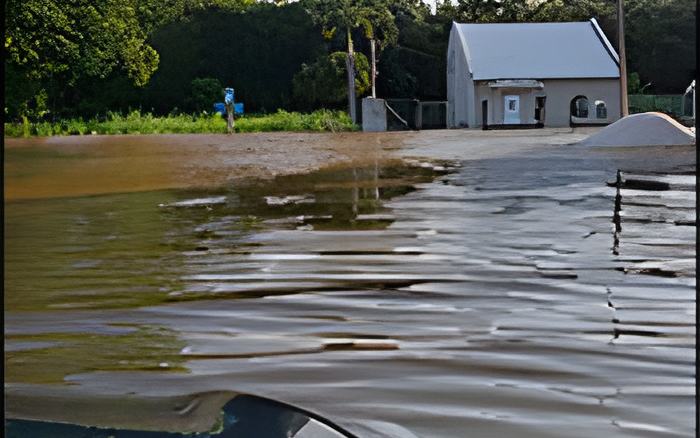
Belize, like the rest of Central America, is currently trying to recover from the floods caused by the two deadly November hurricanes, Eta and Iota.
If you're wondering why the climate suddenly seems more extreme than normal, a recently completed study called the State of the Caribbean Climate Report says that the entire Caribbean is collectively facing a similar weather crisis.
Some of the brightest minds in the Caribbean carried out a detailed analysis of the weather patterns in the CARICOM states. They have concluded that all of the extreme climate events of the last decade are directly connected to climate change and global warming. They are also predicting that extreme weather conditions like 2019 and 2020 will become the norm and that the people of the Caribbean must adapt and become climate-resilient.
The report was officially unveiled yesterday in a regional, 2-hour press conference, which was broadcasted live on UWI's Facebook page. Here are a few key excerpts from the presentations:

Dr. William Warren Smith - President, Caribbean Development Bank
"We do not need to be reminded of the significance of climate change for our region. We've watched, unfolding before our eyes, predictions that climate events would become more variable, more intense, and more damaging for the predominantly small island states of the Caribbean. In the past 3 years, I joined 2 CARICOM missions to witness first-hand the damage and destruction caused by Hurricane Mariah on Dominica and Hurricane Dorian on the Bahamas. These front-row views of the catastrophic impact of hurricanes reinforce my own conviction that climate change must remain at the top of CDB's assistance agenda, and underscore the urgency of Caribbean governments building resilience to climate change."
Voice of: Professor Michael Taylor - Director, Climate Studies Group, UWI Mona Campus
"Our climate is already changing. If you look at chapter 3, Chapter 3 picks up that message and discusses it in terms of rainfall and temperatures. It discusses it by using climatology, which first of all just set the baseline.
"It is this chapter that makes the case that the Caribbean has warmed, and that warming is having a significant impact on our way of life. It is this chapter that makes the case that inter-annual - or year-to-year variability in rainfall, where one year is extremely wet, and the next year is extremely dry is an important and significant manifestation of our changing climate, which we must come to terms with."
"Within the last 11 years, we have had 2 major region-wide multi-year droughts that have impacted the Caribbean and impacted our way of life. Chapter 4 supports the idea that our climate is already changing."
"If we are going to live with this climate that's already changing, early warning will have to be a part of the strategy, going forward. There is a need to understand and forecast Caribbean climate extremes, as they will only grow under projected climate change."
"We're on a track for continued variability in rainfall, but around a lower means, so a drier future, higher sea levels, and more intense hurricanes. This chapter presents this kind of picture for the Caribbean, and it does so for 3 time-frames, the 2020s, for immediate planning, the 2050s for midterm planning, and the 2090s for long-term planning."
Dr. William Warren Smith
"Ladies and gentlemen, before I close, I wish to make 2 important points, which should underpin our future work on climate change. First, early investment can reduce economic damage and loss of lives to disasters. Therefore, Caribbean countries must take early action, and receive the full support of the development agencies in planning, in implementing safeguard measures and investing in the appropriate climate-resilient infrastructure. Second, climate change adaptation and mitigation are more effective when they are fully integrated into a comprehensive and sustainable development framework."
This study was carried out through collaboration between the University of the West Indies, the Caribbean Development Bank, the African, Caribbean, and Pacific Group of States, and the European Union.