
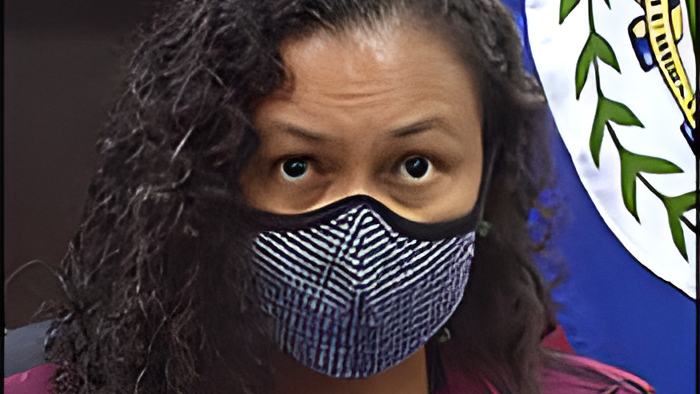
We also asked the TNC representative to discuss that extended list of conservation commitments which the Government and People of Belize have agreed to under the Blue Bonds agreement.
Belize is expected to step up its marine conservation significantly under this new agreement, and we asked TNC's Julie Robinson to explain the more important commitments on the list:
Julie Robinson - Belize Program Director, TNC
"In terms of the conservation commitments, there's a suite of them. There's a set that we call milestones, and those milestones include things like the protection of 30% of Belize's oceans. Now, when I say oceans, I want to be very specific here because we're talking about going all the way out to the 200-mile marker, including the exclusive economic zone. Currently, Belize is just under 16% protection. So, we're talking about almost doubling that. But, it's gonna be done in a way that's representative. So, right now the area that has the least amount of protection is our deep sea ocean. So those are some of the areas that we will be concentrating on. In terms of that protection, that will be done in a step-wise fashion. So, commitments like, in the first year, let's get to 20%. In year 3, let's get to 25%; in year 5, let's get to 30%. Those are some of the commitments. That will be guided by a marine spatial plan. The marine spatial plan is another commitment that the Government has made to the Nature Conservancy, which is they will initiate that marine spatial plan within the first year. We call that the MSP; the Marine Spatial Plan is the MSP. The MSP is a participatory process. It will be led by Government, facilitated by TNC, but it will be stakeholder-driven. So, that process is a lengthy process. We're planning it to be a 5-year process, and it will include all the various users of the seas. And not only the current uses like how we use our seas now, but it will also take into consideration any future uses."
"Other commitments are a little bit - I'll say - softer in the sense that these are what the Government has said that they will commit to doing, but there's no financial penalty if they don't get these done. Those include things like improving the governance for fisheries, aquaculture, setting up a framework for blue carbon, looking at watershed management. So, there's a number of different things, but I'd like to think of them as less of commitment, but more than this is kinda a partnership whereby Government, TNC, and other local NGOs and other partners have said that this is the way that we as a country want to develop our Blue Economy."
We also asked her to discuss a situation where Belize fails to meet these commitments for whatever reason. She said that there are certain grace periods built into the timelines set for the more important conservation commitments:
Julie Robinson - Belize Program Director, TNC
"I think that it will be very unlikely for Belize to not follow through on any of those commitments because these are things that we actually worked on together. But, in the unlikely scenario that they do, I would imagine it's likely due to some extraordinary circumstances. For example, we're still in a pandemic. There could be other major events that could happen that could impact the government's ability to actually follow through on those commitments."
"One of the things that we've built into the structure is to allow a grace period, for example, so that if they don't meet a commitment by a certain time, there is a grace period for Government to try and make corrections to that. However, if Government is still unable to meet those commitments, then what would happen is that there is a financial penalty, so a penalty and that amount will be held in escrow. Now, in terms of the details for how those funds would be managed, I have a financial person who would be better able to talk about the details of that."
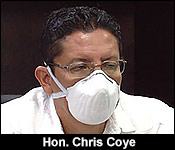
Hon. Chris Coye - Minister Of State, Ministry of Finance
"I can speak quickly to that. In terms of those financial penalties, if they arise, those would actually get paid into the Conservation Trust Fund. So then, it actually stays in-country."
Tomorrow you'll hear about the Marine Conservation Endowment Fund.