
Exactly a week ago, we told you how the Ministry of the Blue Economy backed down on new regulations for the lobster industry.
Those new regs require that lobster tails weigh a minimum of 4.5 ounces, up from the previous 4 ounces. Also, fisherfolk would no longer be allowed to catch and market lobster smaller than 3.25 inches. Previously, the minimum size was 3 inches.
Fishing communities all across the country loudly objected, insisting that this change would basically drive them out of the business. They insisted that they would only be able to find lobsters that fit those minimum requirements at the very beginning of the season. Every catch from later in the season - they said - would be disqualified for being too small.
With all the pushback, the Ministry decided to postpone the implementation of those lobster regs until next year. However, technicians from the Belize Fisheries Department are now looking for industry data to track trends, which can be used to extrapolate the overall health of the lobster population in Belizean waters.
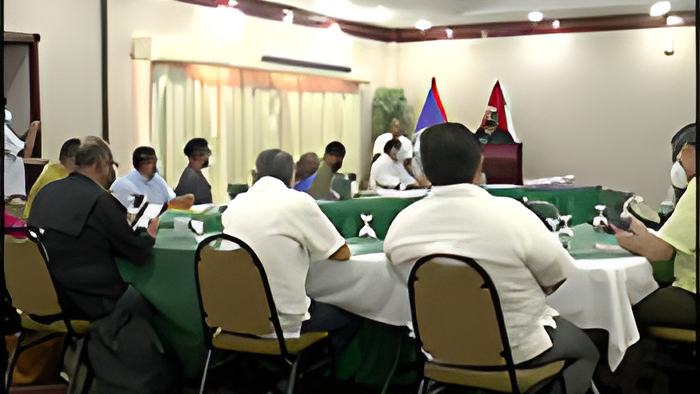
This morning, the Fisheries Department invited the press to discuss the preliminary findings of the Lobster Stock Assessment, which was carried out by Ofelia Morales Fadragas, a Cuban lobster expert. She worked alongside a scientist from the Environmental Defense Fund and the leadership of the marine co-management organizations. The spokespersons were very careful in their description of this snapshot of the industry, and here's what they told us:

Mauro Gongora - Fisheries Officer, BFD
"The assessment of the spiny lobster fishery of Belize is very important, as you know, because of its huge importance. Actually, spiny lobster is the primary fishery commodity of Belize, generating over $35 million Belize dollars, and employing over 3,000 fishers. And so the fishery was assessed this week based on export data that we collected from the fishermen cooperatives and from the private entities that process and export lobster tails out of Belize."
"So, the results of the assessment show that Belize is experiencing a fishing effort level that is not sustainable at this time and that we think that it is a result of other sectors, economic sectors not performing particularly well. And that is why you have a number of fishers joining the industry, but also because of the impacts of COVID 19, which has affected the national economy of release as well."
Reporter
"So there's been like overfishing. Is that the term used?"
Daniel Ortiz
"It seems like that's what you were going for in a very politically correct way, sir."
Mauro Gongora
"Well, I don't think we have reached that point as yet, and that is the reason why it is important for the government to put in place management measures that will prevent or avoid going into overfishing of a very important fishery resource."

Kendra Karr - Rep. Environmental Defense Fund
"So, what we actually went through this week is reviewing the data, and doing some analytics, and these are common methods used around the world to assess various fisheries, and to make decisions for management. And once we did that together as a group, we interpreted it, right. Someone from Turneffe Atoll has a different interpretation or might have a different idea of what we're seeing, compared to someone from down in Punta Gorda. So we took all the information of the experts that are in the room to really get an idea of what's been happening in the fishery over time in order to make some recommendations."
Mauro Gongora
"I can tell you that the spiny lobster resource is undergoing some strain at this point in time. And the recommendations that are coming up basically indicate control of fishing effort and reduction of fishing effort."
The fisheries officers at the event told us that this report will be presented to the Ministry of the Blue Economy for further analysis.