



About five months ago, BEL started the conversation with the public about energy independence. That was within the context of a national power outage which was caused when the national grid lost access to the electricity sourced from Mexico. Also, world oil prices were soaring on the international market, and that was creating the possibility of instability for electricity rates.
One of the major projects that BEL proposed was the possibility of customers installing solar panels on their rooftops to generate renewable energy that could be sold to the grid for more indigenous sources of electricity.
Since that idea was floated publicly, rooftop solar has gained a lot of momentum, and it is now poised to feature prominently in the government's National Energy Policy, which is currently being finalized.
But how much do you know about solar panel technology? Daniel Ortiz went looking for answers. Here's part 1 of his story:
For a number of years - and in the last few months specifically - corporate and public entities in Belize have been on a full-court press to encourage citizens to be more energy efficient or reduce their dependence on fossil fuels.
In March, Belize Electricity Limited launched a Pilot Project for their National Electric Vehicle Charging Ecosystem.
Sean Fuller - GM, Commercial and Retail Services, BEL
"We're creating a brand new ecosystem, one that will transform and transition our country to a more environmentally-friendly, cheaper, and safer means of transportation in Belize."
2 months later, the electricity company presented the idea that Belizean households could install solar panels on their rooftops, generate solar energy, and supply it to the grid as citizen power suppliers who could get some sort of value for that.
Sean Fuller
"We've submitted to the PUC draft legislations to allow for distributed generation and solar PV, that is, both interconnection standards to ensure that these systems are installed properly and interconnected to a network safely, and also two tariffs; tariffs for distributed generation and a feeding tariff that allows BEL to be able to purchase excess power from these producers, the independent producers' households."
On the regulatory side, the Belize Bureau of Standards launched the Energy Efficiency Labeling Scheme to encourage Belizeans to become savvy when selecting appliances with better energy ratings.

Mirco Schroder - Programme Officer, EU Technical Support Office
"We all can and must change our habits. In the past, all of us learned how to save water in school, but we have yet to learn how to save energy. Therefore, we need more education and awareness raising on how we can use our energy best."
The Ministry of Public Service, Energy, and Public Utilities will most likely include these initiatives as part of their National Energy Policy for Belize, not only demonstrating the nation's willingness to adapt to the global trends and best practices, but a determination to be among the countries actively pursuing net zero carbon emissions.
Ryan Cobb - Director, Energy Unit, Ministry of Public Utilities, Energy, Logistics & E-Governance

"This year, we initiated the process of updating our energy policy for the country of Belize. Within that, we have several goals. One of the primary goals is to have 75% of all electricity produced in the country from renewable energy resources by the year 2030."
Daniel Ortiz
"To fit in line with the COP-27 and COP-26 agreements?"
Ryan Cobb
"That is correct. Actually, we updated our nationally determined contributions to be in line with that. And the policy is following that line right now. This policy is centered around seven main pillars. These all centered around having greater energy security when it comes to electricity generation; generation from more renewable energy sources; the choice of generation, such as how we can allow distributive generation within the country. So, that means your rooftop solars."
"We're also looking at energy security, such as fuels for vehicles and hydrocarbons. We're also emerging looking at emerging technologies, such as electric transportation, both in the private and the public sectors. So, these are just some of the lines that are at the core of the energy policy."
So, since rooftop solar - a type of distributed generation - features prominently as one of Belize's fundamental pivots to renewable energy sources, there are a few important issues that citizens must acquaint themselves with.
Obviously, the first question is, how does it work? Ssolar photovoltaic panels are equipped with evolving technologies that capture sunlight and convert it into electrical energy that can be used or stored.

Sean Fuller - GM, Commercial and Retail Services, BEL
"The expansion study suggests that we can get anywhere between 45 and 60 megawatts of solar on our network. To put that in perspective, our entire grid's need right now is about 110 megawatts. The study is saying we can have as much as 45 to 60 megawatts additional of solar on the network."
Next, BEL and the regulator, Public Utilities Commission, are already in the early stages of negotiation for its roll-out in Belize.
Ernesto Gomez - Director, Tariff Compliance and Standards, PUC
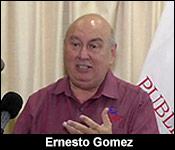
"We have to open up the law to develop licenses for different people. Right now, we only have licenses for the power plants - we call them the independent power producers, licenses for the utility, and a license for somebody who wants to put a big generator for his own use. We need to open up that license to be able to give licenses to people who want to put it on their rooftops."
"We are just about to release the concept paper to the public on the different forms of rooftop solar and distributive generation."
"We cannot make any decision without consulting with the public. So, we put it out there. The public gives us their response. When we get their response, we then write the by-law, put it back to the public, and if the public is comfortable with it, then we send it to the Minister for signature."
While that consultation process is going through the motions, BEL is ready to fast-track its roll-out - once the legal fine print is worked out.
E. Andrew Marshalleck, SC - Chairman, BEL's Board of Directors

"The technical issues are not significant. I think we suffer from having to plan, plan and plan, and a little slow on execution. It's not so much about the planning. The rest of the world has moved ahead with this years ago. We know how to do this. The technology to do it is relatively available. All we need is [a] regulatory environment in which it's permitted. In fact, it was being permitted kinda off-book outside the regulatory regime already in some rural communities."
There are also very strong arguments in favor of this project for citizen solar generation. The main benefit is that Belizeans will support BEL to become more energy-independent by forming part of its home-grown power generation sources. The fact that it is renewable and not harmful to the environment is most certainly an added plus.
Dr. Devon Gardner - Policy Expert/Head of Energy Unit, Caricom Secretariat

"Imagine a customer being able to go to an electric utility like BEL and say, 'Look, I want to put a two-kilowatt solar system on my rooftop, and that is financeable through BEL and the utility bill. Those kinds of things, if articulated through policy and eventually supported through the appropriate regulation, would be a win for customers who would no longer have to be forced to go elsewhere to find resources to finance solar PV if they so decide. They would now be able to build some amount of - if you want to call it - stand-alone resilience into their systems at home. For instance, if you have a hurricane, like the other day, you would have some amount of self-generation that would keep going, even while the grid is down or unavailable. More so, it allows you to show that you're a custodian."
There's also a potential benefit of rate stabilization since Belize won't be depending so much on fossil fuels and the volatility of oil prices on the world market.
Dr. Devon Gardner
"Hopefully, if the system is built out in a way in which it is optimized, we think that it could lead to reductions in costs. Certainly, in the worst case, even if it doesn't reduce the cost compared to where it is now, it will make the cost stable. You won't have those up and down, variable fuel charges emerging, as you would have when BEL is dependent on some of those fuels and electricity supplies that are functions of international oil markets. One of the things that are important is to get to a point where we can, as a country, have greater predictability in pricing and supply."
Tune in to tomorrow's newscast when we'll have part 2 of our story, which explores pitfalls that Belize wants to avoid in its implementation of rooftop solar.