
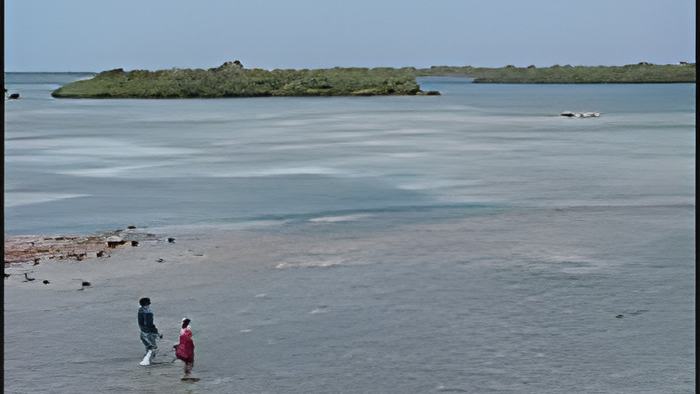
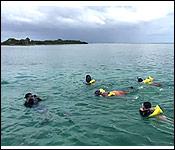
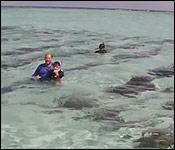
Imagine yourself swaying in a hammock above sandy beaches with the Caribbean Sea glittering in front of you. That's what it's like everyday on the Turneffe Atoll - a 30 mile long haven of tranquility and natural beauty.
But keeping it like that doesn't happen for free - the Turneffe Atoll Sustainability Association ensures that the marine reserve is protected against disasters - both natural and manmade. They're responsible for making sure that the entire marine ecosystem - which includes part of the Mesoamerican reef system - that sits below the waves continues to thrive.
But more than that - they also make sure that both tourism stakeholders and fishers are able to put food on the table in a sustainable way.
And this weekend, journalists from various media houses in Belize were ferried out to the atoll to find out just what it is that TASA is protecting. Courtney Menzies was there and she has this story.
The Turneffe Atoll is a collection of islands made of white sand and greenery, surrounded by sparkling cerulean waters, making it a hotspot for tourism, fisheries, and marine conservation.
And the Turneffe Atoll Sustainability Association is in charge of ensuring that this natural resource remains as pristine as possible, while living up to its reputation as a captivating marine wilderness. It's headquartered on Calabash Caye, at the center of the atoll, and that's where we spent this past weekend.
While Turneffe has always been an important location for both the tourism and fishing industries, TASA has broken into the eco-tourism world, while still maintaining its conservation efforts. This includes the nature trail, which shows off the flora of Calabash Caye, including its mangrove forest, and the underwater trail where snorkelers can get a glimpse of what it's like under the sea.
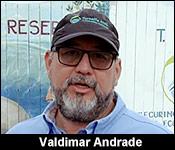
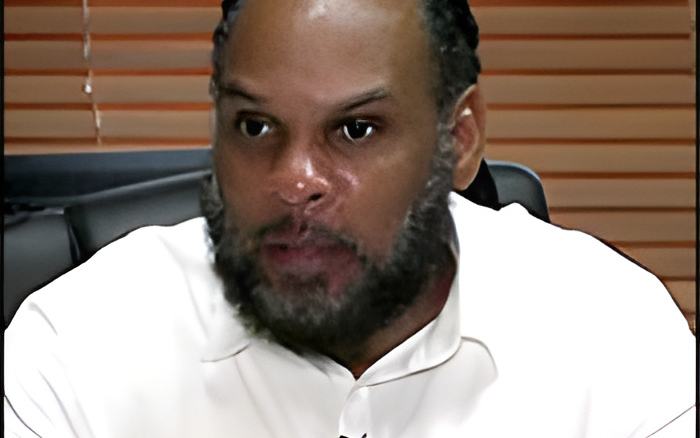
Valdimar Andrade, Executive Director, TASA
"Here we also is our base for our tourism and sustainability program and so here we also have our nature trail which you will visit tomorrow morning to be able to get a good glimpse of the littoral forest and the mangrove eco system and you will be able to see from lagoon to sea and what are the functionalities of those systems. We also have an underwater trail which you were fortunate to visit today and get some glimpse of the life that is on there and we really appreciate that the Belizean journalists have taken the time to immerse themselves in all of this and to look at what is there and what it is we are doing. But our job is basically to build infrastructure and products around the natural resources that we are working with."
And a little further from the island is the seaweed farm - a little known trove of what could be a potentially sustainable livelihood for fishers to take advantage of during the off season for seafood delicacies such as lobster and conch.
Valdimar Andrade, Executive Director, TASA
"In terms of the seaweed farm, we have been working with fishers since 2017 to look at how we can look at complimentary livelihoods that decompresses the pressure on fisheries like conch lobster and fin fish and so we have been exploring techniques on how to do it, if you notice that technique is a submerged technique."
"That particular farm that you saw is actually the seed stock farm so we manage that and from there fishers get seed stock to seed their seaweed farm. teh technical methodology requires them to harvest 75% and leave 25% behind that 25% allows them to continue to grow seaweed."
"So now we're looking at the market realities in terms of the foreign market. Seaweed is used as a glutenator so basically it is used in the labs, it is used at a thickener for soups and other products, it is also used for ice creams and also in cosmetics and so we have been looking at the super food industry as well, so where it would provide quite a bit of money, or comparative money to the fisheries that it is trying to offset at the end of the day so that is the work that we're doing now to look at the markets."
And according to Andrade, before COVID, there was an average of over 13,000 people visiting Turneffe, but that has dropped to about 7,000. But they've been investing in the infrastructure, and now, they've come up with a marketing strategy to advertise this little known treasure.
Valdimar Andrade, Executive Director, TASA
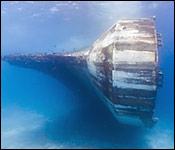
"For us, it has been, again, one of the things that we have learnt, we have to do more marketing, again which was not a forte of what we did before but now we have built a whole marketing strategy, you can visit turneffe.org and you will see parts of the marketing strategy that we are building there so we are working with the Belize Tourism Board, we are working with all of these partners cross here to be able to market this product. So the Wit is a hook product and so the adventure dive market is huge and so now we have to largest artificial wreck dive site in the Caribbean and Central America so we are able now to go out and market that. So now we're going to start to be going out as of this year to shows, DIMA, the dive shows, to be able to put that product out there along with the Belize tourism Board and others."
But of course, though Turneffe is undeniably a natural gem for Belize, TASA still has a lot of work on its hands as it contends with diseases, illegal fishing, and funding.
Valdimar Andrade, Executive Director, TASA
"This is one of the things, one of the pressures, from fishing, this is some of the pressures we are facing in terms of climate change, in terms of other things, I don't know if you're able to see there are some stony tissue lost disease, the coral that are showing some of that which we are treating."
Reporter:
"The white, right?"
Valdimar Andrade, Executive Director, TASA
"Yes, exactly, and so those are some of the things that we have to continue to work on at the end of the day so our adaptive management program is working on some of this to be able to get the coral reef help."
Reporter:
"Has it gotten more difficult to enforce?"
Valdimar Andrade, Executive Director, TASA
"For us, I would say, yes, because of fuel prices. Because in terms of fuel prices and that is why we have been looking at technology, from that point of view it has gotten more difficult because we have to spend more to get more but generally over the years we have built a good rapport with the fishers here and the stakeholders on Turneffe, the tourism stakeholders that help us to keep an eye on it as well. So what we have been able to prove is if you have consistency, it works."
"The reason we are doing this whole sustainability program and the blended finance approach is because all funding is difficult or booming difficult to get. There are a lot of additional hoops that you have to jump through today to get those funding and especially the multilateral ones, it's a lot of work but that's development work, development work is a lot of work and you do want to make sure that you are able to deliver on those."
And it's important that TASA is able to keep patrolling and preserving this natural resource because not only does it put food on the table for plenty of residents, but if the Turneffe Atoll didn't exist, neither would Belize City.
Valdimar Andrade, Executive Director, TASA
"It is a source of protein for this country that is very valuable, it is also a source of protein that is tradable and especially at this level. 1 in every 4 is employed in tourism and so spaces like this create that level of employment for locals and so in the fly fishing industry for example, those are higher end guides that are employed in those space and so that is also why people should care at the end of the day."
"In terms of Belize City, if Turneffe was not here, Belize City would have been blown away a long time ago, that's why people should care, tomorrow when we go on the tower, I will show you the 11 thousand acres of mangroves that protects Belize City."
And therein lies the totality of Turneffe - environmental safety net, natural wonder, and a major factor in the livelihoods of hundreds of residents. And as Turneffe protects us, TASA is hoping that Belizeans return the favor.
This trip was accompanied by a workshop hosted by members of Earth Journalism Network, who will be giving up to ten grants to Belizean journalists to produce stories about the Blue Economy. We'll tell you more about this tomorrow.