
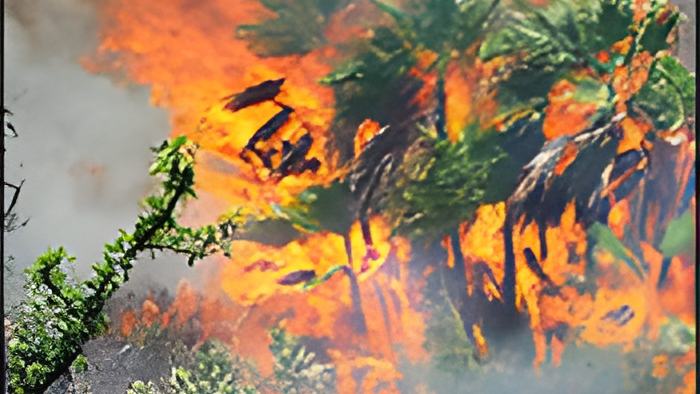
And in other news, the dry season is approaching in a couple months, and that means more wildfires for the central area of Belize, which is surrounded by savannah lands. And while this is healthy for the savannah, it has gotten out of hand in recent years, so much so that it has threatened both property and lives.
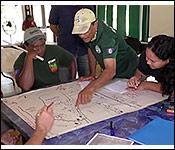
And that's why for the past three years, the Belize Zoo and Monkey Bay Wildlife Sanctuary, along with other stakeholders, have formed a coalition which seeks to turn villagers into firefighters. This training not only helps residents and technical staff learn how to control and extinguish wildfires, but also teaches about best fire practices - which include not burning fires during the hottest part of the day.
Courtney Menzies was at the training session today at the sanctuary and has this story.
As the rainy season comes to an end and the heat picks up, those in the Central Belize area are preparing for wildfires. The savannah near villages like La Democracia, Gracie Rock, and Cotton Tree provide the perfect conditions for fires that can easily get out of control.
That's why the Maya Fires Corridor Fire Working Group was formed - to prepare both villagers and more technical staff in the area to be able to switch into firefighting mode if need be. And according to the Conservation Project Manager at the Belize Zoo, it might be worse following Hurricane Lisa.
Jamal Andrewin Bohn, Conservation Project Manager, TBZ
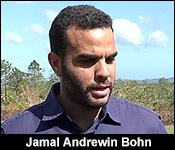
"You may notice with all of these communities, they're all ones that have fire in their backyard. We're all kind of immerse in this pine lowland savannah that every dry season, it becomes a fire hazard so it is something that is unavoidable and fire happens regardless. We also have some of these stakeholders that need to burn as part of the agricultural practices so ultimately we're ensuring that they have the tools, the knowledge, the skillset to do so in a safe manner that, again, doesn't cause any secondary harm to health livelihoods and life, basically in this area."
Courtney Menzies:
"Did you see a lot of more extreme cases of burnings that went wrong or fires that spread too far and affected other people's home or their farms or whatnot?"
Jamal Andrewin Bohn, Conservation Project Manager, TBZ
"All the time, it's been a chronic issue in Central Belize, much like any other part of the country that has fire prone areas like savannah and usually we also see and uptake right after hurricanes and so when we came up with this project proposal and we actually pitched it to the US Embassy for funding, which they endorsed, our biggest concern was the impact it has on public health just on a yearly basis but as Belize experiences more and more storms we know that the dry season that usually follows a major hurricane season means more fires, more fuel on the ground."
"Basically, everything the hurricane brought down must go somewhere and it sits, it rots, but as it dries up, as the weather conditions in this area become more favorable for fires, it's literally like you're standing in a tinder box, it's all this fuel that is sitting on the ground and waiting to be lit, either accidentally, intentionally, by nature, by man, usually by man, and it just adds to the already high fuel load that usually sits in these savannah areas if they haven't burned for several years, so it makes a high risk area even more alarming and concerning."
And the training included two groups, both lasting for two days each, and headed by TIDE's terrestrial manager, Mario Muschamp. He explained what it takes to be able to fight fires.
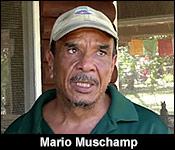
Mario Muschamp, Terrestrial Manager, TIDE
"You need to understand fire behavior and the factors that influence how fires behaves and that's your weather parameters, that includes weather, temperature, relative humidity and the fuel and the stuff that will burn and what condition those are in so those are the things you'll need to know, how those will influence how that fire behaves because the fire behavior will then tell you if you'll be able to control and manage it. In terms of the safety zones and all of those things is to ensure that the guys who will be implementing, dealing with fire have a safe spot that they can get back to in case things go wrong and you need to get to somewhere safe. No matter what that fire does, you'll be in a place where you'll be safe."
"Also a part of this training is for people to understand how you manage a wildfire, so first step is that you will go and assess that fire, see exactly what it's doing, then after that you will come up with your strategies and your actions on how you're going to put that fire out and organize yourself, as you can see the organizations, who is going to lead, who is going to be responsible for certain aspects of the operation."
"Then we are looking at fire as a tool for managing of eco systems that actually needs fire like our pine savannah. Our savannah actually needs fire but what is happening in Belize, it's getting too much."
"The bottom line is that if you don't plan and if you don't work according to your plan then there's a high chance that things will get out of control and you'll be putting the life of that crew and who knows what else in danger."
And the participants today were the technical team who underwent more advanced training - including a staged burning over the weekend. And while they say the first time around was difficult, they've been getting the hang of controlling a fire - which takes a lot of teamwork.
Jimmy Zometa, Conservation Ranger, Monkey Bay Wildlife Sanctuary

"I was part of that burn, but I was actually more as a guidance person helping new recruits to come in and learn about these fires and because of us doing these trainings and having time to be out here and get familiar with all the tools and techniques, for me, it was kind of easy compared to when I did it the first few times and I could also share my knowledge with the others in an easier way, so it's easier to explain and easier to see how everything works out as plan."
Ernesto Velasquez, Head Ranger, Belize Maya Forest Trust
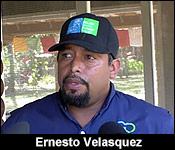
"The first thing is working together as a team. I notice this is becoming like a big fire fighting family. We've been together almost 2 years now doing different trainings here and there and I know sometimes here in Belize we're going to need everyone's help and maybe even more. So, I think it's very important for us all to learn each and know who could take on responsibility roles and doing fire fighting on a big management. As we could remember before a couple of years ago we had a big fire. If we had the training we have now, I think we could have work together and done a lot."
Since the training began three years ago, close to 50 participants have learnt the basics of fighting wildfires.
13 of this year's participants were villagers, and 15 were technical staff.