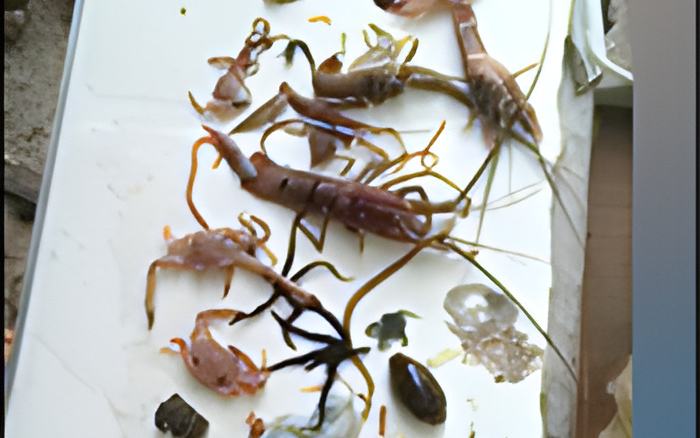


And MarAlliance is also keeping a close watch on the sargassum swarm. It's trapping and suffocating marine life. But there's no simple or single solution. According to National Coordinator Kirah Foreman, dealing with sargassum requires a multi-prong approach.
Kirah Foreman, National Coordinator, Mar Alliance
"We work with megafauna. We work with sharks, rays, turtles, and other species that we work with. They utilize these areas for industrial habitats. So sharks, juvenile sharks, they're in shallow seagrass, mangrove areas, turtles, they reproduce, they use the beaches for nesting."
"And so we, it's a sargassum issue where we're not working directly on the issue. It's very important for us to look at and for us to keep our breath support going on because it is impacting these species and the critical time of their life cycles when they're driven out within the nursery and recruitment areas."
"The sargassum issue is very complex. When we talk about responses, it has to be a multi-prong approach. If you look at other neighboring countries, it's something that's impacting not just Belize, but also Mexico, the entire Caribbean, the West Coast, Africa, there's an entire sargassum belt."
"So it's, I'm sure, you know, we have bigger countries than us with more resources who are still struggling to address the issue. So there are responses that have taken place, but it's a very complex issue."
"And it also, it really is a multi-prong approach, which will incorporate not just local action, but regional action as well. There's a lot of regional mechanisms that are looking at how to address it at a regional scale, but it is a complex issue."
"So while we would, as we would like to have a very quick, you know, we could just go there and clean it up. We would like to have a response set in place that would eliminate it completely. It's almost really realistic to say that that can happen, as you said, that there's nothing that we can do and that are being done."