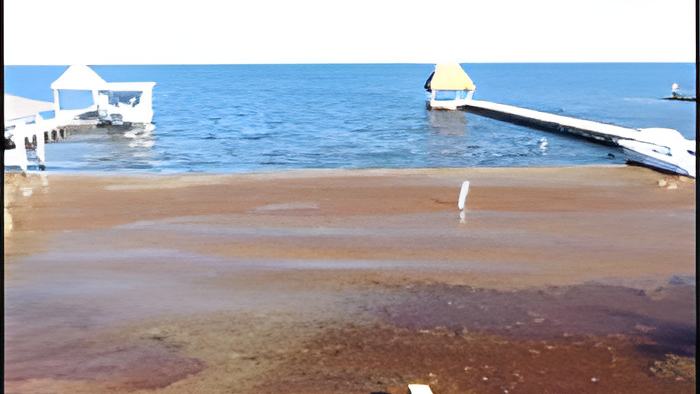
And Rosado further explained that it's one of the worst waves of sargassum we've seen, and has been ongoing for the past six months. And while Arceo couldn't confirm if it's affecting tourism overnight stays, he has heard reports of tourists shortening their stays. Here's what they said.
Valetin Rosado, Biodiversity Scientist

"This is the worst year. We've had some years that have been really bad but it's been consistent, every year, we get sargassum. The challenge with us this year is that it began in February and it hasn't given us any break. So usually you would have a couple days or weeks coming in and then it eases off throughout the year and it continues off and on but this year since February it's been non-stop."
"We've also realized we can't just let it be, we can't just stop picking up sargassum because everyday that we don't go out and clean up, it just continues to accumulate and unfortunately, it's not going to disappear, we still have to come in and take it out and usually when you're dealing with sargassum that's more than 3 days old, that's the worst because it cost more, you expose the staff more, you expose the equipment more, so the priority is that it has to be early and we have to have the resources to deploy immediately."
Elito Arceo, Tour Operator

"When you go fishing outside the reef, I was there two days ago, you can travel for miles outside the reef and all you will see in every direction as far as you can see is sargassum. Some of them are the size of a football field, it's massive. Now when you're dealing with the tourists, of course there's a concern because we're tour operators, that's how we survive, that's how this community survives. I wouldn't have the information if a hotel is having cancellation but if you do on social media on some pages, you'll see some people say I came for four days, six days, I left after 3, so we know that there is some effect of that. As a matter of fact at Mexico Rocks which is a popular site, some of the corals were not even visible."