
Last night, we told you about the major shortages at the country's largest public hospital. Midazolam, the preferred anaesthetic, is in limited supply, and is always needed for the COVID unit. And on top of that, the monitors used to observed a patient's vitals are in short supply since the ones they received from the ministry were defective.
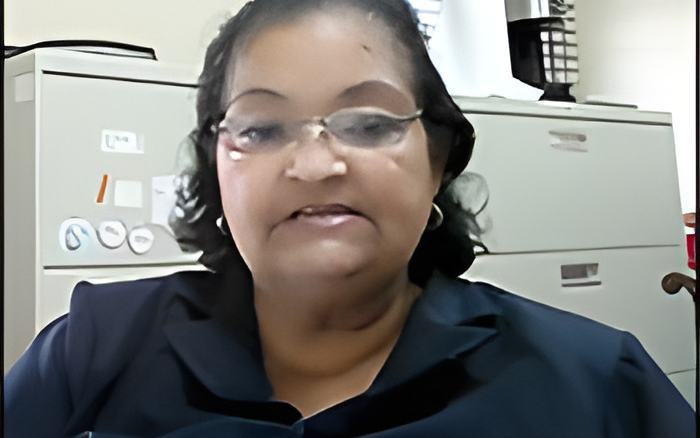
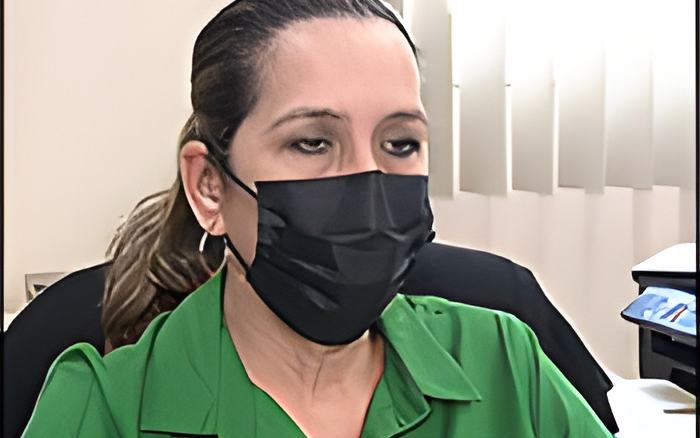
It's a huge concern as it relates to the quality of care given in the hospital, and today we asked the CEO Chandra Cansino if it could have contributed to the recent spike in COVID deaths. She explained that despite the challenges, the patients' health is their number one priority.
Chandra Cansino, CEO, KHMH
"For the most part, the anesthesia medications are available for any patients. Yes, we acknowledge that there is a supply chain issue with Karl Heusner and the Ministry of Health, and we were trying very hard to address that as urgently as we possibly can."
"I've only been here for about three weeks, but I understand that there has been a supply chain shortage for quite a few months now, which has been made worse by the pandemic and very high demand for these medications needed to, you know, to ventilate patients, et cetera."
Courtney Menzies:
"And has the hospital been having to procure its own out of its own pocket, having to find it, anywhere where they can find it and bring it in?"
Chandra Cansino, CEO, KHMH
"Yes, that is that is precisely what we were doing when the supply numbers go down to low, especially if it's on a weekend. The hospital tries its very best to look at the medications that are needed so that the patients can get the necessary treatment."
Courtney Menzies:
"But this has to be a serious cause for concern, not just for yourself, but for these doctors and nurses who are working with these patients, and I'm sure they are stressed that maybe one of these days we will run out."
Chandra Cansino, CEO, KHMH
"Yes, it is certainly nerve wracking. But as I said, we really, I really anticipate sit down with the Ministry of Health and Wellness very soon, and I think we will be able to address most of these concerns and most of these issues."
Courtney Menzies:
"Do you feel like a lot of the recent deaths have been attributed to lack of these types of supplies and equipment?"
Chandra Cansino, CEO, KHMH
"No, no, I don't. We've, for example, I think they reported yesterday that we have zero vials of midazolam. We don't have zero vials. We actually have about 200 vials currently in the pharmacy. And that is not a lot. That is for the amount of use that- for the amount of vials that we use. It's not a lot. So we're at that point where we're urgently in need of procuring some. And the ministry has written to us and I think we are supposed to get the supply in today. So yes, we do reach that point where, you know, we get nervous, but certainly we don't reach the point that the patient does not have the ability to get the medication."
And while they had to go into their own pockets for the anesthetic, they also have had to spend on assistance who do the work of the defected monitors.
Chandra Cansino, CEO, KHMH
"I know they received, I think it was about 15 to 20 monitors and they failed a little soon after they were connected. And so they've handed those over to the NENC which is an arm of the Ministry of Health and Wellness, so that they can do an assessment and establish what was the reason for that. So, no, they weren't working, but we needed to establish if we can fix them here or if they can't even be fixed."
Courtney Menzies:
"And how many are you in need of?"
Chandra Cansino, CEO, KHMH
"Well, ideally we would want to monitor for each patient because that is the tool that helps the medical team to conduct the eyeball assessment without having to go. And, you know, take the vitals that show everything, that shows the polls, that shows the blood pressure that shows the oxygen saturation. And so without that, it's a little more onerous on the medical staff because then all of that has to be done, you know, regularly, you have to do it. In some cases, every 15 minutes, in some cases every half hour or in some cases every hour before or it depends on what the doctor prescribes."
Reporter
"And have this lack of or these machines that malfunctioned and right now operating on the limited amount that you do have. Has this affected the way the doctors and the nurses, the quality of care that they give that they have to be… Taking on another set of stress, knowing that they are not all patients might have this monitor?"
Chandra Cansino, CEO, KHMH
"No, no, because we've actually hired additional temporary staff"
"PCA's that's what we use, patient care assistants that they're actually functioning, perhaps as little machines, you know, doing the busy work of getting the numbers so that the doctors and nurses can properly do their job."
Courtney Menzies:
"But this does affect the hospital's finances, which is already limited."
Chandra Cansino, CEO, KHMH
"Yes, yes, the finances are very limited, but we do what we can with what we have. And of course, the patient is a priority for us. So if we have to do without, you know, something for administration, then we do without that and we ensure the patients have what they need."
And we also received reports that the hospital didn't have biowaste containers used to store waste needles and the like, and that they had to use crystal water bottles as storage containers. Cansino said she would have to check on those reports since as far as she knows, they had already received the containers required.