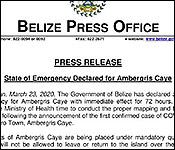
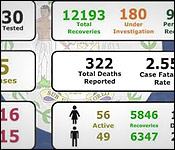
Two years ago, on March 23rd, 2020, the worst fears of many Belizeans were realized. The then-prime minister had announced that Belize had recorded its first COVID case, plunging us into what would be the two most trying years of our independent history. With over 650 deaths and even more confirmed cases, the pandemic has devastated families and all but crushed our fragile economy. And while we'll never go back to "normal," there is a new norm that we can look forward to, and that starts with the removal of restrictions that first started two years ago.
Tonight, Courtney Menzies takes a look back at the start of the pandemic in Belize, and got some insight from the man who was leading the charge, Dr Marvin Manzanero. Here is that story.
Where were you two years ago today? Probably at home, watching the news and hearing about the first COVID 19 case that was identified in Belize.
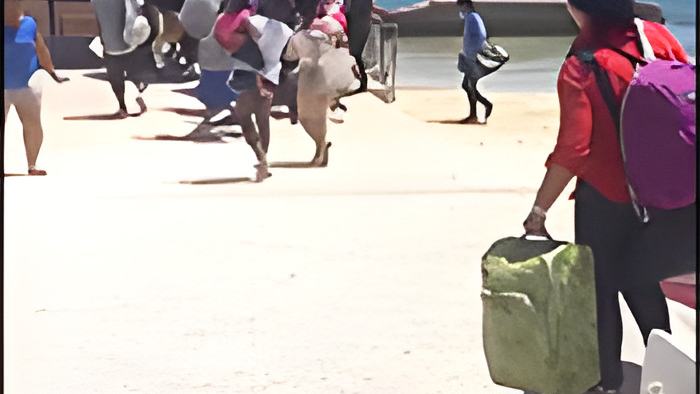
Today marks the two year anniversary of when that case was first announced and since then, we've endured lockdowns, curfews, and endless SI's. But in those first moments, 9am on March 23rd, 2020, it was like the world stood still, and then erupted into chaos as Belizeans began panic buying and store owners began price gouging. And everyone who could bought a one way ticket off San Pedro, where the first patient resided.
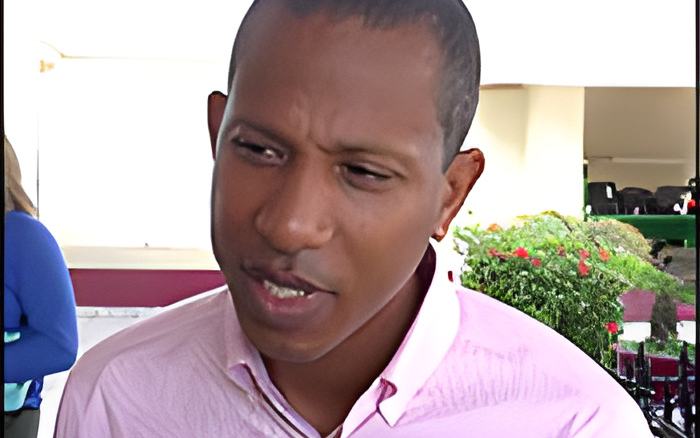
And one man who was at the centre of the fury in those early days, was Dr Marvin Manzanero. Today he recalled what it was like when he was first informed of the case.
Dr. Marvin Manzanero, Ministry of Health and Wellness

"The case had actually been swabbed as a potential case from the Friday, so that was March 20th, that sample was initially processed on the Saturday, March 21st. and I recall distinctly receiving the call Sunday morning, around 1:30 in the morning, is when the lab had called to confirm that that sample had turned out to be a positive situation. So we knew from Sunday March 22nd. I of course had to alert the persons who supervised me and then it went to the prime minister. And then we decided, because there were so many unknowns, if we could announce it on the Monday. Of course preparations of measures and whether situations needed to be dealt with were taken care of from the Sunday, contact tracing and all that, so the announcement was made on the Monday, March 23rd, two years ago."
There was even levels of protection that needed to be gathered for this index case and her family because you would recall other than the shelves being empty, it's also people with threats and people saying they wanted to burn houses and stuff like that. Lots of stigma situations.
"So whenever the situation came about to lockdown San Pedro, it didn't happen immediately, it was announced and in the 48 hours, that is when people started leaving the island, again you don't expect that that's what going to happen, because it wasn't just people who went to work for work but you also had people who were natives of San Pedro leaving and that has to do with the stigma associated with that particular situation."
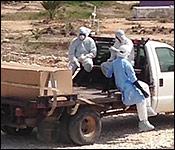
Less than a month later, on April 5th, was the first COVID casualty. Easter was cancelled and then there was another death. We were plunged into a countrywide lockdown
Dr. Marvin Manzanero, Ministry of Health and Wellness
"I did recall that the cases that started to show up were in the Cayo district, related and linked to Belize City, so the decision we had is that we needed to cordon off areas in Belize City so that you can do an adequate mapping, an adequate surveillance measures because you're trying to do containment."
"It was considered initially, I can tell you, and then once you saw what was happening in San Pedro, it wasn't possible so I think that's what triggered the lockdown for the entire country and that's what went on for 90 days until July 1st when it opened."
So we came out on the other side, but that only led to deep dive into the deadliest part of the pandemic. The end of 2020 and the start of 2021 saw the death count surge as a COVID contagion took hold.
Dr. Marvin Manzanero, Ministry of Health and Wellness
"That first weekend when the country opened back up, you start seeing the links of cases popping back up in San Pedro, linked to Orange Walk, which is where it shows that the cases, although it exploded in San Pedro, the link was in Orange Walk and the illegal crosses that had happened. That first weekend in July is when you started having places opening up and hotels giving discounts particularly for Belizeans, and I think that's when it moved on to what would be the start of a second wave."
And after that second wave was the third - with the Omicron variant. But while that variant resulted in thousands of new cases, it wasn't as deadly as Delta and now, it is slowly subsiding.
And over those two years, we've done a complete 180 - from establishing strict regulations to relaxing them. And throughout that time, a lot of information and experience has been garnered, but if there's one more bit of advice Dr Manzanero has to offer, it's to not let your guard down.
Dr. Marvin Manzanero, Ministry of Health and Wellness
"I think the key item is that we should have learned something individually from what we went through. Not only in terms of the potential exposure to COVID but perhaps in terms of how we deal with our lives or out family, our work structure, our community. We should have become more resilient community and in essence yes we have to learn to live with COVID so even if all regulations are lifted there might be times when those will have to be reenacted or being brought into play at different levels but I think individually and as family units, you need to have other plan of action as you move along."
And while we've seen hundreds of deaths and even more hospitalizations, tonight we can report that, for the first time since 2020, there are no positive cases in the KHMH's COVID unit - a notable milepost in the war against the pandemic.