


More than 150 countries recognize October 10th as World Mental Health Day, with this year's theme being "Mental Health is a Human Universal right." In compliance with some of the changes made to the World Health organization's Mental Health policies and programmes, Belize has updated its own and launched a revised version this morning at the Biltmore. Jomarie Lanza followed this story.
After 15 years, the Ministry of Health and Wellness in partnership with PAHO and WHO have successfully revised and updated the country's National Mental Health Policy, which was launched today to coincide with World Mental Health Day. The focus of this new policy framework seeks to deinstitutionalize persons struggling with mental health variations, in addition to raising awareness, eliminating the stigma and promoting mental health services and treatments as a universal health right and not an isolated concern.
Dr Melissa Diaz, Director, Public Health and Wellness
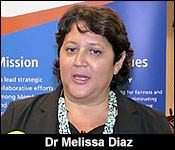
"So today for the ministry of health and Wellness it's a very momentous day for us because we've had the opportunity to officially launch "Belize's National Mental Health Policy 2023-2028". This is an updated policy as you all have heard from 2008 and there is a lot that has changed with regards to what we have in the policy: the objectives, the visions, and the core values of the policy. Though there are some similarities but what we want specifically is to ensure that we educate and we build health literacy, we inform the public, sensitize the public about mental diseases and mental illnesses and how common they are and how we can support as a ministry, but not only us as MOHW this needs multi-sectorial approach, this needs an all of government approach, and as Dr Cuellar mentioned in his presentation, an important support is you what can you do to ensure that you reduce stigma, that you help to educate family and friends with regard to mental illness as it is absolutely important as part of your general health as well."
Part of how the framework was structured has to do with how much covid has impacted and influenced individuals' mental health, and how we can address and recover from additional stressors.
Dr Melissa Diaz, Director, Public Health and Wellness
"But Mental illness like you quite rightly said has increased due to more than likely the pressures of the world we've gone through the covid pandemic there was a lot of fear globally with regards to the pandemic of the uncertainty and anxiety depression and all these things OCD. These things are now easier to recognize and we want to ensure that we give the support and we provide the help that's needed for persons who are experiencing any level of mental illness."
PAHO Representative Dr Karen Lewis Bell discussed PAHO's role in the updating of these new policies and why they believe that institutionalization of mentally ill persons contradicts the message they are trying to convey on the importance of prioritizing one's mental health.

Dr Karen Lewis Bell, PAHO Representative
"One of the main focuses of this policy is to ensure that efforts are made to help to reduce the stigma and discrimination against persons who have mental health conditions so as PAHO we are very very pleased to have partnered with MOHW in revising and reviewing this national mental health policy."
"This had been an initiative of WHO and PAHO To deinstitutionalize mental health and this was from the early 2000s actually. Institutionalizing persons with mental health contributes to the stigma associated with mental health conditions and I think it's very important for persons to understand that mental health illnesses are a chronic illnesses like anything else like diabetes like hypertension like chronic kidney disease mental health illnesses are chronic illnesses as well and persons actually can function in society and live productive lives if they are managed properly and encouraged to take their medication If medication is required and there is a gamut of conditions that are included in mental health illnesses."
In 2022 there were 1657 documented Mental Health patients in Belize with three of every five mental health patients being female. The most commonly diagnosed mental health disorder is anxiety, and then depression coming in second.