

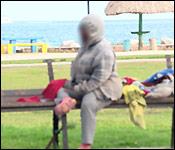
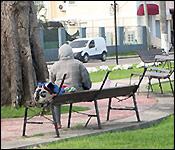
Tonight, we bring you a deeply human story that shines a light on a struggle many families face quietly and often alone. It is the story of a young Belizean woman living on the streets while her family desperately searches for help within an overburdened mental health system. Jaleeza Roberts looks at the emotional toll on families caught between love, surrender, and a system with limited options.
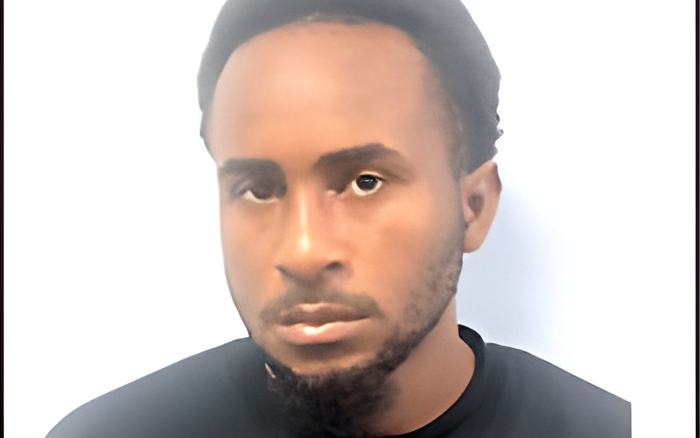
Every family has a breaking point. For the Lemoth family, that point comes again and again, each time they receive another video of their mentally ill 28-year-old daughter and sister, Deidra Lemoth - who is often seen roaming around BTL park.
Deidra was not always this way. Her family remembers her as joyful, adventurous, and magnetic, the kind of young woman who filled rooms with laughter and energy. But slowly, something changed - as she fell into the depths of mental illness. Before they fully understood what was happening, Deidre was no longer safe at home and no longer able to care for herself. Her sister Shamalee explains:
Shamelee Lemoth, Sister
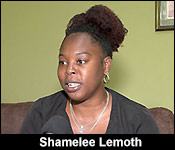
"She's always been a joyful person, adventurous, outgoing, life of the party, and she just start going downhill. So you wa see like anger spells. One minute she's happy. One minute she's angry. She wants to fight."
"Recently, my mom went to see her and took her food. She spaz out, bax away the food, fight with my mom. The next minute, she begs someone for a call and said, mom, I love you. I want to see you. So it's like up and down. She goes to violent spells, temporary spells, sad spells. The only thing she hasn't done yet is commit suicide or suicidal thoughts."
The waiting has come at a steep emotional cost. Chamalee described the turmoil that grips her family daily:
Shamelee Lemoth, Sister
"Man, it's very heartbreaking. It sends all of us in turmoil. My dad is angry, happy, sad. My mom is frustrated. Her pressure goes high sometimes. It breaks her heart. Sometimes you just have to hold back the tears to get video of her eating out of the garbage, sleeping on the street, people giving her food. Look at it. Recently, it was cold weather. She's out in the street, barely in a jacket, clothing, anything like that. She's a female. You know, you go through your cycle. Where is she getting her supplies from, her stuff like that? So it's a lot. It's taking a toll on us, and we need help, but we don't know where to go, where to turn to, because if everywhere is a waiting area or no space."
Families caring for loved ones with severe mental illness often face an impossible contradiction of loving someone deeply while being unable to safely bring them home. Shamelee shared that her sister cannot stay with relatives because of unpredictable and sometimes dangerous episodes.
Reporter
"What are some fears that you guys have when dealing with her?"
Shamelee Lemoth, Sister
"Okay, so a fear is, I have kids. If I say take her into my home, and she has like an episode, one of my kids will get hurt, one of my son did get hurt, he got a buss in his head, she hit him. So that's the thing I'm afraid of. So we can't have her in the home with us, because she fights with my mom, with my little sister, she just goes off. So we have to protect ourself at the same time, even though we love her and want help for her."
The family is not asking for miracles. They are asking for a place where she can be properly evaluated, medically and psychiatrically. A place where she can be safe, from the streets, from harm, and from herself.
Shamelee Lemoth, Sister
"She needs testing, she needs a medical evaluation, we just need somewhere safe for her. And there's a private place here in Belmopan, but it costs $2,000 a month. That is very steep right now, (4:15) the way how the economy is going right now."
Jaleeza Roberts, 7 News.
In related news, yesterday, Cabinet gave its approval for the expansion of services for homeless and displaced persons through the establishment of new shelters in what are called priority districts. It's. Part of what is called Belize Homeless and Rough Shelter Initiative, which - a release says, "seeks to address…complex social challenges…driven by factors such as mental illness, substance use, family disintegration, economic hardships, and the lack of long-term institutional care."