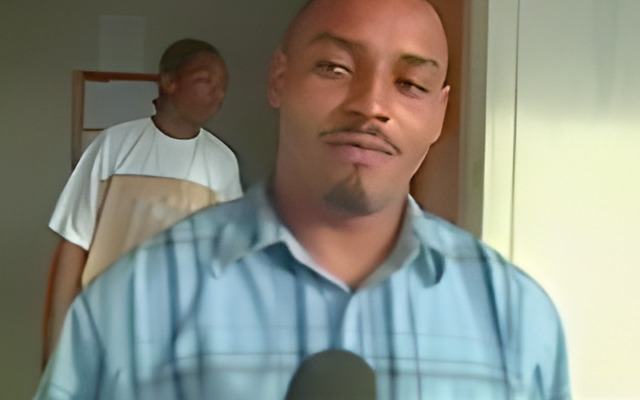

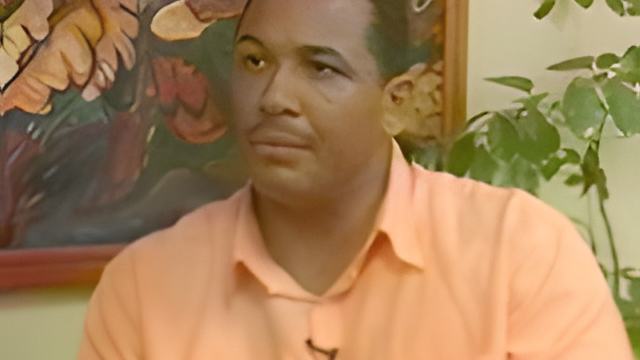
Last night we reported the UDP's and the ACB's allegation that Godfrey Smith is a part owner of the private registry. Today that claim was amplified in both the Amandala and the Reporter Newspapers. It's a powerful assertion that directly implicates the Minister in a corrupt act. But is he the owner, and can it be proven? Well, tonight in an exclusive interview with Channel 7's News Director Jules Vasquez, Minister of Foreign Affairs Godfrey Smith answers that and many other questions relating to the Private Registry and the scandal that has erupted around it.
Jules Vasquez,
Are you Minister, as the UDP has alleged, the part owner of the Belize Companies Registry Limited?
Hon. Godfrey Smith, Minister of Foreign Affairs
"I am not. I am not a part owner of the company, I do not own the company, I do not own shares in the company, and neither does anybody hold any shares on my behalf."
Jules Vasquez,
Are you a beneficiary of receipts from this company?
Hon. Godfrey Smith,
"I am not."
Jules Vasquez,
The Leader of Opposition has stated as a matter of fact that he knows, as a fact, that two Ministers, yourself and Eamon Courtenay are principal players in this privatization. Is the Leader of the Opposition, are you suggesting, that he is just making this up? You said that you have no interest in this and you are not a beneficiary of the profits of this company.
Hon. Godfrey Smith,
"And I stand by that initial statement. Also I won't impute any motives to anybody except to say I don't own the company, I hold no shares, and nobody holds any on my behalf."
Jules Vasquez,
But the Leader of the Opposition, his brother, is on record as 50% owner of BELIPO, the parent company of the registry. Are we to think that the Leader of the Opposition is making this all up, that it's just a cruel fantasy?
Hon. Godfrey Smith,
"Jules politics is at play, high level politics. I will not impute any motives or speculate on reasons and motivations except to stand by what I said earlier. The matter was taken to Cabinet; it had Cabinet's approval. The matter of the privatization of the Intellectual Property Office and the Companies Registry, that power to be able to collect fees on behalf of the government, were both authorized by parliament by pieces of legislation that went both to the House of Representatives as well as the Senate.
At the time of my being Attorney General we had a document called 'Delivering Justice,' which set out a broad scope of things to be achieved. If anybody examines that document it would be seen that one aspect focuses on this entire matter of Intellectual Property and on companies, the idea being to set up a companies house, a commercial house, that would modernize the way we administer trade marks, patents etc. and companies, changing the situation from one where it took close to two weeks, or beyond two weeks, to get a company formed, to a situation that exists today where you can get a company in a turnaround time of two hours. That was the idea, to really take trademarks and patents, put it on a commercial basis, speed up the efficiency, professionalism, and modernization of those commercial activities."
Jules Vasquez,
Was it put out to tender?
Hon. Godfrey Smith,
"You've asked the question about the putting to tender and the answer is that it was not. But let me add this Jules, that this issue of putting out to tender has just recently formed a part of the political financial culture, if you will, of Belize. I am not saying that that shouldn't have been the case from the outset, but that culture should have been a part of the culture (process) a long time ago. The fact remains it was not. Under successive governments, things like the BTL etc, the Ships Registry, the IBC Registry; none of these things were put out to tender. Should they have been? Clearly yes and that's clearly well established as part of the financial and political culture of Belize."
Jules Vasquez,
How did the private owners of the Registry, David Jenkins and Denys Barrow, how did they qualify for ownership of this thing? How did that come about? There was no open tender, no suggestion that they made a bid. How did they get into this contract with the government of Belize?
Hon. Godfrey Smith,
"The principals who own the companies are established people who work in that area, a broad section of offshore work, corporate work, etc. and some intellectual property work."
Jules Vasquez,
So they approached you, you approached them? How does it work if there was no private bid?
Hon. Godfrey Smith,
"Well I prefer not to get into that kind of detail because I think that's a...if you ask me questions about myself, I can give you a full answer on everything you ask in relation to me. Once you start bringing in other people, I'd prefer if you give those people the benefit of answering those questions. I don't want to answer on anybody's behalf, except my own. It was not put out to tender, the thing was privatized, and I signed the contract. In terms of who did what and whatever, that will take us down the road where it is not in anybody's interest. I certainly do not want to be in a position where I seem to be answering for people. I think others who are involved should give it as they recollect it."
Jules Vasquez,
But you are involved. You signed the contract with this company. You made a sovereign commitment on behalf of the government. What is your recollection?
Hon. Godfrey Smith,
"In terms of what?"
Jules Vasquez,
How did the contract, the arrangement, come into being? These people did not have a company set up, there was no such company.
Hon. Godfrey Smith,
"A proposal was considered and an agreement entered into. I invite you to consider and examine the end product which are two modern, almost first world certified, registries doing excellent work in Belize. That is the primary thing as far as...I am inviting you to consider it from that perspective."
Jules Vasquez,
Well obviously your colleagues in the Cabinet considered it and thought it irrelevant, irrelevant enough to cancel a contract.
Hon. Godfrey Smith,
"Well I've already averted to that by saying the politics intervenes and then you have to basically wear two hats. I don't think anybody disputes how well they run but the political heat is now on and politicians react as politicians do."
Jules Vasquez,
If you had the approval of parliament and your colleagues in the Cabinet, what then do you think of the government apparently quite hasty and irreversible decision to immediately cancel the contract with BELIPO?
Hon. Godfrey Smith,
"Well you are as well aware, as I, of the political climate in which we live Jules. Without the benefit of careful study, analysis, or information people jump up, they cast allegations, they make accusations, they call for things without the benefit of real data. So obviously the thing, because of the payment of these stamp duties on behalf of Mr. Ashcroft, the whole thing has turned into a focus on stamp duties and that it was all about stamp duties when actually it was not. If you examine the history of the thing and what exists today, a professional registry, I don't think anybody can deny that. But unfortunately, like so many things these days, it has become a political issue and the government has decided to take action on it."
Jules Vasquez,
Do you support them taking that action, effectively undoing a contract that in one case, the BELIPO contract which you certainly nurtured into existence, and the Companies Registry contract which you signed?
Hon. Godfrey Smith,
"Well obviously I would be forced to wear two hats, one as the Attorney General when I signed it. I stand by the decision that the outsourcing, the management contracts for the operation of these things, have produced excellent results. The Belize Intellectual Property Office has been sanctioned, if you will, by the World Intellectual Property Organization. Professionals run that place, and I don't think there is anybody, any lawyer or any person in business, who operates with companies who would gainsay that you have now a professionally managed registry. Now turning with my hat as a politician, because of all the political heat and the town board elections and so on, I would have to support the decision of the government to terminate."
Jules Vasquez,
Even if it is wrong, in a technical sense, even if it is retrograde?
Hon. Godfrey Smith,
"Well I would have to support the position of the government, even if it it's a decision that would conquer, what I would consider to be, a professionally and well run Registry."
Jules Vasquez,
Having yourself signed it, what do you think of this revenue breakdown of which such consternation has been made? 70 to 30 and 30% of that 30 retained for expenses.
Hon. Godfrey Smith,
"With the benefit of hindsight perhaps greater scrutiny could have been given to that. But as I said to you they were styled off existing contracts for existing registries that were privatized, namely the IBC Registry and the Ships Registry. They were styled off those, I can't remember the exact thing but the concepts and structures were almost identical."
Jules Vasquez,
You said the 70-30 breakdown could have been rethought, again I have not seen the contract and I've only heard of it, but I know that the BELIPO and the Companies Registry enjoyed consular status.
Hon. Godfrey Smith,
"I believe you are correct. Again that came straight from the existing...as I said these things came off the precedent of the IBC Registry and the Ships Registry. Does it make sense? Perhaps not. Sitting here with you right now I can honestly say to you I am not sure what the role of the consular status thing would be but it was there and there was precedent for it."
Jules Vasquez,
But it gives exemptions to the owners and I would imagine the employees because you can get things duty free, up to vehicles can be brought in duty free. You signed this contract.
Hon. Godfrey Smith,
"Yes I did. Should that exist? I think not. I think it shouldn't exist for BELIPO, Company Registry and it shouldn't exist for IMMARBE or the IBC Registry."
Jules Vasquez,
But you signed it. Were you asleep at the wheel?
Hon. Godfrey Smith,
"No but I am saying that there was precedent for these things and Jules its always very easy with the benefit of hindsight and the big public spotlight on to look more carefully. As a Minister yes I take responsibility, as I said for the germination of the idea, for the implementation of the contract, and for seeing to it that the end product delivers what it was envisioned to do. The finer details might not have been given the care it ought to have but at the end the day I signed it. I am saying to you now, with the benefit of hindsight and more careful scrutiny, that that shouldn't exist for any company, that kind of exemption or that kind of status.
This transaction was an extraordinary transaction and has resulted in the obvious attention drawn to the stamp duties. But the thing was never designed about stamp duties or government taxes. Again its really stamp duties in relation to the transfer of shares. That was never really in contemplation. What was in contemplation was a modern efficient registry that could deliver for business people and lawyers a fast efficient service. A management contract basically which existed before this Companies Registry as well as the Intellectual Property Office, was styled off existing registries i.e. the Ships Registry and IBC Registry; they were modeled exactly along the lines of those pre-existing registries. So there was already a precedent for that."
Jules Vasquez,
Why, in your opinion, did the government agree to pay stamp duty when the government is not subject to tax?
Hon. Godfrey Smith,
"Honestly I was not involved in that aspect. Yes I was involved in the whole BTL matter in terms of the workers, talking to them and so on. The final agreements, I was not involved with. I simply cannot answer that question because I don't know."
Jules Vasquez,
Do you see how a interpretation could be taken that if there is a deal involved with friends of the government to collect effectively 80% of the stamp duty, why the government would pay the largest stamp duty probably recorded in maybe 15 years, why the government which is not subject to tax would pay the stamp duty that for the benefit or the enrichment of the private owners?
Hon. Godfrey Smith,
"You said what if it is said or could be said, it is already being said and as I said, I can't speak for the legalities of the contract drawn up and who were to pay what monies."
Jules Vasquez,
I know that the BELIPO contract has eleven years remaining and the Belize Companies Registry has thirteen years remaining. What, from a legal perspective, as someone involved in government which is now canceling this contract, what do you foresee being the settlement or the penalty of this? It appears the government just wants to do a cancellation and basically tempt the owners of the private registry to 'sue if yuh bad.' What do you foresee happening?
Hon. Godfrey Smith,
"I would say that the, and I'm here speaking obviously as a politician, the neatest thing for everyone concerned is that the matter be resolved and an amicable solution be found without resort to litigation. That would be the ideal. What will eventually happen I can't really say Jules. I can't say what would eventually happen."
Jules Vasquez,
But foreseeably this company has an enforceable contract, the government will have to pay some money to cancel that contract.
Hon. Godfrey Smith,
"That is the normal course, that you negotiate over some form of compensation. That is the normal course and it may well likely be the course in this case. To answer your question, I can see how..."
Jules Vasquez,
That interpretation.
Hon. Godfrey Smith,
"And it is being said."
Jules Vasquez,
Do you accept or reject that interpretation?
Hon. Godfrey Smith,
"I reject that interpretation."
Jules Vasquez,
You are seen as an ascendant, a political figure at a very young age you're the co-deputy of the PUP. It is being said that you are engaged in a corrupt transaction which disserves the interest of the public and the government. How do you see this event and the hysteria surrounding it affect your political future?
Hon. Godfrey Smith,
"Yes I am caught in the middle of a hugely controversial issue, yes that happens to politicians. Will it affect my political career? It may but these are things politicians have to face. Nobody put a gun to my head and said I want you to enter politics, I've done it of my own free will. Would I prefer not to be in a position like this? Clearly, but I'm in it now and I have to well deal with the situation, explain my whole involvement in relation to what I did as Attorney General and I've done so and am prepared to do that with whoever comes forth and explain. But only time will tell the net impact of the situation like this on a politician such as myself."