Only the Governor General's signature is needed to make the 10% General Sales Tax(GST) law. Despite opposition, the bill was passed today by the government's Senate majority. And though it will become law shortly, it will not be implemented until July 1st as government must first upgrade and implement new systems, a time consuming and costly venture.
And while government does its part, what will the new tax mean for you? Well first of all light bills and phone bills will go up. Only those whose total light bill is $150 or less will be exempt. By total we mean the combined cost of kilowatt charges and service charges. Everyone else's bill will go up by 10%. Add that to the 14% additional rate increase currently being requested by BEL and you're looking at a potential increase in your bill of 24%. How many are below that threshold? Well BEL couldn't say today. A company spokesperson could only tell us that the company has to meet with the GST team before it makes an announcement. Phone bills will also go up by 2% as the tax on telecommunications is presently fixed at 8%.
Many businesses aren't complaining because they can claim those GST charges and get refunded. But for those in the tourism and productive sectors, they cannot. That's because they are in the GST exempt classifications which means they must pay but cannot claim GST payments. And that's the most significant adjustment that has been made in the bill between the first reading in November and the third reading yesterday. Government has removed the bulk of the items from the zero-rated area to the exempt area. For the Belize Chamber of Commerce- it's the worse possible outcome and General Manager Kevin Herrera told us its one they just can't accept.
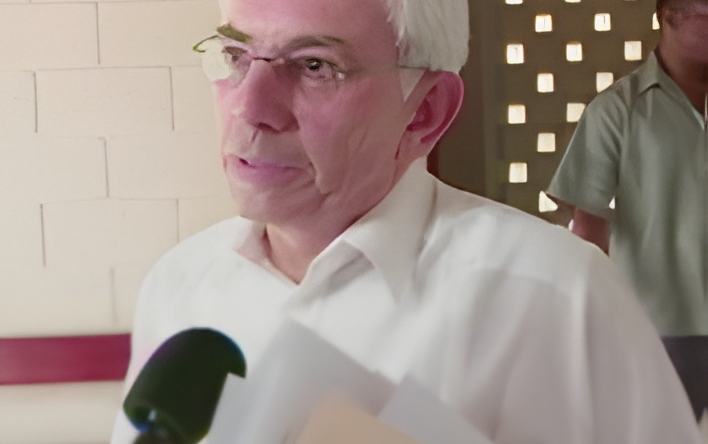
Kevin Herrera, BBCI General Manager
"This is not acceptable to us. We feel that we were trying to get a much better deal than the bill which was presented in the first place and what we saw yesterday was a much worse deal than the original bill. Actually we lost a major opportunity to have done something really good for the productive sector, for those people producing goods and services within the country. We had the opportunity to possibly lower the cost of production in many of those cases. What we have done is we've actually limited the ability of producers of goods and services in the country to reduce our cost of production and claim their inputs. The major difference is that by putting these items in exempted category, or in the exempted schedule, it prevents them from claiming their input tax. They'll pay the GST on the inputs of those products but they can't claim them back nor can they charge it."
Jules Vasquez,
Will it undermine how competitive we are in the productive sector?
Kevin Herrera,
"Of course. The ideal situation would have been for all our products and services that are produced locally be zero-rated, and I think we must remember that we do not only compete in Belize, within the borders of Belize, but we are competing with the Chetumals, we are competing with the Melchors, we are competing with the neighbors, with the Miamis, and those type of things. So if items are more expensive, significantly more expensive, what will happen is people will go over the border and get them cheaper and that in effect is what will happen and I think we have to try to protect our productive base as much as possible."
Jules Vasquez,
The government says that the more items that are zero-rated, the higher the tax will have to be. The fewer items that are zero-rated, the lower the tax. So the compromise of a ten percent tax is you cannot have as many zero-rated items.
Kevin Herrera,
"That is what they are saying but we have not seen those numbers. I was on the tax reform committee, I have not seen those numbers, we've asked for those numbers, I have not seen them. But perhaps if they show me the numbers, they can convince me but they haven't shown me those numbers as yet."
Jules Vasquez,
But the government has gone to great lengths to insist that this is revenue neutral.
Kevin Herrera,
"Then they should have come out with the numbers to back it up. Like I said, we have not seen any support for that argument."
Jules Vasquez,
But the Minister in charge of tax reform, who you've served with, said that it is science. He said that in the National Assembly yesterday that they've gotten it down a science and the projections are accurate. Are we to...
Kevin Herrera,
"Like I am saying Jules, I have not seen those numbers. I was a member of the tax reform committee over the past nine, ten months. I have not seen those numbers. Maybe he has seen them, maybe they have worked them out. I have not seen them. I would like to see them, I would like to be convinced."
Jules Vasquez,
The Minister of State in the Ministry of Finance said it's a matter of science. However it is clear that they've ignored the Chamber of Commerce, they've ignored representations from Dr. Henry Canton in the productive sector as well. Is it a case that they are listening to the experts and not listening to those who actually have the experiential expertise who are working everyday, not with figures, but in the fields who are living it?
Kevin Herrera,
"Yeah. Its one of the issues that I see coming up over and over where you go through the process of consultations. We put in a lot of work into these exercises, as you may imagine, throughout the year and its somewhat disappointing of you to go through all and you see very little of your inputs in the final product. But does not mean that we stop, we have to try to continue to influence them. But what I'm saying is sometimes you get the impression that government is not really serious about your views but have something predetermined in their mind, in terms of what they want and so then you go through the process pretty much to legitimize what has been predetermined already."
Herrera says the Chamber will continue to lobby government and the Prime Minister and ask that he invoke section 95 of the law which allows him to vary certain section without taking it back to the House. Hotel owners are also expected to lobby the Prime Minister as the hotel tax remains and will be upped to 10%. While that's one thing, for the hotel owners, the real issue is that they will be GST exempted meaning, again, that they must pay the tax, but cannot have it refunded.