
Today the Prime Minister held a press conference to discuss Belize's debt re-profiling program. Though the program has been in the works for months and the details of it recently leaked, government this week made it official: it can no longer pay its debts on schedule. Today after a meeting of the National Economic Council, the Prime Minister held a press conference to discuss the program, which confirms the most fundamental failure of any government: that it cannot meet its debt obligations as it is committed to.
To buffer him in this most difficult undertaking, the Prime Minister was flanked by National Development Minister Mark Espat, Financial Secretary Carla Barnett, Health Minister Jose Coye, and Central Bank Governor Sydney Campbell. The PM opened with a brief prepared statement on the debt re-profiling programme. He stressed that right now, Belize is current with its debt obligations, but made it clear that the country couldn't stay that way much longer.
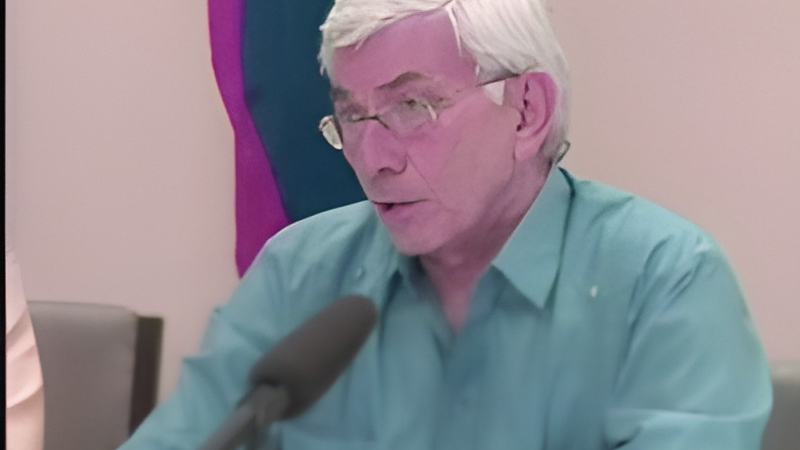
Rt. Hon. Said Musa, Prime Minister of Belize
"We are committed to servicing our debts as long as the cash flow allows. Our decision to seek a rearrangement of Belize's debt reflects our commitment to a long-term sustainable debt profile.
We require the immediate support of our creditors to arrive at a long-term solution. Our government has approached the changes to the management of public sector finances in a strategic way. First we undertook the homegrown stabilization program, then we engaged our fiscal sector partners, and now we are asking for the cooperation of our commercial creditors."
Carla Barnett, Financial Secretary
"All our creditors we have met with equally and we've said so from the start. It is going to be transparent and open. So we will do with all our creditors and they can organize themselves in groups, we have indicated that to them and that is okay. We will be sharing information with everybody equally."
Jules Vasquez,
These people are institutional investors, they are sharp, they want their money, they made an investment. How do you expect this announcement will be received?
Rt. Hon. Said Musa,
"I don't think it will come as a surprise to them. I think they have been expecting it, especially after the many leaks that have taken place prior to the announcement yesterday."
Jules Vasquez,
But will they not say that you should pursue other alternatives, securitize your income stream from your taxes or something else but 'don't come to us.' Wouldn't that be a reasonable response from them?
Rt. Hon. Said Musa,
"Well you can think of many areas that could come up in terms of the negotiation but we believe that we are on firm footing in terms of getting a good end result as part of the negotiation with the creditors, especially since we are doing it in a market friendly way. We're not, as other countries have done, waiting for a default and then approaching them, we are not in that situation."
The formal announcement of the debt re-profiling program means that Standard and Poor's Rating Service has automatically downgraded Belize from a CCC- rating to a selective default. Now, default is the absolute worse word that can be said of any government's fiscal position, and the Prime Minister said that sometimes, some words have different meanings.
Rt. Hon. Said Musa,
"And the second part of your question, whether it is a technical default, we don't see it like that at all. In fact we are going to the market in a friendly manner, in a transparent manner, long before any question of default arises. Belize has always met its debt obligations."
Carla Barnett,
"The issue of Standard And Poor's, I think it is a selective default. It is a technical decision that they make whenever countries announce that they are going to be seeking any accommodation from creditors and it does not reflect at all that there is any delay in payment of any debt. We are current with our debt and we will continue to be so, at least for another couple of months."
And while the term selective default has one meaning to the international community, particularly investors, locally it means that the Prime Minister's political capital will take another hit. He discussed how it affects his administration.
Jules Vasquez,
Do you think that this significantly weakens your administration?
Rt. Hon. Said Musa,
"I think the Belizean people, when they reflect on what we are doing, will recognize that it is a courageous move that we are making on our part as a government. We are taking the necessary bold steps. So I don't see how it will weaken the administration. In other words we are not abdicating our responsibility as a government. We are doing what we consider is necessary, whatever the political cost."
Jules Vasquez,
What would you expect those costs will be? Obviously it is a unhappy day or a grim announcement you have to make, that we can no longer meet our debt obligations as they are presently are.
Rt. Hon. Said Musa,
"I think it is part of the transparency that we are going through. Our government has been carrying out a whole series of reform programs, especially at the fiscal level, and indeed in terms of the political costs, we have paid a heavy political price for the very stern and harsh and difficult economic financial measures we've had to take over the past two years."
Jules Vasquez,
Would you not say that you all were monumentally neglectful and inept in managing the country's finances?
Rt. Hon. Said Musa,
"No I would not say at all. I am saying that we have done a lot in terms of growing the economy of this country, in improving the infrastructure of this country; maintaining the facilities of this country; expanding education for our children; improving the health care system which was the verge of collapse in 1998. We have done a lot in terms of the highway construction program which has cost a lot of money.
I would not classify that as mismanagement. I would say yes, it came at a high cost because of the local and exogenous factors that came into play and I mentioned some of them a while ago. But the point is, this is where we are, we are facing up to it and we propose to deal with it and we believe we will be very successful in addressing it."
Of course faced with a situation where the investor committees have no patience for spin, the Prime Minister has to be forthright about where we're at and how we got there. And today that means admitting that Belize's cycle of taking on debt to pay off debt has been going on ever since we started raising bonds, which were supposedly for development but now admittedly for refinancing.
Rt. Hon. Said Musa,
"Well all the past debt refinancing has been to launch new bonds, if you like. Now we are not saying we want to the increase the debt, what we want to do is reduce or put the debt on a sustainable footing so that we can pay it. The difference of course now is that we are going to the creditors and saying, 'let us negotiate and work out how we can best put the debt on this sustainable footing so Belize can meet all its obligations.' Before we borrowed in order to pay, now we are not borrowing to pay."
Negotiations with creditors are expected to begin shortly. Belize is trying to re-profile US$960 million in debt which is 90% of GDP. 58% of that debt is owed to private sector bondholders. The Prime Minister also confirmed that Belize has secured the New York Law Firm of Cleary and Gottlieb which recently handled the re-profiling of Iraq's debt.