
Last night, we told you about the major Supreme Court judgment which residents of the Mayan Village of Jalacte won against the Government of Belize.
Acting Chief Justice Michelle Arana has ruled that the Barrow Administration violated their customary land rights when the then government acquired some 31 acres of Jalacte lands. Some of those properties were put to use in the 47-million-dollar upgrade of that rural road that runs from the Dump area in Toledo, all the way to the edge of Jalacte and its border with Guatemala's Santa Cruz village.
Although that road has been improved up to highway standards, it came at the cost of farmlands belonging to the Jalacte residents. So, the Acting Chief Justice has ordered the government to return any vacant lands that they acquired, and more importantly, GOB must pay the aggrieved resident of Jalacte damages of a little more than 6.3 million dollars.
Once again, the high courts in Belize have affirmed that Maya Customary Land Tenure exists, and must be protected. But, as we also showed you last night, the Government and the Maya of Southern Belize still can't agree on how to implement the ideas of customary land tenure into a system that is recognized at the Lands and Surveys Department.
At this late stage in the implementation, there is still disagreement on several important matters. Last night, you heard the CCJ panel questioning the Government representatives on the status of a draft protocol for conducting free, prior, informed consultations with the Maya on how their lands will be used in the future. This protocol is supposed to help minimize any disagreements between the Maya and the Government on issues like logging permits, and any incursions into lands that will officially be recognized as customary lands.
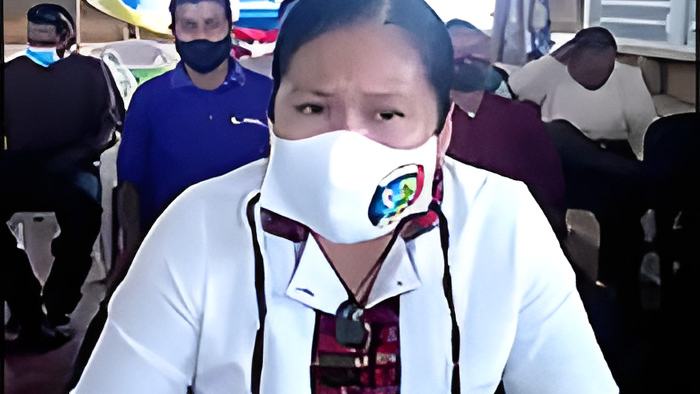
Yesterday, during their virtual press conference, we asked the leadership of the Maya about their perspective on why there are still disagreements on this "FPIC" Protocol, as it is referred to by the court. Here's how the spokesperson of the Maya Leaders Alliance and the Toledo Alcaldes Association described the ongoing disputes that began during their interactions with the Barrow Administration:
Cristina Coc - Spokesperson, MLA/TAA
"And consistent with what the previous administration had issues with, this new government has also indicated that it has issues with the fact that the process for decision-making rests with Maya villages, represented through their alcaldes, who are the customary elected leaders of the Maya villages. And on matters where it concerns the broader Maya community, they represented collectively by the Toledo Alcaldes Associations. Both the past administration and this new administration seem to think that an FPIC protocol should not include the traditional governance system of the Maya communities. But, of course, that is contrary to self-determination and the process by which indigenous communities are afforded the right to determine their own representations."
"The Government of Belize is telling us that there are other groups that have emerged, who want to be able to provide their input, and are objecting to the FPIC protocol, again raising the issue of representation. The court was very clear today. It is not for the Government of Belize to determine who and how the Maya people will be represented."
"From our vantage point, we view the use of these newly emerged organizations as another attempt to obstruct any progress in the implementation."
"And at the same time, many of the complaints from our villages fundamentally rests on the absence of an FPIC protocol. Many of these incursions by third parties, by proponents, by the Government itself, is because there is an absence."