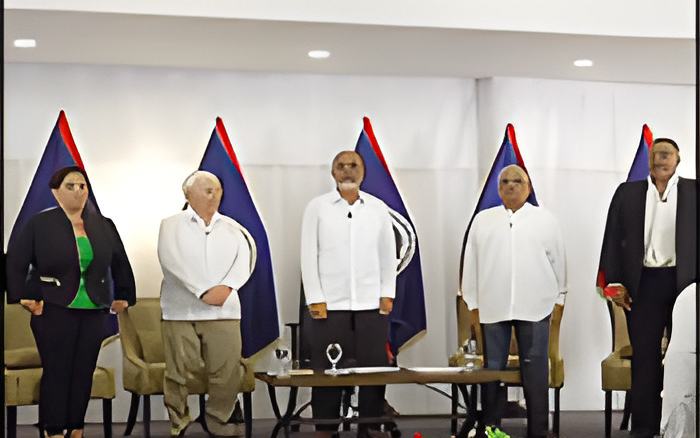

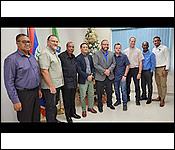
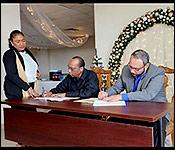
On Wednesday the Minister of Constitutional and Political Reform as well as Religious Affairs signed an agreement with the Churches Community, comprising the Council of Churches and the Evangelicals. According to a release, that statement of agreement, quote, "reaffirms the unique partnership between the government and the church communities that strengthens the political process and benefits Belizean society." End quote.
The statement has ten points that, according to the government, outlines the shared values and commitments of both parties. It agrees that human rights, nature, and dignity all come from "the creator" and that the partnership between Church and State in Belize has a unique place in Belizean history, culture, and identity.
This statement also reaffirms the constitution's preamble which speaks about, "the supremacy of God". This, we note, has been a point of disagreement within meetings of the People's Constitutional Committee.
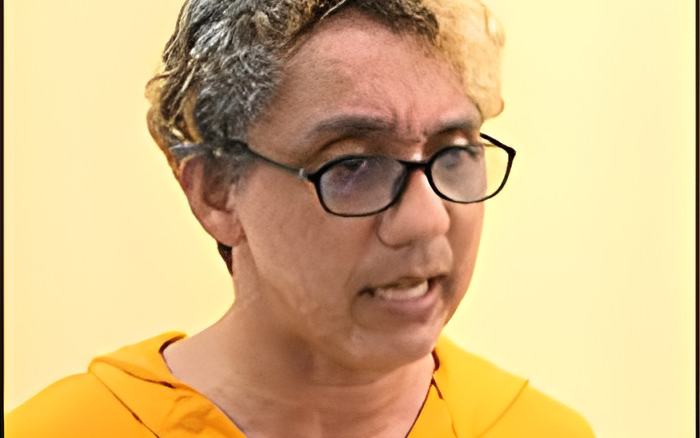
Today, Bishop Moses Benguche, who represented the churches at the signing, told us that this agreement was born out of many meetings, even before the PUP took office, and the purpose is to define the role of the church in Belize's society.
But it was only Christian church representatives at this meeting - and even if other religious sectors were included - what about atheists and agnostics? Is this statement now excluding members of the community? Here's what Bishop Benguche had to say.
Bishop Moses Benguche, Church Representative
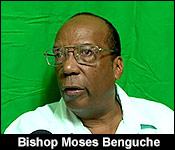
"In the statement itself, we want to be able to reach the point in the constitution itself where that preamble is quiet clear as to defining the understanding of the nation being founded under the principles of God and what we are saying here so as not to let anybody become alarmed or become confused, as we defined it in our country in this day and age, we are not only a multi-denominational country but a multi-religious country and so there are different sets of persons who make reference to their god in the way they see it and the way they understand it from their culture and so in understanding who God is and under the principles of the supremacy of God, we just want to highlight that it doesn't only have to do with Christianity itself more than the dignity and respect for a god."
"What we're trying to do, this is as I said a first step and it is a working relationship that for us beginning with the Belize Council of Churches and the Evangelicals, this is a first step, I am certain in time we will be able to include some other groupings both in our discussion and in any further agreement with the government but we thought that we would begin, we would initiate the process and then as we go along certainly both the Belize Council of Churches and the Evangelicals certainly will be willing to add other persons and other personnel and organization to the unfolding discussion."
Courtney Menzies:
"Does this not, having this enshrined in this way, box out a section of our community?"
Bishop Moses Benguche, Church Representative
"I would say no because as we understanding from where we sit, we talk about common humanity, and when we talk about common humanity who does exist in Belize and so there is no point in trying to exclude anybody. When we talk about common humanity, it involves everybody and so there is no exclusive right for any grouping whether you are a Christian, whether you are a Muslim, you are a Hindu, everybody is included in that."
Bishop Benguche says the next step is to target the youths, and he plans to have an educational summit where they can focus on the primary and high schools.