
body,td,th { font-family: Arial; font-style: normal; font-weight: normal; }
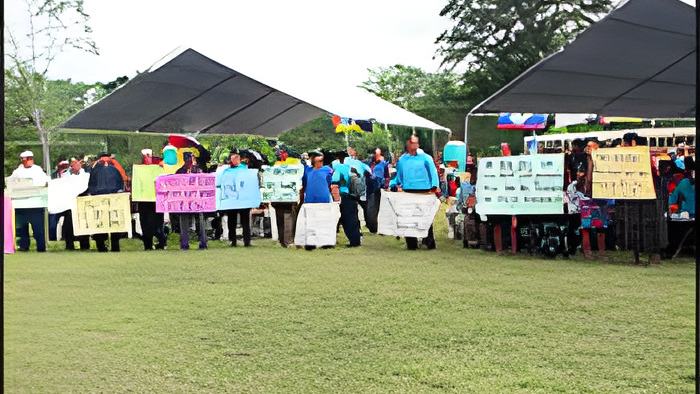
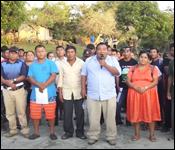
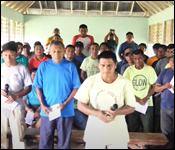
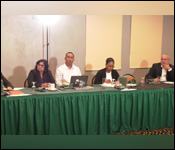
The issue of the Maya Land Tenure Policy is rife with tensions, both between some of the Maya villages and the government, as well as those same residents and other non-Maya villages. We've taken you to Laguna, Yemeri Grove, and Santa Elena as this story continues to evolve. And since the media has been following it since the government began consultations, they invited us to an informational breakfast session, where we were allowed to ask as many questions as we needed to better understand their side and their initial proposal.
Some of the questions answered included the reason why the government refused to meet the villagers in Santa Elena, and what the 1 kilometer circle actually entails.
Courtney Menzies attended the session and condensed it. Here is that story.
They say they felt they were being limited and caged in by these metaphorical circular fences. Today the government's lead attorney clarified:
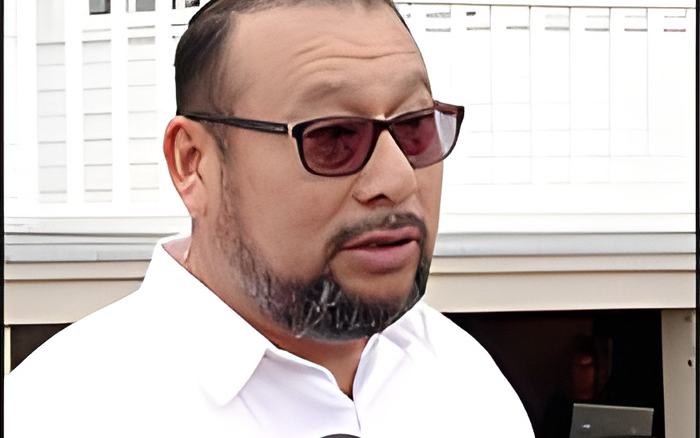
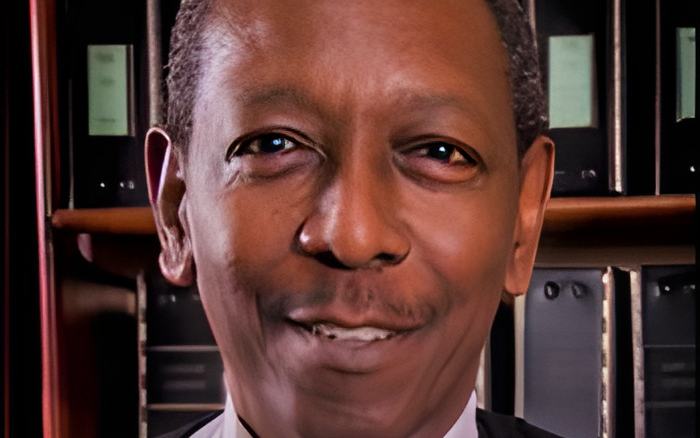
Andrew Marshalleck, Lead Government Attorney
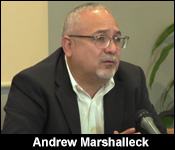
"You can apply first and you're automatically entitled to the concentric circles which are defined by reference to population size. Between 500 people or less, that village is automatically entitled to a 1km, a circle that has a 1km radius. Now it's fundamentally untrue to say you're being confined to 1km. First off, and you will recognize this right away, a 1km radius means that actual diameter is 2km, it's not 1. So from outer boundary to outer boundary it's 2km, from the center to the outer boundary is 1, what has been described as a radius. So when you hear language like that, that I'm being confined to 1km, or corralling the Maya people like hogs and all of that, that's designed to inflame."
"You decide to apply, you apply, you're automatically entitled to that space, now you can also apply for additional spaces outside that space. But where you do apply for those additional spaces, the rules of the application change a little, it's no longer automatic, you have to show continuous use and possession of that space for 30 years."
And of course, that 1 kilometer varies depending on the size of the village - the bigger the village, the larger the radius.
But if you're applying outside the circle, you'll also have to give notice to the neighboring village and all third parties, who will also have the opportunity to object to your application, with good reason. The issue will then be referred to a tribunal for decision.
But what about the occupied land that falls outside of the circle? Marshalleck explained a hybrid option.
Andrew Marshalleck, Lead Government Attorney
"The description is that 2km from village center is houses. The circle isn't intended to catch farmlands, so it's of no use to tell me, that doesn't include my farmland, of course it doesn't include your farmlands. But what is being missed there is the benefit of not including the farmland, and the benefit of not including the farmland stares you right in the face. Communal land ownership can either be bought or sold, it cannot be used a capital to raise, you cannot take it to the bank to borrow money to build your house, you can't do anything with it. Now if you keep the farmlands privately titled, that options remains available to you to develop those farms. Now you can say, well, I don't want that, I want the farmlands are communal lands, well, then all you do is your apply for it."
"We adjusted the policy to create a path where those people who didn't want it can choose not to be a part of it."
And this will allow those villages without definite boundaries - about 38 of them - to have their boundaries defined organically over time.
And Marshalleck - as well as the rest of the government team - emphasized that this is just a draft based on information they've gathered over multiple consultations.
But he also explained that rejections without suggestions lead to a cycle of endless consultations. And while last week, the PM criticized the leader who tore up the policy, the Minister of Indigenous Peoples Affairs had a different view.
Dolores Balderamos Garcia, Minister of Indigenous Peoples Affairs
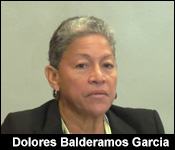
"I believe that village leader was misinformed so I wouldn't blame him. I would tear up something too if someone comes and tells me, we're going to pen you into one km. So I don't put the responsibility so much on that village leader, I'm not sure if it was Mabil Ha or if it was Crique Jute, but I really put the responsibility on those who were riling up the crowd unnecessarily."
And she explained that's one of the reasons they opted not to go to the Santa Elena meeting held two weeks ago.
Dolores Balderamos Garcia, Minister of Indigenous Peoples Affairs
"The plans for the consultation that Saturday and Sunday were already in place long before when all of a sudden a few letters started to come into the office of Indigenous Peoples Affairs in Punta Gorda saying, we're not coming to PG, we want you to come to Santa Elena and clearly it was not a situation that the government could have responded to in any kind of responsible approach because, well, I don't want to use the word capitulated but had we said, okay, we'll go to Santa Elena, we would have met 20 bus loads of people with placards that had been prepared for them, saying, remember you have to come back to us for your vote. Turning the entire situation completely political."
Still, the minister says, they're willing to meet the Maya people halfway:
Dolores Balderamos Garcia, Minister of Indigenous Peoples Affairs
"Yes we do intend, it will set back the process, but we do intent to reach out in going back to the villages because I think that responding to the political reality, because there is pressure, Senior Counsel and Samatha can speak to the legal aspects, I have to try to address to the legal reality. We do intend to go back to as many villages as we possibly can, even if we have to bring some of them together."
So, that meeting is set for Sunday in Big Falls, and Marshalleck highlighted the importance of moving to the next stage of the process.
Andrew Marshalleck, Lead Government Attorney
"The consultation process is about finding solutions, it's not about taking the issue and shooting it down any political alleyway, it's about finding a solution and I want to emphasize that we keep our eye on the prize, we need legislation in place by next year or at least something with the kinda details where the wider public can get engaged and maybe even find even better solutions."