
Last night we told you about the two leading attorneys who are calling for the abolition of the death penalty.The point to the fact that no one has been hanged in Belize for 40 years; no one has been sentenced to hang for 20 years - and modern jurisprudence has moved away from sentencing persons to death.
This is why Belize and Guyana are the only countries south of the United States that still have the death penalty on their books.
Parvais Jabbar from the Death Penalty Project and Belizean Senior Council Godfrey Smith recently wrote an article saying, quote, "Belize is out of step, behind the curve and arguably, in breach of its international obligations to abolish the death penalty without delay."
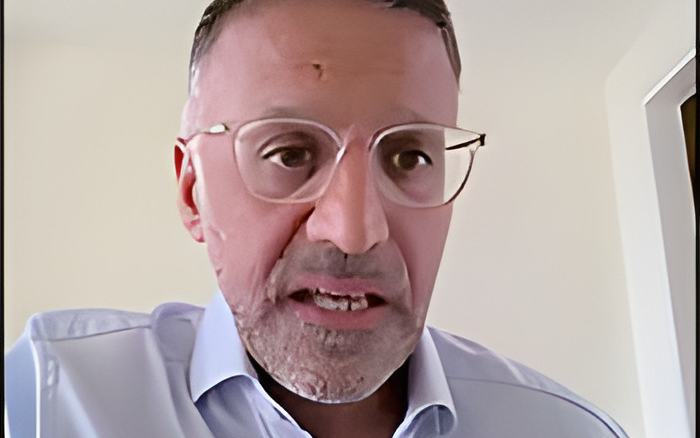
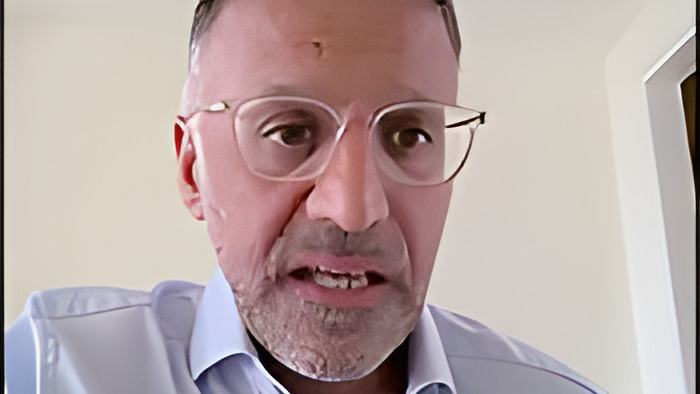
They did a joint interview via zoom today, Jabbar from his office in the UK, and Smith from the Marine Parade Law Chambers - they focussed in Belizean law needing to reflect the times we are living in:
Parvais Jabbar, Death Penalty Project
"I mean, if you look at where we are globally, two thirds of the world now, 75% of the world has either abolished the death penalty or stopped executing and are considered ADF - Abolitionist de facto - meaning that no execution has taken place in that particular country for more than a decade. So Belize is in that category. Okay?"
"What Ranguy does is, or what the decision on sentencing in Ranguy does, it follows a very long line of jurisprudence which has established, as you say, the death penalty is reserved for the worst of the worst or somebody who is beyond reformation."
"It doesn't say that person shouldn't be punished. It doesn't say, they're not saying, for example, in this case, we are not applying the death penalty because we don't want to. It's a it's a personal opinion. It's a political opinion. They're saying the death penalty is not appropriate. And moreover, that there is another sentence. He got three life sentences."
Godfrey Smith, Senior Counsel

"But ultimately, it's a question for Belizean society, Belizean government to decide. Look at the question soberly and decide does it serve any purpose to keep it on the books? Does it mislead and encourage people to think that there is a likelihood that it will be, could be introduced when in reality, as you've seen from the arguments we've raised, it is this is very, very unlikely."
"It can't give you a sense of comfort or security because no one's been hanged for 40 years! No one has been sentenced to death for 20!. And the last person we said that was on death row was more than ten years ago. Again, it can only be a sense, give a sense of security if it serves as a deterrence. And to repeat, for it to serve as a deterrent, it would have to be imposed on a lot of people very quickly. It can't be a sense of comfort if one happens every 20 years, that's, that, that would defeat the purpose."
Parvais Jabbar, Death Penalty Project
"Where Belize finds itself currently is having the death penalty on the statute books, not having executed for 40 years, as Godfrey has just told you, not having sentenced anybody to death for 20 years, nobody being on death row for a decade. And so the natural question then is the question is asked of all countries, which is where are you? Are you moving towards abolition? Are you stuck somewhere? Should we consider abolition?"
Godfrey Smith, Senior Counsel
"If indeed people see it as security or comfort, what I can say is that It's false sense of security and comfort, it's misleading because it's not being used at all. And as we argue in the piece, very unlikely to be used if in some of the more egregious cases in Belize it hasn't been used, in what scenario is it likely to be?"
"To my mind, it's just a monumental - I'm sorry to put it this way - waste of time to persist in asking for, and insisting upon it when the focus really and truly ought to be elsewhere on the true causes of criminality and violent behavior. and the things that will cause people to turn away, eliminating people through the death penalty, executing them does not attack the problem at its roots."
Parvais Jabbar, Death Penalty Project
"Abolition of the death penalty is not anybody advocating for abolition of punishment. It's really, really important. It's about proportionality, okay? And it's about ensuring that it's not arbitrary. So by abolishing the death penalty, we're not saying people should walk free. People are guilty of committing a crime, they should be punished."