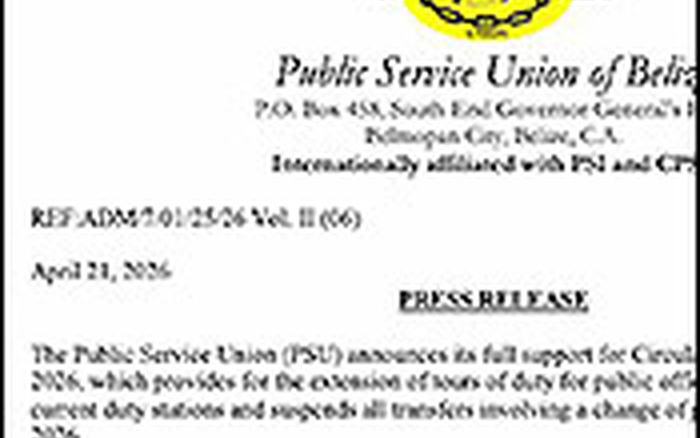

And, there was other big news coming out of Cabinet today. Minister of Public Service, Henry Usher outlined his surprising plan to pause all government transfers this year. It's a decision with a huge ripple effect - across the public sector and it will change the personal and professional plans of scores of public officers who were supposed to be transferred.
So what motivated it? And what's the justification? That's what Jaleeza Roberts asked the Minister today in Belmopan:
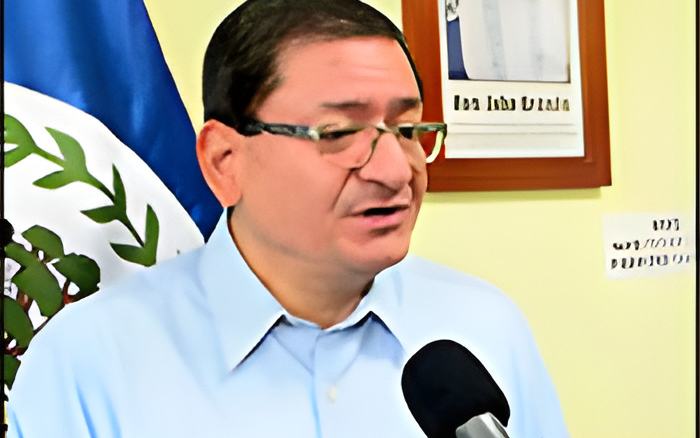
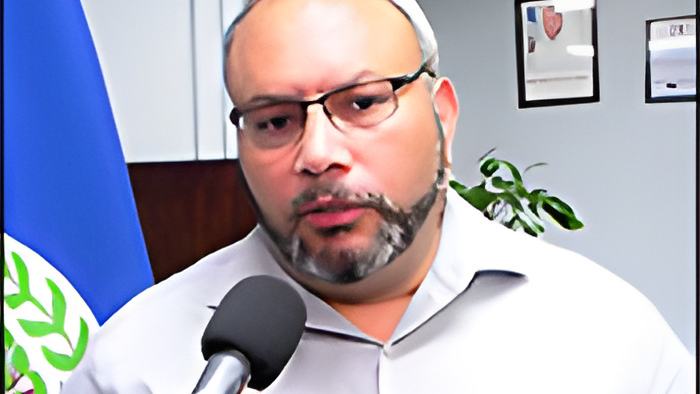
Henry Charles Usher, Minister of Public Service
"Certainly, as you alluded to last week in a previous interview, we are facing uncertain global challenges. There's a lot of headwinds when it comes to the finances and the effects that they will have on government services. So government is looking at different ways in which we can save money, and this is one of the cost-saving measures. By extending the tour of duty, you are extending persons, yes, at their current post, but in that regard, you don't have to pay transfer grants, in some cases housing allowances, based on where the public officers are going."
"Maybe you would have had to pay hardship allowance, etc. So these do add up, and every penny counts when it comes to saving right now in these uncertain times."
Reporter
"And so won't it cause widespread disruption and inconvenience for many of the persons that would need to travel or something like that?"
Henry Charles Usher, Minister of Public Service
"Well, transfers in the public service are governed under the public service regulations. As you know, those are enshrined in the Constitution. I think it starts at Section 96 of the regulation, and that deals with transfers. And it says very clearly in that section that transfers are to be done in the interest of the public service and are not to be done as a punitive measure. Many times, and we've seen it in the past, unfortunately, persons are transferred because of issues that happen within their particular ministries. And every year we seem to get more and more transfers."
"It's not necessarily the most efficient way to go. You asked if some people will be disrupted. My answer to that is by moving them, that also disrupts their family life, where they need to now find housing, wherever they're being posted. So we're trying to make sure that the proper analysis is done before we do these transfers.Of course, the regulations say that a tour of duty is two years. It can be extended for a third year. So we know that public officers are transferable. But we also realize that many times these transfers don't necessarily have to be done on a mass basis and that's what we're seeing."
And while Usher questions the logic of mass transfers, he said that doesn't mean there will be no transfers. He said requests can be examined on a case by case basis:
Henry Charles Usher, Minister of Public Service
"Of course it doesn't stop ministries on a case-by-case basis for the Ministry of Public Service to look at requests to make certain transfers but this mass transfer of public officers is what we're trying to avoid this year as a cost-saving measure but also so that the proper analysis can be done. In other words if a public officer needs to go or is out on a tour from his home station do we move that person back to their home station so that we don't have to pay a housing allowance all of these analyses and observations need to be looked at and that's going forward so that's what we want to do with all the different ministries."