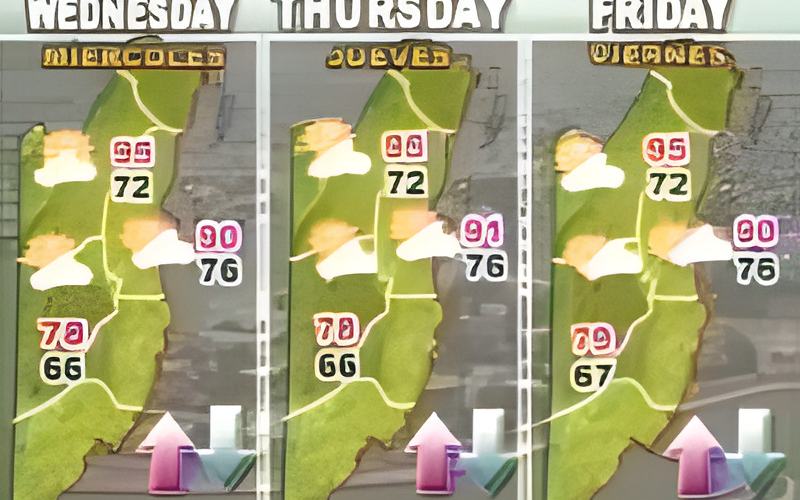

For 15 years Belize’s Weather Bureau has not had a working radar. The civilian population may not notice, but for forecasters, it is a huge difference – particularly as storms or severe weather systems move into Belize. But that hasn’t been happening since the mid 90’s. Instead of radar, weather forecasters have been predicting the weather using satellite images which are accurate but not nearly as precise. And that’s why it’s big news tonight that Belize now has a state of the art Doppler radar. It arrived in Belize a week ago and it was installed at the Weather Bureau in Ladyville today. It was quite a scene and 7NEWS was there.
Keith Swift Reporting,
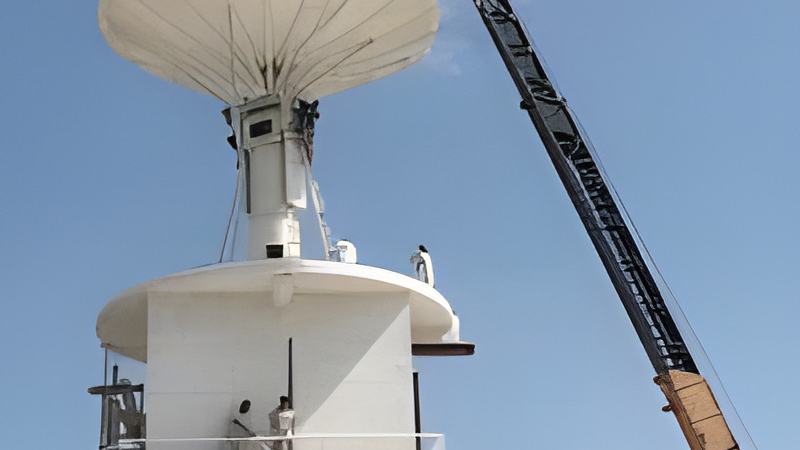
7NEWS was there this afternoon as the giant one ton dish was hoisted off the ground by a crane. Its destination was the roof of the Belize Weather Bureau. It looks like a satellite dish but it is actually a Doppler radar, one of only three in the region.
Ramon Frutos, Acting Chief Meteorologist
“We’re very very excited because I’ll tell you what, this whole project has been in the pipeline for the last ten years and today we are seeing the fruition of this project, it is coming to its conclusion and its closure and everybody in the region, in the Caribbean region especially, are all excited about these radars going up before the end of this hurricane season.”
And half of the work today was actually getting it up. If you do the math -

the dish alone weighs a ton, with a diameter of 28 feet and the journey to the top of the weather bureau’s tower is 40 feet. The job of getting it up was Selects Gematronik, a German contractor. Klaus Kunze is the chief engineer.
Klaus Kunze, German Contractor
“We are putting the antenna together, that’s two pieces, and then the conduits and soon we will put up the dish as you can see. With the crane we need the right position so that we can screw everything together.”
Keith Swift,
How heavy are the parts?
Klaus Kunze,
“This one is maybe one ton and the conduits is a little bit less and the lower part is heavier, maybe 2,000 kilograms. It will maybe take us around three weeks to fix the whole antenna, the whole system.”
After about half hour it was mission accomplished but acting Chief Met Officer Ramon Frutos says it will take months before the Doppler starts spinning. Once it does, it will usher in an era of precise, up to the minute - local weather

forecasting.
Ramon Frutos,
“This Doppler radar will have the capability of helping the local forecasters to detect severe thunderstorm activity and be able to track the eye of hurricanes as they come within 186 nautical miles offshore of Belize. So it will be a very good tool to do now casting, very short term forecasting.
The Doppler radar can give you the movement of systems like for example thunderstorm clusters, how fast they are moving towards the radar or away from the radar system and it will also give us profiles of the wind flow. The Doppler radar can also be used to detect, tornadic convective clouds within a hurricane system or within a tropical system that is moving towards the coast of Belize. So this then will be a plus for our forecasting capabilities here in Belize.”
It should start spinning and forecasting in late September.
Deputy Prime Minister and Minister in Charge of the Weather Bureau Gaspar Vega will officially launch the radar tomorrow afternoon. But as we mentioned – it will be months before it actually starts working. A dome has to be built and it has to be tested. As was noted in the story, the radar is one of only three in the region: Barbados and Trinidad have also installed Doppler radars. A fourth radar will be installed in Guyana. They will form a regional network. The total cost is 3.2 million euros about US$4.7 million, nearly $10 million Belize.