
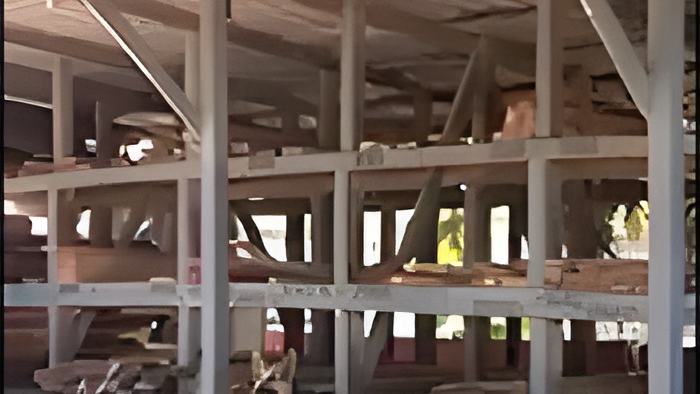
Tonight, contractors, aspiring homeowners, and even fishermen are in limbo as Belize finds itself in the midst of a government-imposed lumber shortage.
It's the result of revisions to logging concessions that Minister of Sustainable Development Orlando Habet believes had to be made. Those revisions were discussed and ultimately approved by Cabinet in a move that has frozen logging activity for the logging season October 2020 to July 2021.
But it's put a hurting on the construction industry, one of the few that wasn't crippled by COVID. For many, it's a desperate situation with a far reaching ripple effect, one that Cherisse Halsall took a closer look at today.
Belize is facing a lumber shortage. It's a stark reality that's reflected in Belize City's lumber yards where once abundant hardwoods are now looking pretty scanty.
But it's even more apparent one well-known lumber yard we saw today that has apparently closed its doors for good.
And over on Faber's Road, lumber yard Manager Pedro Makin showed us how his facility has all but emptied out.
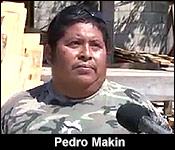
Pedro Makin, Manager, Thomas Gomez Sr. Lumber Yard
"We used to have very good operations here we had a long shelf from here to way up that side, we sold a lot of lumber but due to all the changes and like i said everything is rising up, it's very slow."
But lumber remains a necessity, and further down on Cemetery road we met shopper Gleinstein Garbutt who told us that he was badly in need of today's purchase and didn't even shop around for a lower price. He also told us about a trend he's been observing.

Glenstein Garbutt, Customer
"Accidentally you no notice some truck sometimes with some little pieces of lumber so small small, thing you know why that because basically the big tree no deh anymore so whatever those guys find they just cut."
The man who sold him those four planks says he's one of an average of 10 customers a day.
Alvaro, Manager

"You have specific types of lumbers that people look for we no gat. What happened is we're having a shortage of Santa Maria like for the fisherman, you have the fishermen who use bundles of specific types of lumber because it do good against the water, but we don't have, nowhere have. We went to the shipyard, shipyard is short too. And pine we're having shortage of Pine, something that's usually common and so if you see something that's usually common has a shortage well you know it's doing bad, the lumber industry is doing really bad. Next thing is that we have problems with or at least this is what the log man is telling us that the government is the new change of government they are reviewing all the concessions licenses and they aren't issuing new licenses so everything is on a pause right now. So it affects if you notice nobody's around because whatever they want, we don't have."
"You have the contractors the builders because if no material then they can't work so if you notice it affects more than one person you have a whole community of people that depend on the lumber and we can't work so no money."
And it's all too real for the contractors on San Pedro, many of whom found themselves frozen amid several projects. Hilton Classen says it's threatening credibility as well as livelihoods.

Hilton Claasen, Contractor, Bundu Blu Holdings
"With the shortages, I mean firstly on importation that's made a huge impact on us as far being able to cost directly and being able to fulfill our commitments on contracts. There were substantial delays in getting lumber here too and I don't know if that was just on the supply chain not just in government-related things, like I said I can only speak on our side which is construction but we've had substantial delays on certain lumber because it slows things down on site and you know ourselves and most of other crews and we want to make sure that our guys are looked after and maintained so you know you gotta keep things flowing on the job site."
"If you have a weekly payroll going on and you're not getting the lumber in or your not able to do the work you want you know you can shift your crews around to other jobs and stuff but if this is out on every job that, or on the three or four jobs that your busy with then you can only do so much."
And while the lumber industry and by extension the economy is hurting, Minister of Sustainable development and Climate Change Orlando Habet says they can't be hurting as much as the environment is.

Orlando Habet, Minister of Sustainable Development, Climate CHange
"A big problem, forest licenses for logging concessions have been given out without much consideration for the requirements in issuing those licenses. There have been very few cases of monitoring for those licenses so that the persons who have those concessions can abide by those requisite that are put in their concession agreement. There has been no reforestation part within the program to make certain that everybody who gets a license to cut logs plant back one or two or three or whatever the policy is. There has been no monitoring of what has been happening and so we have lost a lot of resources within some of even the watersheds and we saw some of that effect in the last flood season, because all that area along the river valley crooked tree you saw that water flowing into the watershed which will absorb the water and retain the water. Those are some of the things we are trying to address now."
But we asked the Minister what if anything he plans to do for this struggling industry that's already in the mids of a recession. He says he's given the situation a lot of careful thought.
Orlando Habet, Minister of Sustainable Development, Climate CHange
"I can understand where they are coming from, indeed what we did was we put a stop on the licenses that were issued when we came into power because we wanted to make a revision and upon revision what we notice was that licenses that were issued did not go through the process so there is something called a harvest suitability assessment, the forest rangers officers have to go into the particular that is identified, to make sure that it is not a watershed, that it complies with certain regulations that is not on a steep mountain slope with a certain slope because then there is apart from deforestation there is washing out of the hills and you can cause a mudslide things like that. Also to see in certain areas that were issued it had been deforested before, a fire had passed through and they had already harvested the logs or hurricane had passed through and they already harvested the logs so there is nothing much in there. Another problem is that many times on may occasions there were like 10, 20, 15 application for the same location, so who do you give. That's another problem. We notice also that people were being given licenses and they still owe government for royalties, so how can you give a license when you owe 10,12,15 thousand dollars and then you are applying for another concession. So those were being reviewed. There is another problem that some of the big sawmills that provide yes they provide jobs and opportunities for people and they provide the lumber that people would build their homes, most of them do not have an application within the forestry department for a logging license, so what they do is they engage other people within the communities so that these people can the licenses and instead of these people something for their livelihood from it, what they do is they in turn take and they sell it to these companies and the companies make all the money and these people stay poor still. Yes we have to do some conservation but we also at stake, but it has to be in a sustainable fashion."
Tomorrow we'll tell you why the government may be considering the importation of pine lumber.