And the bond was a big hit at COP 26 - because it shows a way to cure a sovereign debt problem by coming up with a conservation plan.
Last night, we showed you what Chris Coye, the Finance Minister of State, and Julie Robinson, the Belize Program Director of the Nature Conservancy, had to say about the successful launch of the Blue Bonds of Ocean Conservation in Belize.
Yesterday, these two representatives hosted a 42-minute press briefing in which they invited the media to ask any and all questions about this debt for marine conservation swap, which has allowed Belize to retire the Superbond. Our coverage yesterday focused on how this public debt restructuring allowed the Briceno Administration to settle the Superbond with Belize's creditors. Viewers also heard the representatives explain the new commitments Belize has made to honor the repayment schedule over 19 years.
Tonight, we show you what the head table had to say about the Blue Bond's Conservation Fund. It is being touted as a major part of the agreement which contemplates the establishment of a long-term source of financing for the continued protection of the country's sea spaces. Yesterday, we asked the experts on this agreement about how that conservation fund will work.
Here's what they had to say:
Julie Robinson - Belize Program Director, TNC
"This will enable us to set up a Conservation Fund, of which the Government will be making semi-annual payments that will amount to - on average - 4.2 million US dollars per year. Those funds will go towards..."
Hon. Chris Coye - Minister Of State, Ministry of Finance
"In Belize dollars."
Julie Robinson
"4.2 million US."
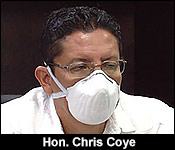
Hon. Chris Coye
"But paid in Belize dollars..."
Julie Robinson
"In Belize dollars, thank you, yeah - paid in Belize dollars, local currency. So let's say - 8.4 million on averages. It fluctuates from year to year, but those funds will be used, first of all, to build permanent capacity within various government - whether it's the ministries or departments, you know, Coastal Zone, Department of Environment, Fisheries Department, to build their capacity to be able to implement those conservation commitments. We cannot expect Government to implement these without having the resources. So, that's first and foremost. 40% is the strategic allocation - that's what we call it - that will go toward Government. Of course, it still has to be accountable. So, it's not as if they were just gonna get money, and then you don't have to report on anything. There are a number of safeguards in there to ensure that the funds are being used for the development and implementation of these milestones. The rest of those funds will then go toward grants programs, and those grants programs will then - there will be a call for proposals that will be issued, for example, every 6 months. And whether you're a conservation NGO, a community-based organization, or a fishing cooperative, or you're in the tourism sector, it's open and available for users of the resources, of the marine space, to be able to implement innovative ideas, things that will help Government and partner with government to achieve some of these conservation commitments, because it can't just be up to the government alone. This is really kind of an all-hands-on-deck, everybody coming together, working toward a single vision. So, that conservation financing agreement is for a term of 20 years, and then after the 20 years, you've probably heard the prime Minister talk about an endowment fund that has been capitalized at 23 and a half million US endowment fund. That, over the 20 years, will build to be over 90 million US, and then the interest from that, once the conservation funding comes to an end, from that 20-year agreement, the interest from that endowment will then continue to go into conservation, continue to go into that conservation fund, to help to maintain the capacity that Government will need, and the grants program for the other sectors."