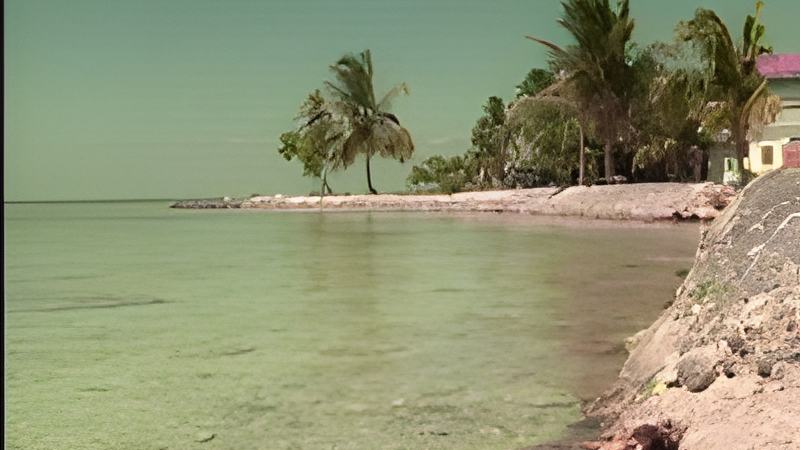
Sarteneja, it sits at the northeastern-most point on the map of Belize, a jutting point of near-paradise in the Corozal District that, for the most part, is truly undiscovered. And so it should be, Sarteneja is a fishing village and not much else. But with over fishing taxing marine resources, fishing isn't what it used to be and now a pair of organizations is encouraging Sartenejans to leave fishing behind and embrace tourism. It's no small feat considering that there are approximately 300 fishermen in the village representing over half the registered fishermen who nring in sea produce to the northern and national cooperatives. We were in Sarteneja to find out how it will be done.
Alfonso Noble Reporting,
It's as picturesque and breath-taking a place as there is in Belize, and because of this you'd think Sarteneja would be a leading tourist destination. But, it's not. This village of about 2,300 people is a small fishing community sentenced to that role by tradition, disposition and isolation. But with new blood and ideas coming from "SWEET," the Sarteneja Wildlife Environment and eco-tourism team, this sleepy fishing village may soon give way to a teeming tourism hotspot.
Junel Cruz,
"The fishing industry at the moment is declining so the people of Sarteneja, especially the fishermen, are having low income so we see that it is necessary to have diversification towards a new industry."
And that shift from fishing to tourism is brought on because of the un-sustainability in the fishing industry. As part of a COMPACT grant, Sarteneja residents are getting funding to make the switch from fisherfolk to tourism types. On this day sweet received $16,000 from COMPACT and $16,000 from GEF.
Junel Cruz,
"One of the project is to benefit the organization where we are going to be having some capacity building for the staff itself and some infrastructure, like you can see that is our SWEET center which will be now our office and also we working as a information center. We are also planning to have this as a meeting point for the tourists who come here to the village.
We want to do some diversification to other alternatives such as diversifying from the fishing industry to what is the eco-tourism industry. So how are we going to be doing this? First we need to start with what is training, some tourism tour guide training, where our people will become knowledgeable with what they are doing. Apart from that we will have purchasing of equipment that will help them for their first tours so they can use this equipment and they don't have to invest. So we will be supplying this equipment for them and their first tours."
Amador Guerra and Velia Chuc are villagers and are the ones directly benefiting
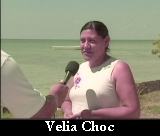
from the shift.
Amador Guerra, Villager
"I started fishing 13 years ago and now I am 48 years old but I stopped fishing because its too much fishermen and the product is scarce."
Velia Choc, Villager
"Many fishermen go to fish but they come with less money every time."
Amador Guerra,
"Right now I am taking the course of tour guide because with that I could live. I need to maintain my family and that is why I am taking the course of tour guide. It is easier to be a tour guide and we could now protect the areas because when you are a fishermen you damage the reef and the corals and lots of things."
Velia Choc,
"The benefit is that I can get a job, work, to give my child a better life.
And that better life the villagers say will and must come from the tourism industry as Sarteneja definitely has attractions to spare and beauty to share.
The tour guide training and capacity building for Sarteneja comes in at a total of $64,445 from GEF and $61,769 from COMPACT with disbursements spread over a one year period.
7NEWS produced for broadcast by News Director Jules Vasquez
Edited and Prepared for the internet by Keith Swift