
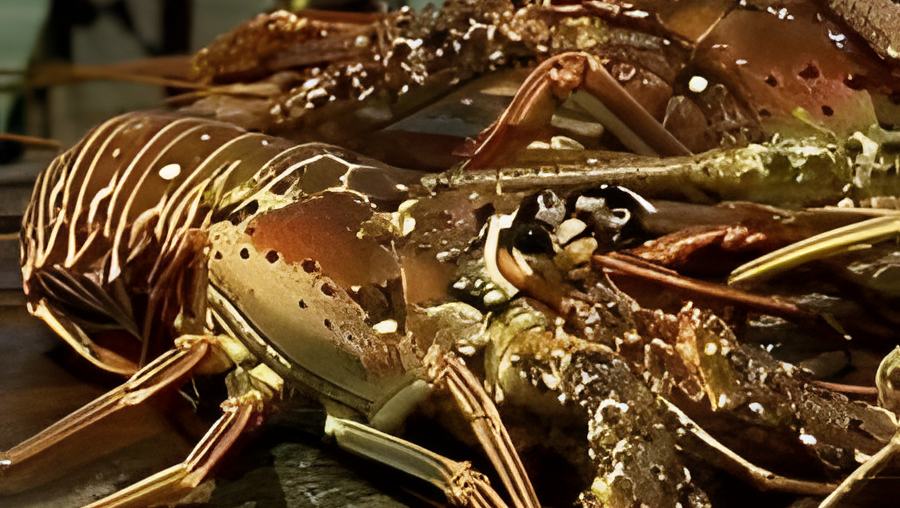
A week ago we took you to Placencia for the peninsula's annual lobster festival but the true home of the lobster fest is Caye Caulker where the spiny lobster is king. This weekend all boats led to Caye Caulker for the island's lobster fest. The first lobster fest, which marks the opening of the lobster season, was held fourteen years ago on Caye Caulker and since then it has grown and become the island's premier event. Our 7NEWS team of Keith Swift and Alex Ellis were in Caye Caulker for the island's annual feast and they found out that lobster fortunes come and go like the tides that wash up in that island's beaches.
Keith Swift Reporting,
This is what this weekend in Caye Caulker is all about - the spiny lobster - and to give you an idea of just how important lobster is to this island - about four out of every 10 dollars made on Caye Caulker comes from the sale of lobster.
Porfilio Guzman, Chairman - Lobster Fest Committee
"Lobster is one of the biggest sea product we have right now, not only in Caye Caulker -it is the whole country of Belize."
Ralph Humes, Chairman - Caye Caulker
"The lobster industry is very important to this island in the sense that this was a fishing village for many years before and at the same time the lobste3r attracts tourism. In a sense people come to Caye Caulker for a lot of lobster dishes so the lobster industry is very viable to Caye Caulker."
Roman Jimenez, Fisherman
"The lobster gives you money: lobster is money."
Lobster is money, big money in fact for Caye Caulker and that's the reason for the island's annual lobster fest - a three day guilt-free feast on all things lobster. And at this lobster fest there was more than just lobsters on the grill - there were live lobsters. Efrain Ramos and Marciano Nnuez returned with an icebox full of fresh catch -which were destined for the nearest grill. And one grill which was fired up from early is that of Isidro Villamil who has been a chef for 17 years.
Keith Swift,
In Placencia they grill only the tails but down here you do the entire lobster. Why is that?
Isidro Villamil, Chef
"It looks better; its bigger, nicer, it looks juicy, and its big - more meat."
But even as they celebrated and feasted on lobsters, there were many concerns weighing on the minds of the fishermen who earn a living from the lobster industry. Porfilio Guzman, Robert Blease, and Enrique Chan have all been fishing for more than 30 years. All are still active fishermen and share the same concerns.
Robert Blease, Fisherman
"When I was younger, there used to be a lot of lobster. When you used to haul one trap, you used to get between 15 and 20 lobster."
Porfilio Guzman,
"The stock is down. What happened is that every year more and more fishermen are just coming up so what happened is that the lobster has to divide itself so when you used to get like a hundred or two hundred pound a day, you won't see that again right now."
Enrique Chan, Fisherman
"The lobster has declined. There is a lot of lobster but it is smaller so I believe that sometimes our government should think about closing the season for a year. It would make a hell of a change because it would give time for the lobster to grow."
Robert Blease,
"Licenses supposed to be only for Belizean fishermen and not for any foreigners. Lobster is depleting, it is getting less and less, and if we make everyone come in and get fishing licenses, it will be bad for the Belizean fishermen, it will be very bad. That is our living - that is the way we make our money."
Last year Belize made $14.6 million from the sale of lobster tails. A great deal of that money was made right here on Caye Caulker. But even those fishermen here agree that Caye Caulker's new cash crop is tourism.
Robert Blease,
"It used to be a fishing village then but right now, that is going. Tourism is taking over."
Keith Swift,
Do you think it is a good thing that it is a tourism village rather than a fishing village?
Robert Blease,
"In a way yes because it helps, like how the lobster fishermen aren't doing as well, the tourism industry is helping income wise but I really wish we would stay like a little small fishing village for a while. I love my job as a fisherman; I love fishing."
Ralph Humes is Caye Caulker's Village Council Chairman.
Ralph Humes,
"No doubt tourism is much bigger than the lobster industry. For instance you have the Hol Chan Marine Reserve, a lot of people come here for that. You also have the Shark and Ray Alley, a lot of tourists come here for that. So I think tourism is a bigger claim for Caye Caulker than the fishing industry."
Keith Swift,
But you don't see the village giving up lobster any time soon?
Ralph Humes,
"I don't think so, lobster will be the backbone of Caye Caulker for years to come."
Porfilio Guzman who is one of the founders of the lobster fest says that before tourism there was lobster and after tourism there will still be lobster.
Porfilio Guzman,
"The youths right now, I don't think they are really into the fishing right now. They are more into the tourism."
Keith Swift,
Do you see a day when maybe Caye Caulker might just give up lobster fishing?
Porfilio Guzman,
"To tell you the truth Keith, on my behalf, I don't think that would happen. I think this place is a fishing island and I think it will remain a fishing island which in we will have it like maybe 60-40; 40% fishing, 60% tourism."
And Guzman is so confident because he says he has confidence in fishermen like Roman Jimenez who is a second generation fisherman. Roman is only 24 years old but has been fishing for lobster from he was 15 years old.
Keith Swift,
Ten years from now, what will you be doing?
Roman Jimenez,
"Ten years from now, if God spares me a life, I will still be fishing for lobster."
Caye Caulker has about 150 licensed fishermen. The lobster season opened on June 15th and it closes on February 14th.